
Photo: DrillOrDrop
Students looking for a career in the onshore oil and gas industry were expected to enrol in a new national college this month.
But although the college has received an estimated £1.5m in start-up money from government and industry, it is not now expected to open for at least two or three years.
The institution, called the National College of Onshore Oil and Gas or NCOOG, was part of an initiative launched by the government in 2014. Its aim was to develop skills needed for a thriving UK onshore drilling and fracking industry.
It received £750,000 from the then Department of Business, Innovation and Skills, a sum said to be matched by the onshore industry. The government also promised another £5.6m for equipment and facilities.
The four other national colleges announced at the same time have all opened, offering training in high speed rail, nuclear engineering, digital skills and the creative and cultural industries.
But at NCOOG it is hard to find evidence so far of staff, promotion or much course development.
There is no website and, as far as DrillOrDrop can establish, no lecturers, accredited courses or students.


NCOOG is a joint venture company, owned by Blackpool and Fylde College (B&FC) and the industry body UK Onshore Oil and Gas (UKOOG).
DrillOrDrop put a series of detailed questions to B&FC about funding, staffing, and achievements.
We received a short general statement which failed to address most of our questions. When DrillOrDrop put the same set of questions to UKOOG we received no reply.
Mandy Mills, a Fylde resident, has researched the development of NCOOG. She said of the delay:
“The local and national press releases concerning the launch of what the BBC called the ‘fracking college’ excitably talked about commitment to the area and world-class technical and professional training.
“Francis Egan, of Cuadrilla said it ‘would give the North-West a head-start in developing skills’. UKOOG’s Ken Cronin felt the college would set out ‘the ambition of this industry right from the start to commit to training people in this country’.
“This kind of press attempts to convince those of us that live near a fracking site that there are benefits; that this is a benign industry which wants to look after the community.
“Three years down the line it seems that none of this ‘ambition’ has been realised or was likely to be realised.”

Cuadrilla’s Preston New Road shale gas site, 25 August 2017. Photo: Ros Wills
What do we know about NCOOG?
DrillOrDrop and Mandy Mills have compiled details about NCOOG from limited public information and responses to Freedom of Information requests.
The story begins in June 2014 when the government called for proposals to establish pioneering colleges that would develop higher level skills for UK industry. B&FC and UKOOG submitted a joint bid.
Successful bid
In November 2014, the government announced that the NCOOG had been successful. Along with the four other national colleges, NCOOG would open in 2016 and would achieve an “outstanding” rating from Ofsted by September 2018.
The government said each college would have a long-term investment plan, governing documents, a refined business plan specifying the curriculum, a governance structure, industry mechanism to provide funds and the definition of a set of standards and qualifications. These documents and strategies were to be developed in 2015.
NCOOG received £750,000 of government development money, to be matched by the oil and gas industry.
A statement from UKOOG said the new college was to have its headquarters at B&FC, which runs the Lancashire Energy HQ. NCOOG would also work with four partner institutions: the University of Chester’s Faculty of Science and Engineering, Highbury College’s Centre of Excellence in Construction and Engineer in Portsmouth; Redcar and Cleveland College’s Teesside Oil and Gas Academy; and the Weir Advanced Research Centre at University of Strathclyde in Glasgow.
At the time, Bev Robinson, Principal and Chief Executive at B&FC, said:
“To be named as the hub of one of the national colleges is a privilege.”
She added:
“This will drive long-term investment in the region, meet the demand for highly skilled labour and secure local jobs.”
She said NCOOG had been supported by “industry-leading organisations” including Centrica Energy and Cuadrilla Resources”.
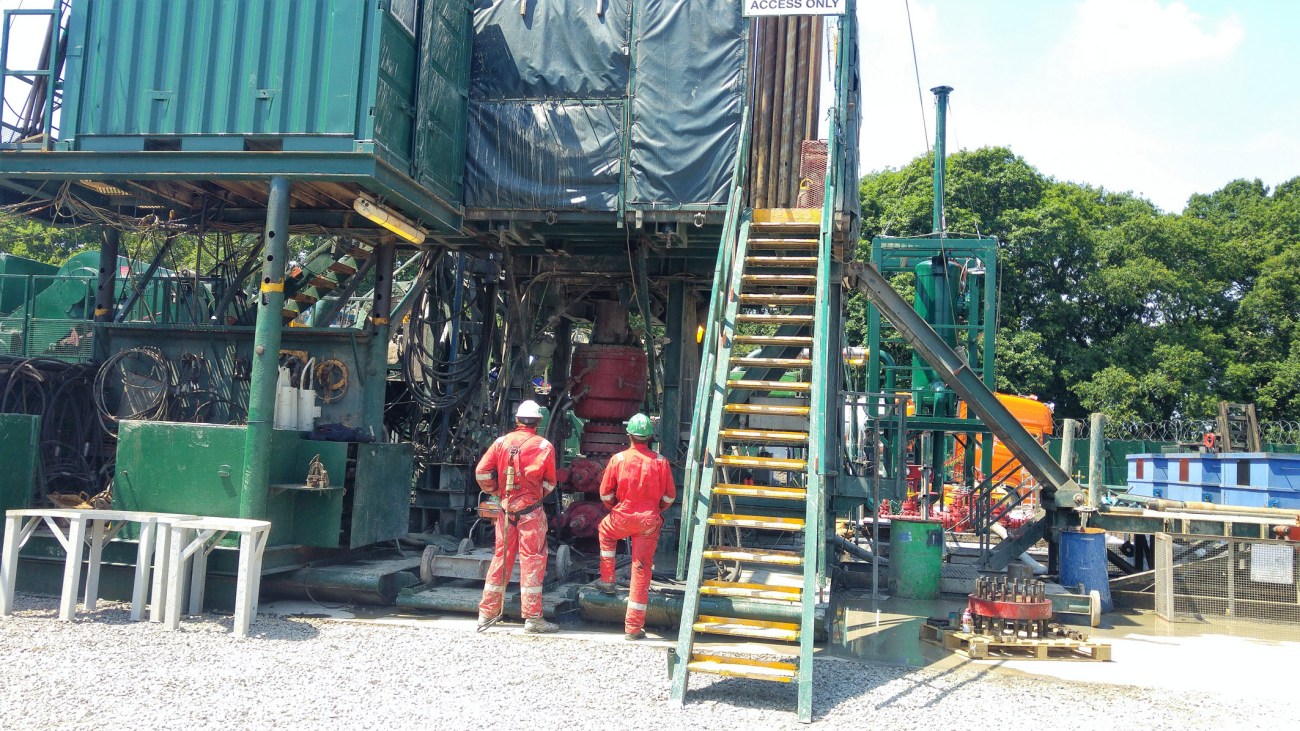
Photo: DrillOrDrop
Chair appointed
In January 2015, Colette Cohen, then head of Centrica’s UK oil and gas production business, was appointed the chair of NCOOG.
The announcement said NCOOG was entering a “critical phase”. The then business minister, Matthew Hancock, said of Ms Cohen:
“She has a thoroughly important job training the next generation of onshore oil and gas engineers and specialists who will extract the shale gas from beneath the ground.”
The press release issued at the time also said NCOOG would focus on four areas:
- Providing specialist skills needed by the industry and training teachers and regulators
- Accredit courses run by other institutions
- Carry out research and development to increase efficiency and reduce environmental impacts
- Work with schools to encourage children to consider careers in industry
The next stage, the press release said, was to develop a business plan and curriculum.
Incorporation and recruitment
NCOOG was incorporated on 30 September 2015, three months after Cuadrilla was refused planning permission by Lancashire County Council to frack at two sites near Blackpool.
The directors included B&FC’s Principal, Bev Robinson, and its Secretary, Paul Howard, along with UKOOG’s chief executive, Ken Cronin. Other directors included: Matt Betts, Vice President of Haliburton; John Blaymires, Chief Operating Officer of IGas; Lee Petts, Managing Director of Remsol Ltd; and Gary Haywood, then Chief Executive of INEOS Upstream. Mr Petts and Mr Haywood have both since resigned from the board.
In January 2016, NCOOG commissioned a recruitment agency to advertise for a managing director. The post was to be home-based, on a salary of £100,000, for appointment in March 2016. Link
By this time, the opening date had slipped to September 2017, according to the application pack.
This said NCOOG would operate through a “hub-and-spoke delivery model”. Courses would be delivered by partner organisations on their campuses across England.
The successful candidate would, among other things, ensure delivery of the NCOOG business plan, provide “strong and inspirational leadership and strategic direction” and oversee the robust financial management of NCOOG”.
There was no announcement of an appointment. We asked whether anyone had been recruited to the role. There was no response from NCOOG or UKOOG.
More money
In April 2016, the Government confirmed it would give £80 million to the National Colleges to “deliver the workforce of tomorrow”. NCOOG was to receive £5.6m for equipment from the Department of Business and Industrial Strategy.
This would be used to “purchase a full suite of training equipment” to enable NCOOG to “offer world-class technical and professional training and education”.
A month later, UKOOG announced that the government funding would unlock industry equipment donations worth a further £2.25m.
Ms Cohen, NCOOG’s chair, said at the time:
“This funding will allow us to progress quickly with the establishment of the college and open new exciting training and career opportunities to local people.”
To get this far, the government said the colleges had to “pass a detailed examination of their business plans and capital proposals” (link).
A board paper to B&FC said NCOOG submitted its business case on 16 July 2015. We asked to see a copy of the NCOOG business plan. B&FC and UKOOG did not respond to our request.
We also asked whether NCOOG had received the £5.6m in capital money.
The college said:
“No further government funding other than the £750k has been drawn down and the college is currently being funded by the industry.”
This was confirmed by the Department for Education, which is now responsible for the National Colleges.
Alarm bells
In March 2017, NCOOG failed to appear on the Register of Apprenticeship Training Providers. A spokesperson told the education newspaper, FE Week:
“With the industry still developing and its requirements for skills becoming clearer, NCOOG has not yet been launched”.
The spokesperson added:
“The NCOOG will make a formal announcement ahead of its official opening, at this stage it is not expected to be in September.”
Yet at this point, the outlook for the onshore oil and gas industry was more optimistic.
The Communities Secretary had granted permission to Cuadrilla to frack up to four wells in Lancashire and the company had begun site preparation work. Third Energy had permission for a test frack in North Yorkshire and IGas had consent for three shale gas exploration wells in Nottinghamshire. INEOS was beginning the planning process for wells in Derbyshire and Rotherham and oil exploration was also getting underway at several sites in southern England.
But the NCOOG board were apparently not persuaded. And a response from B&FC to a Freedom of Information request suggests that the timetable had been slipping before then.
A B&FC board paper in September 2016 said:
“The level of development within the industry has been slower than anticipated; primarily due to the lack of approvals for planning permissions for exploratory drilling wells. As the Board may be aware, where these have been granted they have been challenged via appeals and through the judicial review process.
“This situation has been further compounded by a low oil price which has resulted in the traditional oil and gas industry making significant reductions in headcount. As a result, industry’s requirement for students to be trained has been delayed until around 2019/2020 (subject to planning approval and successful explorations).”
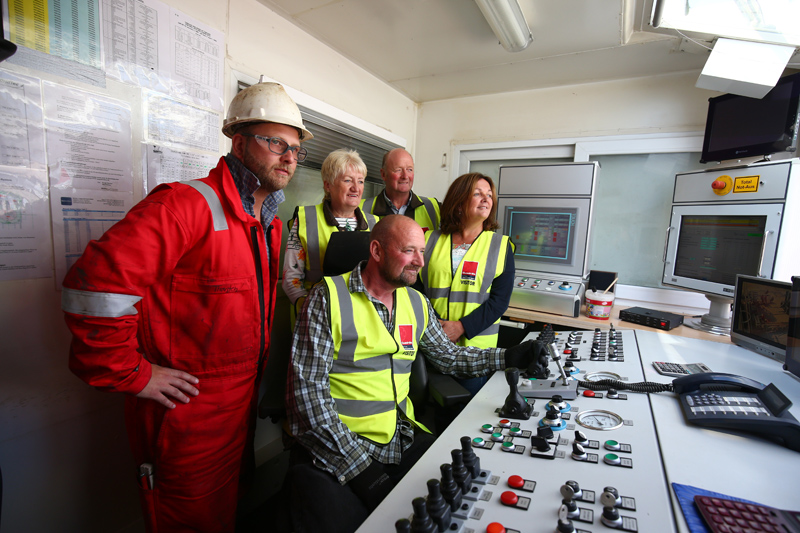
Cuadrilla control room. Photo: Dave Thompson
Where are we now?
DrillOrDrop and Mandy Mills tried to find out what NCOOG had achieved and how this compared with the other national colleges.
The National College of Digital Skills launched in September 2016 in Tottenham Hale in London. It has 6th form students and apprentices and is on the Register of Apprentice Training Providers (RoATP).
The National College of High Speed Rail opened this September in Birmingham and Doncaster with a small group of apprentices already employed in the rail sector. It is offering four higher apprenticeship schemes and a certificate in higher education.
The National College of Creative Industries in Purfleet, Essex, is offering 25 courses, while the National college for Nuclear had 24 courses at two hubs near Sellafield and Hinkley Point.
Asked about NCOOG’s achievements, a spokesperson said:
“The National College for Onshore Oil and Gas (NCOOG) was launched in November 2014 with £750k funding matched by industry to produce a business plan, set up the governance of the college and outline initial potential training courses.
“A business plan was produced which resulted in a further £5.6m being granted by government to provide equipment for NCOOG matched in part by industry.
“A board for the NCOOG has been established and initial training course outlines for HSSE [health, safety, security and environment] have been developed.”
The spokesperson added:
“NCOOG is ready to move to the next stage but will do so once the industry is ready to progress.”
Despite this, NCOOG has no website, although it said it would develop one when the industry develops.
We asked about staffing, current funding, the long-term investment plan, future applications to RoATP, skills capability in the industry and oversight of NCOOG. We got no response.
On course development, a spokesperson for one of the partners said:
“University of Chester has started the development of a range of courses on related subjects and which will come into play early in 2018. These include Health & Safety, Project Planning, Legal aspects of OOG, Comparative energy sources and others under discussion.”
And a spokesperson at Redcar and Cleveland told FE Week that NCOOG was busy developing training courses and standards.
But OPITO, the UK national training organisation for oil and gas extraction, has not accredited any courses at NCOOG or B&FC or any of the partner organisations.
An FoI response from B&FC in August 2017 said:
“B&FC is not currently working on any courses to facilitate NCOOG.”
The NCOOG spokesperson said the initial course outlines developed by NCOOG had “led UKOOG to develop its guidance for HSSE training”.
The spokesperson pointed us to a 7-page Training and Induction Guideline, produced by UKOOG in November 2016. This said it aimed to “support operators in ensuring that the onshore oil and gas industry carries out operations to the highest health, safety, security and environmental standards and minimises risks to people and the environment.”
Mandy Mills responded:
“As far as I can tell, this is an induction procedure document for visitors to Cuadrilla’s site at Preston New Road.
“It is for the benefit of the industry and seems to have little to do with training young people in any high-level engineering skills or qualifications.
“Is this really the result of £1.5 million of development money? What has the board of the National College for Onshore Gas been doing for three years?
“After so much back-slapping and thanks being extended to industry partners and local MPs back in 2014, I’m wondering whether Bev Robinson, of B&FC, still feels it is a ‘privilege to be named as a hub for one of the national colleges’?”
Categories: investigation

 DRILL OR DROP?
Great report Ruth!
More lies from the Oil and Gas industry I guess all the community money will never appear either
Students looking for a future in the UK energy market need to look at what is just around the corner.
The Offshore wind market is booming and seeing massive price drops meaning more investment away from fossil fuel.
http://investnel.co.uk/news/offshore-wind-can-hit-five-times-current-capacity-new-report-reveals
Onshore wind as cheap as gas
https://www.theguardian.com/environment/2017/jul/23/drop-in-wind-energy-costs-adds-pressure-for-government-rethink
Wind supply chain jobs staying in UK
http://renews.biz/108414/offshore-joy-for-uk-supply-chain/
Government in support of solar
http://www.bbc.co.uk/news/business-40699986
Renewable energy is the industry that needs our next generation of engineers.
Compared to renewable energy, training towards a ‘fracking future’ would be an unwise move for any young engineers.
Well done Mandy and Ruth. What a disgraceful situation you have uncovered. Astonishing waste of money and what appears to be blatant propaganda to try and fool the local population unaware of the realities of fracking.
Our usual friendly trolls are clearly lurking down at the bottom of the hole, feeling a little warm.
This a great investigative report Ruth and Mandy, very impressive, one could only wonder where the money has gone? Perhaps into certain NCOOG pockets?
The fact that NCOOG made such grand claims promising much and delivered nothing and is as yet entirely promoted by the industry, perhaps reveals the similar apparent proclivities of the industries own actions?
Perhaps it proves that the seeking of knowledge is based upon a search for truth, and cannot be satisfied by mere partisan political industrial and financially driven motives, it requires objective provable facts, not subjective propaganda from a compromised government and a biased propaganda driven industry?
Kathrynmcwhirter
It is an interesting report, which exercises our biases and predjudices I guess.
To some, more lies from ( fill in the blank ), and a bit more spittle when typing with a feeling of outrage. To others an example of life. High expectations followed, by real life, leads to things not going as planned.
Looks like those naughty centres of excellence ( called colleges and polytechnics in my day ) have used some money to prepare for something that is not happening so fast. At least they did not start to train coal mining engineers
Nothing as profligate as Hs2 it seems. But the profligacy of centres of learning is something to chat about.
Maybe John, unusually, has made a little bit of a valid point?
Perhaps not so much to do with renewables though, but more to do with the large numbers of extremely skilled personnel laid off from employment in the off shore sector (N. Sea) last year (believe it was 60,000) and more predicted this year?
Hopefully, the on shore sector will be able to utilise those skills that are now available that oil prices have reduced from $80/$90 dollars per barrel to $50, and allow less of them re-training as men’s hairdressers in Aberdeen (yes, it is happening.) What were the SNP promoting as the oil price, going forward in 2014?
I am afraid that is the way industry works. If there is suddenly a surplus of personnel already with the training and skills they tend not to invest more money training people who would not get a job at the end of it, as the market has a surplus of trained, skillful personnel. Shocking! (irony)
Could be that the on shore sector is actually aware of that and has decided to save some money, their own and tax payers? (I know the general level of training by industry is poor hence our poor productivity, but this sector is quite different now, with a very large number of people laid off who have received good training.)
I know my suggestion is not so exciting, but I suspect has a little more chance of being correct. We will see.
Colette Cohen, then head of Centrica’s UK oil and gas production business, was appointed the chair of NCOOG.
Centrica have stated that at today’s prices that UK shale is not viable
http://energydesk.greenpeace.org/2015/08/20/super-low-gas-price-spells-trouble-for-fracking-in-the-uk/
It is understandable that there is no need to have a National College for a non viable industry so where has the money gone?
Lol. Sure, John. Centrica pointed to estimated costs (which would no doubt leave some room for padding) in 2012. We are five years hence and costs per unit of production have decreased 25% or more. Le voila! Shale gas is viable again. Better luck next time!
Where is the evidence for the claim that costs per unit of production have decreased 25% or more? Can you point is towards a reliable source for that please?
And I note that Centrica’s range of estimates of extraction costs is the lowest of the four quoted by Greenpeace there. It’s still looking rather iffy to me but I look forward to seeing the evidence for your claim about decreased costs (presumably in the USA and why they will apply here in the UK).
Why certainly. There are many, many sources of data to back the claim. Here is one:
“For instance, new well production per rig in the Marcellus and Utica, two prolifi c gas producing shale plays, has
increased by 842% and 1600%, respectively, since 2008. These productivity gains helped the breakeven price for
drilling natural gas wells in the Marcellus shale region decline by more than 50% since 2008, from around $4/
mmbtu to below $2/mmbtu, according to analysts.”
That quote describes a 50% reduction in breakeven costs in the Marcellus during a seven year period between 2008 and 2015. Centrica’s 2012 costs should be down at least 25% over the five intervening years to now. My guess is that they are down more than 25%, and remember that they would have padded their cost estimates (as every company does for competitive reasons).
Best of luck!
http://www.cbreclarion.com/research/Documents/CBRE%20Clarion_MLPs_Oil%20and%20Gas%20Drilling%20Technology%20Leads%20to%20Efficiency%20Gains_March%202015.pdf page 5
No Peeny (not ANOTHER ID surely 😂 – have the others all been banned here?) – I meant something that was properly sourced not from some stock pumping PDF – surely you can do better than that?
Bets of luck 😂😂😂
You will figure it out at some point Refracktion.
Well clearly not with any real evidence from you to help Peeny.
LOL. Sure, Refracktion. At least I can support the points I make! ;o)
“Among the report’s key findings are that average well drilling and completion costs in five onshore areas evaluated in 2015 were between 25% and 30% below their level in 2012, when costs per well were at their highest point over the past decade. ”
Click to access upstream.pdf
That would imply that costs have declined more than 25% since the Centrica estimate from 2012.
You sure make an easy target Refracktion!
But Peeny we both know that that report suggests that those cost reductions are largely due to downward pressure due to reduced activity – supply and demand in effect. If the industry picks up the costs will rise again as competition for rigs. staff etc grows again.
Keep trying – if you like we can investigate the fact that of the 4 ranges quoted in the Greenpeace article Centrica’s range was easily the lowest.
But really you need to be providing some sort of updated current estimate for UK shale gas extraction costs taking into account the lack of social licence and the other differences between US shale gas extraction and what it will be like over here. You could try to get some data from a reputable UK source – now that really would be interesting. I’m not holding my breath though.
So, let’s get this straight, Refracktion. You expect us to accept your prattle about the uneconomic nature of UK shale due to the fact that commodity prices have fallen to the point that they are below 2012 industry cost estimates. Yet when we demonstrate that lo and behold, costs have fallen (even further than commodity prices in many cases) you expect us to throw this fact out the window because it is an artifice driven by supply and demand?
Supply and demand are real and they do cause lower drill rig day rates. I see zero reason why these lower rates should be excluded from an economic analysis. Yes, when the market for gas tightens again, day rates will increase, but of course commodity prices will have also.
But the primary driver for lower costs isn’t lower rig counts and day rates, it is efficiency gains. Rig and drilling costs account for only 15% of total costs. The gains in efficiency from knowing better where to frack, from completing longer laterals, from completing work quicker, from using equipment that is more efficient – all of that has driven costs sustainably lower.
I don’t need to provide any UK estimate of anything, Refracktion. The industry is committing large amounts of capital to develop onshore gas in the UK. That’s all the proof that is needed, my good friend. It’s called capitalism, and it encourages the efficient allocation of resources. I realize that you are more comfortable with the government making capital allocation decisions, but I must tell you a little secret if you promise not to let everyone in on our little secret…….the Government has never been very adept at allocating capital in the past! ;o)
I love it!
Peeny – I don’t think you’ve quite understood the relationship between o&g prices and supply and demand in the US have you. Sadly for US shale it’s like blowing up a lilo with a puncture in it. The higher the price the more incentive to produce which increases costs (due to increased demand on services) and then lowers the price again (due to increased supply).
I also don’t think you’ve understood the fact that the UK shale “boom” (😂) began at a time when UK w/s gas prices were hitting 100p a therm. Things have changed since then, but as you might expect the guys being paid $700,000 a year are not rushing to admit any issues whilst they can keep sucking in investor cash to keep the Titanic afloat.
Even assuming your $2/mmbtu were applicable industry wide, if UKKOG are to be believed and UK costs will be up to 3 times what they are in US that would still equate to about 45 p a therm – still not happy news given the futures prices until 2023. If the US steps up output that picture will look steadily worse.
Best of luck to you too Peeny! You will need it.
You contradict yourself and show difficulty with comprehension, Refracktion. You challenged me to cite evidence to support the claim of 25% or more cost reductions.
I met the challenge (twice). You then turned around and tried to dismiss the evidence as purely a function of low demand. I demonstrated that this claim of yours was false, and that efficiencies also played an important role. I also pointed out the internal inconsistency in your argument that would measure the high industry costs of 2012 against the low commodity prices of today, and you offered the fallacious point of view that lower costs should not be considered because they will rise when the market heats up again – conveniently ignoring the fact (which you have just admitted in your post above) that costs will rise when gas prices rise as supply of equipment tightens.
Regardless, I believe that you cannot seem to fathom the amount of efficiency gains in the industry over the last five years and the corresponding decrease in unit costs. You might want to take a look at gas production overlayed on rig count to help yourself solve this puzzle (at least it is a puzzle to you).
Best of luck!
At least he knows when he has been defeated. Many of the antifrackers don’t even have enough sense to understand that much.
[Comment removed]
Although I am not at all impressed with the efforts of ukoog I must say it is wiser to wait for the drill and flow test result before starting the enrollment and college training. Everybody knows if there is no commercial rate then there is no industry and i.e no needs for the college. As always I think both sides of this saga tends to jump the gun with their exertions of claim.
TW
I would agree. People can get carried away a bit especially if they thought fracking would be up and running by now with a plethora of activity.
As it is, there is not much more onshore drilling activity than for past years, so the existing drilling capability is sufficient. There is also some underutilisation of existing experience due to the low oil price, as injuneer notes.
I see that INEOS are keen to train up local ( UK ) staff for their Seismic Surveying, as this is something that is in progress. However, if the industry does not grow, then there will have to be some more retraining no doubt.
Why is this even a story?
It is a story because many think uk shale is at best a hype or at worst a scam. The industry promotes it as an economic success but showed no positive results so far and very secretive about its operations which makes many skeptical of its positive claims. It seems like a game to both sides.
Is that right, TW? Can you provide any evidence to back your claim that the industry has promoted economic success from shale operations? Or is this another anti hype story?
Why not let capital markets figure out if it’s a good investment or not? Do you think the government is a better allocator of capital than the capital markets?
Correct TW except this is not a game.
This is a great example of the way the industry fails to live up to its own PR (and it hasn’t even started yet).
Interesting to see the frackers in the USA reduced their costs to produce the current bonanza, and are now reducing them again. (I will not give a reference but the info. is there for all to see, if they are genuinely interested, but that limits it.)
Strange how the antis, under these circumstances still refer to historic US data. Wonder why?
Why is this a story? It is a story because the antis are having a string of set backs and they need to be “excited” with something to keep them interested. More comfort blankets.
The cost of UK shale has risen since Centrica states it is not viable at today’s prices.
‘Gold standards’ come at a price. Green completion is not cheap. There will be permanent community resistance. Inevitable costly delays.
Proven technical problems and incorrect calorific value requiring the expensive injection of imported propane.
1 UK fracking site costs investors £330,000,000 to bring on line.
With the world awash with cheap oil and gas UK shale could never compete.
UK shale has been known about for decades.
The worst is always left till last.
That said Ponzi schemes can work out ok for a while. In the case of UK shale that ‘while’ would be very short. Investors will already be asking probing questions.
This article is showing that we do not now need to start training onshore engineers but we did in 2015.
Shale is a ‘Boom Bust’ industry.
Maybe UK shale has missed the Boom and moved swiftly onto the Bust part.
Statoil who know the UK gas market more than anyone have turned their back on UK shale.
The writing is on the wall.
I spoke to my barber about this article. He thinks that there is no future in onshore shale so he is not considering a career move.
John,
Firstly, Centrica stated nothing of the sort – you are putting words into their mouth. Their cost estimate was produced back in 2012 and must have contained many assumptions. Of these, there have been such large technology advances in the science of production from shale, figures that are that old are essentially meaningless.
For example, since 2012 the US Shale industry has swung it’s principle focus over to oil, as the advances I mentioned have made it feasible to produce oil from shale in many areas. In just the last couple of years, production costs have fallen from around $70/bbl to around $50/bbl and in some areas, down to $35/bbl.
What makes you believe that the cost of shale extraction has risen since then? It has actually fallen significantly as the technology advances have made it much more efficient to drill and frac Wells. In addition, the oil price crash has resulted in a large reduction in the cost base. Not just in people, but rental equipment and consumables are much lower in cost (supply and demand!).
Yes, having high HSE standards does increase costs. But I for one am quite happy for the UK to have such high standards.
By technical problems, presumably you mean the two very minor (BGS definition) Earthquakes at Presse Hall? The UK Govt has already put in place further regulations to prevent this occurring again.
Can you please elaborate on your statement about having to inject Propane? This makes no sense at all to me.
I have no idea where you got the idea that it would cost 330 Million to bring one frac’ing site online. It’s so absurdly exaggerated this I couldn’t help but laugh out loud.
The world isn’t as awash as the popular press would like you to think. Excess production was only ever 2% over consumption and stockpiles are beginning to be drawn down. However, the problem with oil is it’s costly to store, which is why the price is so volatile when the supply / demand curves cross. These days, this is greatly exacerbated by the effects of the Hedge Funds. At the peak of the oil price, they were estimated to have caused the price to spike an additional $20/bbl over what it should have been, and were trading 20 times more volume than the oil companies.
In the meantime, over $1.2 Trillion (possibly over $1.5 Trillion) in production projects have been shelved and/or cancelled since the price crash. This is production that is needed to replace that lost by the decline curve that all fields go through. In particular, the high volume Deepwater Wells in the US and West Africa are beginning to go offline and current drilling levels are not replacing them.
While it was easy to stop these projects quickly, it’s going to take 3 – 5 years to start them back up, so sooner rather than later (general consensus is Q1 2018), the oil traders are going to be calling for oil that isn’t there and the price will spike again.
You may call it a Ponzi scheme if you want, but the Bankers / Hedge Fund Managers / Oil Companies that know what they are doing are putting money back into the US Shale industry, so that the rig count has risen from a low of around 400 to it’s current level of c. 950 rigs. In the meantime, the Industry now looks on US Shale more as a swing producer, effectively buffering the Saudi / OPEC ability to control the market price of oil.
As for Statoil, they are in the process of retrenching after making some big losses on various Exploration projects. Like ExxonMobil, they got into the US Shale industry too late, after all the prime acreage had already been snapped up and lost a lot of money (I believe Exxon lost over $2 Billion) in buying low quality acreage that – with their high overheads – they could not make work. But to say they know the UK gas market better than anyone is a great exaggeration.
Hi Injuneer. As you are new to the blog you might want to go back through some of the earlier stuff. Some of your questions as to the validity of JP’s comments will be answered and you might change your responses.
If I remember correctly this one ‘ cost 330 Million to bring one fracking site online.’ came from an interview with a certain notorious director of a drilling company….
But there are soooooo many of them!!
Don’t know if it’s just me, or the way the blog works, but I find it difficult to track when and where new posts are made? I’m sure I’ve missed responses to posts I’ve made and don’t want people to think I am ignoring them, especially if they have asked a question.
It doesn’t seem to follow a logical order with older posts sometimes appearing above new ones? I’m not yet getting any e-mail notifications either.
Hmmmm, all us oilfield types seem to be regarded as being notorious 😉
If you can find the interview and post a link for me, I’d be grateful – I can’t see how they get anywhere close to 330 Million, so would like to know the rationale behind it.
Small point of semantics, to me ‘Drilling Company’ or more commonly, ‘Drilling Contractor’ means the Company that provides the actual Drilling Rig. The Company who they are drilling for (e.g. BP, Shell, UKOG, Cuadrilla) is called the Operator.
Injuneer
There are two ‘spots’ to press prior to sending out your post, on LHS just below your reply. That gets you a reply straight to your in box..
Re past discussions, they will all turn up in due course as you touch on them. More than once.
Do not be disheartened when the same arguments are presented again and again even though you think you have refuted them ( a situation which goes both ways no doubt ).
Steer clear of Browns Gas and Tesla Towers, they are a black holes.
‘I have no idea where you got the idea that it would cost 330 Million to bring one frac’ing site online. It’s so absurdly exaggerated this I couldn’t help but laugh out loud’
I was wrong. It is £333,000,000
Page 11
Click to access EY-Getting-ready-for-UK-shale-gas-April-2014.pdf
I presume you believe these guys. It is industry sponsored you know.
And why statoil turned their back on UK shale. They are however involved with shale in other parts of the world. When Chesapeake say fracking is a bad idea in a country they have very good reasons why they say that.
https://drillordrop.com/2016/11/13/francis-egan-on-drilling-in-2017-low-gas-prices-financing-expansion-and-how-many-wells-can-you-fit-on-a-site/
As statoil are our main piped gas suppliers and have been for decades I say they are well in touch with the UK market.
.
What you seem to be missing here is that much of the uncertainty was already happening..indeed the board for the National College was set up 3 months AFTER fracking was rejected by LCC. They didn’t seem so sensible and quick to save tax payers’ money then! The uncertainty in the industry is not a new thing..so why launch the National College of On shore gas at all? Why appoint a board? Why advertise for an MD a year later?…I can only assume because the govt and the industry knew that fracking would get the go ahead despite local dissent, it would be supported by government regardless of the common sense of the situation…and ultimately it served a purpose to convince us all how great fracking was and curb residents’ opposition. There was no intention of ever really living up to the promises. It’s an important story because it’s about government and industry working together to control a situation that local democracy has rejected and using tax payers’ money to do so.
John-I love the way you keep on as if you know anything about economics, but then as you keep on evidence shows you don’t.
All I would suggest, in relation to this story is look up the supply/demand=price equation. 60k trained personnel laid off, more people to be trained? It doesn’t work.
Martin – we could all see this – why couldn’t they? We had people in Aberdeen collecting food parcels in Porsches FGS! Supply and demand eh?
John Powney. I think you are contradictory in your own arguments. On one hand you (and others) have said shale is uneconomic because of their production decline rates and i.e high cost. But yet you specifically claims the world is awashed with shale gas. It can’t be both John. If it is uneconomic then companie would have gone bustex and no longer able to produce gas and therefore there would be no awash supply og gas. I assume that you base your view od the US scene. There are strong evidence the US shaler have innovated their games to cut costs while increase their production. One can understand the skeptics of whether thos innovation can be applied to UK shale or its operators.
Protecthis. If you use capital market as an indicator of the economic of UK shale investment then clearly the anti are right. Just look at the share price of the UK shalers. They are getting a beating from their investments.
TW
There has been some posts recently in the financial press about Ponzi Scheme economics and shale gas/oil production in the US was included in it.
The overall gist is that some industries, such as Uber and Netflix have yet to make a profit, and just burn through cash. Yet they have high market values, have made a small number of people exceedingly rich, and have provided benefits to the public below the true cost of the operation. Spotify was also on the list.
Applied to shale the view was that it has yet to make money overall, but America and the world has benefited from the drop in oil and ( for the US ) gas prices. The consumer is getting the benefit of something below cost.
Yet again some individuals have become very rich. More individuals in America due to land ownership, of course.
The discussion was how it would play out. For Uber, there is no moat, so a competitor can arrive and clean up, as Uber has the debt, the new entrant none. What was supporting them all was easy money and willing investors. Easy money was seen as the main culprit ( low interest rates / willingness to lend ).
For shale, it was one of last man standing. The most recent shale operations in the US have to be be more efficient to get the cash. Hence past performance is not the only predictor of future viability or size. A smaller frack industry may be what happens when the tide of easy money goes out.
Cue sigh of relief from big oil and gas ( Aramco, Russia, Venezuela, Brazil and so on, plus a few large companies like Exxon ).
Hence, it is possible for the US to be awash with gas, and the world to be awash with oil, while the US supports margin production below cost. Yet at the same time, fracking may mature to be just one of the ways to get gas and oil out of the ground at an economic price. Time will tell, but I have no money in shale, just conventional.
The benefit to consumers noted above should not be taken to refer to environmental or health issues, which have been well aired on this board!
To suggest that Uber doesn’t have a moat is ludicrous in the extreme. A first mover advantage coupled with a network effect means that it is their game to lose.
The world was awash with cash for energy producers because they were able to produce fantastic returns when commodity prices were higher. The industry isn’t going to be much smaller now that prices have corrected, but it will be more disciplined.
Protectthis
Yup, I think you are right re the moat, I should have put…deep moat!
Re the awash with cash bit, the article by Bill Bonner, and the mention of Ponzi Schemes was in the context of the USA being awash with cash, printed by the fed.
Protect this
How is the Uber moat now? Maybe it’s the moat of entrenched taxi providers that is hard to cross. But time will tell I guess.
TW. I think perhaps you have misunderstood. JP suggests the world is a wash with conventional oil and gas.
The cost of shale in the US has not been computed yet as the price of the destruction is not included….
The point is that if we were to burn all the fossil fuel reserves the world currently holds we could not stop the acceleration into hell as the planet turns into a hot house, people die from excessive heat, crops fail, land is covered in salt water, hungry people migrate in their billions to Europe and wars and famine ensue before the extinction of the human race…sobering thought on a happy Sunday, but one nevertheless.
When you weigh up the destruction of habitat, stress to local residents and negative economic effect of onshore shale extraction it does not compare favourably to the rapid move towards clean energy production. The use of reserves to construct clean energy generation and absolute rationing of fossil fuel to enable future use only where necessary is imperative.
Regarding the £750,000 given by the government. This should be returned to the taxpayer and invested in something positive for young people now. The homeless crisis in young people would benefit from this small drop in the ocean, to give them a helping hand to get back in the saddle 🙂