Respondents to the consultation criticised the ecological assessment commissioned by Europa as “flawed”, “incorrect” and “not credible”.
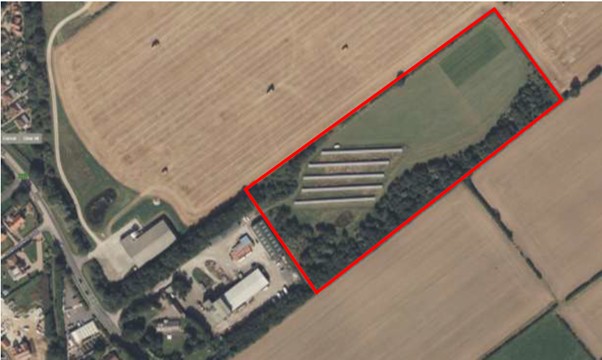
The assessment, by the consultancy RSK ADAS Ltd, reported:
- “No impacts to potential nesting birds, reptiles, hedgehogs or their habitats are anticipated”
- “No trees, hedgerows, scrub, neutral grassland or woodland boundaries are to be impacted by the works”
- A “heavily isolated” pond was “adversely affected by pollution”
- Five birds (feral pigeon, lapwing, robin, wren and blackbird) were recorded on the field survey
- Access to the site is through “a large urban and industrial area” and the site itself is a “heavily urbanised and industrial area”
Key responses
Respondents to the consultation said:
- “serious flaws” in Europa’s commissioned independent reports had led to “questionable conclusions” by statutory consultees
- The ADAS assessment failed to take into account previously-published studies
- The site should be seen in the context of the wider landscape, which includes a wildlife network linking the Heritage coast, the national park, land owned by the Duchy of Lancaster land and National Trust and nearby sites of special scientific interest.
Wildlife recordings
The responses reported that a breeding bird survey carried out on 24 March 2025 recorded 26 species of which:
- One was protected under the Wildlife and countryside Act (Barn owl) and
- Eight were protected under the Natural Environment and Rural communities Ac 2006 (skylark, linnet, yellowhammer, reed bunting, dunnock, song thrush, lapwing, grey partridge)
Another report, commissioned by Frack Free Coastal Communities steering group, reported 18 bird species, as well as roe deer and hares.
The farmer of adjoining Duchy of Lancaster land said a previous survey by Wold Ecology in 2023 confirmed that the pond, described by ADAS as “adversely affected by pollution”, was used by breeding great crested newts.
The farmer said:
“This pond is not polluted and should not have been ruled out as having potential, which to my mind, questions the whole validity of the survey conducted by ADAS. Over the past couple of weeks, with the help of Wold Ecology, I have been out with a torch at night and have managed to find proof of the Great Crested Newts.”
CPRE North and East Yorkshire described the ADAS survey as “incorrect” and called on the North Yorkshire Council planners to investigate the evidence provided by consultation responses, rather “than simply rely on the applicant’s evidence”.
A response from Scarborough Birders said the proposed Burniston site was less than a mile from popular birdwatching sites at Long Nab (245 species recorded) and Scalby Lodge Pond. The response also said the village of Burniston was on the coastal migration corridor for migrating birds, often at night:
“Many species of birds use this method of [nocturnal] migration as a safe and accurate means of achieving their migration goals.”
Europa’s decision to raise the proposed height of the drilling rig to 38m would “increase the risk of bird strikes during poor weather, for example, where visibility at night would be seriously compromised, even if the structure is illuminated”, the response added.
The person living closest to the proposed site said:
“I have 5 nesting boxes all inhabited, in my garden, I have 6 bird feeders that need attending every two days. We see deer, hedgehogs, and squirrels regularly and there is a rabbit warren at the top of my garden. Birds of many species are visiting every day.”
Another response said the ecological assessment was:
“minimalist and not credible to those who regularly use the cinder track and local footpaths and experience the huge diversity of wildlife in the area”.
Site of Scientific Interest
CPRE North and East Yorkshire said the site was 800m to the east of the coastal site of special scientific interest (SSSI).
The National Planning Policy Framework, which shapes planning decisions in England, says “development on land within or outside a SSSI, and which is likely to have an adverse effect on it, (either individually or in combination with other developments) should not normally be permitted [paragraph 193b].”
Paragraph 195 states: “the presumption in favour of sustainable development does not apply where the project is likely to have a significant effect on a habitats site”
The organisation said:
“CPRENEY does not consider that the proposal for hydrocarbon extraction at this incredibly sensitive location qualifies it as an ‘exception’ where the benefits of the development in the specific location clearly outweigh both its likely impact on the features of the site for which it was designated.”
“Insufficient nature-based solutions”
Developments must provide evidence to show that there has been at least a 10% net gain in biodiversity maintained for 30 years to comply with the 2021 Environment Act.
The ADAS report concluded: “achieving a net gain on-site will be challenging without substantial mitigation measures and habitat creation”.
A response to the consultation said:
“The proposal fails to adequately demonstrate how these biodiversity net gains and ecological enhancements will be delivered and maintained”.
The respondent said the timelines proposed were unrealistic.
Another response said:
“It is unclear how this assessment fully addresses the long-term disruption and potential harm to biodiversity caused by fracking operations.
“Fracking activities can lead to habitat fragmentation and degradation, impacting species that rely on connected ecosystems. The assessment should provide a more detailed analysis of these long-term ecological consequences.”
Other comments
Some responses mentioned that the ecological appraisal could not assess some habitats “due to access and time constraints.
Other responses included:
“‘large urban and industrial area'” – a cluster of small industrial or commercial businesses perhaps, but when the proposed site is surrounded on three sides by green fields, I struggle to see how that description really fits.”
“On a recent trip there I saw deer, hares, evidence of badgers, pheasants and heard noisy birdsong.”
On Scalby Beck, which runs south of the site:
“The river and its corridor are populated by many species of fish, birds, mammals, plants and invertebrates. Some are endangered, like White Clawed Crayfish. There are also breeding groups of Otters & Heron present. As the river is fed from the surrounding groundwater, we are concerned that any contamination could have devastating consequences.”
Other comments said:
“The area is an outstandingly beautiful place, full of wildlife and right next to the border of the national park.”
“The industrial activity would destroy farmland, disrupt wildlife, and potentially scar the landscape for many years to come”
“The retrieval of such [fossil fuel] resources will scar our beautiful environment and destabilise its ecosystem. It is not in the interest of the local population nor that of any of the wildlife.”
“I fear that if fracking goes ahead then the resulting pollution, disruption to wildlife and aesthetic changes to the area would have a direct impact on tourism.”
“Once-pristine landscapes become industrialized zones with constant noise, light pollution, and heavy truck traffic that disturb both human communities and native species.”
“the approval of this site and its operations will have the potential to devastate the landscape, its wildlife and the biodiversity in the area”
Other articles about responses to the consultation
Proppant squeeze/fracturing and induced seismicity

 DRILL OR DROP?