
The Campaign to Protect Rural England (CPRE) has changed its policy on fracking and called for a moratorium unless shale gas extraction secures “radical reductions” in carbon emissions.
In a policy note issued this month, the organisation also said fracking should be banned unless it could be shown that it would not damage the countryside.
CPRE said fracking must be controlled by “effective regulation” and “democratic planning”, which were adequately resourced, locally and nationally.
The statement takes a much tougher line than a policy guidance note issued in November 2013, which said CPRE did not oppose the exploitation of shale gas and was seen as backing for government policy on fracking.
The latest note said to avoid a moratorium, it must be clearly demonstrated that fracking would:
-
“Help secure the radical reductions in carbon emissions required to comply with planning policy and meet legally binding climate change targets;
-
Not lead to unacceptable cumulative harm, whether for particular landscapes or on the English countryside as a whole, and
-
Be carefully controlled by effective systems of regulation and democratic planning, which are adequately resourced at both local and national levels.”
“Inconceivable fracking will help carbon reduction”
CPRE said if it were possible prevent leaks from shale extraction, domestically produced gas could result in lower greenhouse gas emissions compared with gas imported by tanker, though not by pipeline.
But the policy paper said investment to extract shale could divert funding from energy efficiency, storage technologies and renewable energy.
It said “a significant gap” was due to open up between predicted emissions and the UK’s binding targets in the 2020s.
“It is becoming almost most inconceivable that fracking would help rather than hinder the challenge of meeting these vital targets”.
It called for a moratorium until the government’s Emissions Reduction Plan was published and independently assessed. It said any shale wealth fund should fund carbon capture and storage, as well as local landscape enhancements, rather than induce communities to support fracking.
“Temporary use of land”
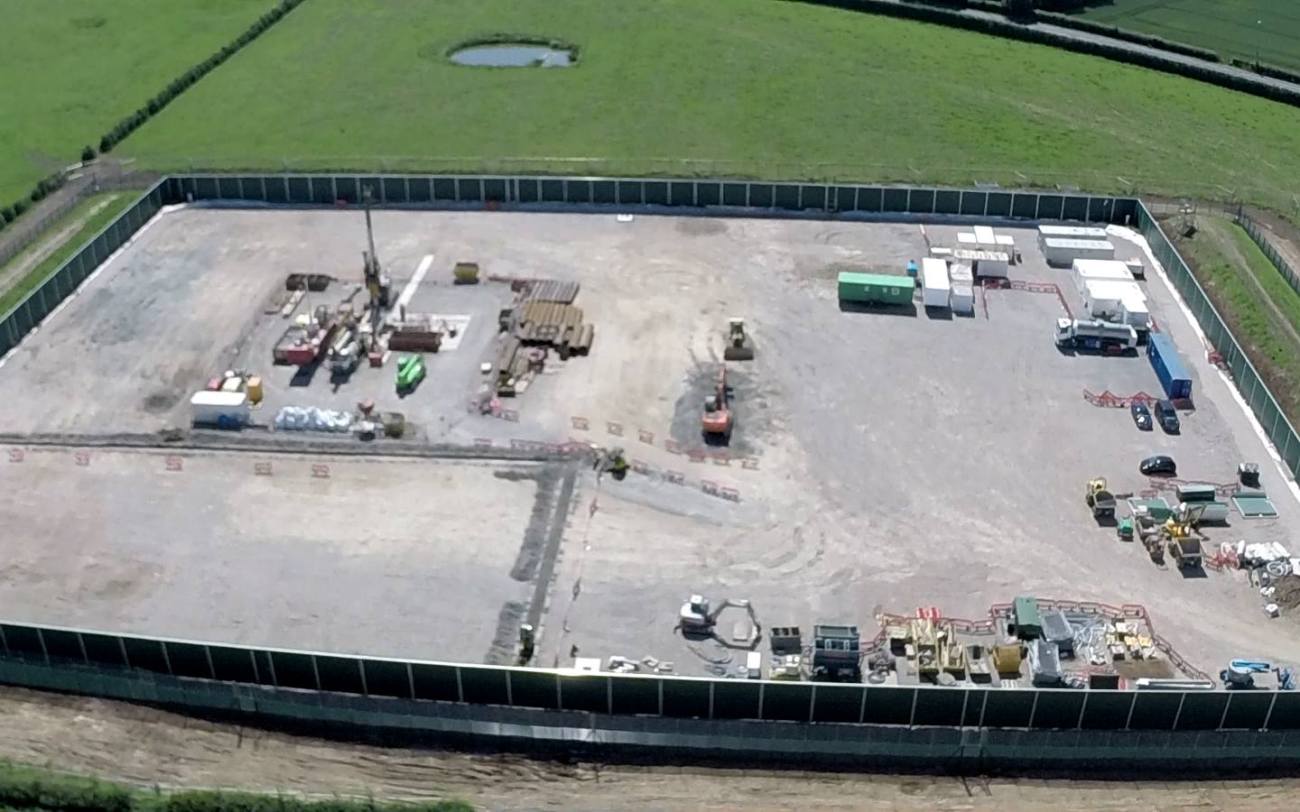
Cuadrilla’s Preston New Road site, 18 June 2017. Photo: Frack Free Creatives – Knitting Nannas of Lancashire
CPRE said shale gas production pads could last 20 years. But they were still classed as temporary use of land in planning policy.
There was a risk, it said, that without successful restoration the change of use could become permanent:
“Developers could seek to argue that they should be treated as previously developed land, hence suitable for building on”.
CPRE said if fracking were approved, there should be restoration conditions backed by guarantees or bonds so that sites could not be considered as brownfield land.
Democratic decision-making
The document raised concerns about the quality of decision-making for fracking developments and appeared to contradict ideas in the Conservative manifesto for taking decision-making out of local authority control.
CPRE said mineral planning authorities [MPAs] were finding it more challenging to make decisions on fracking, because of cuts in funding and lack of staff with relevant experience.
UK environmental regulators had seen recent cuts in staff and since December 2016, they were compelled to prioritise economic growth in their work.
CPRE added that decisions were being taken over more actively by ministers, following a change in planning law in 2015. And the proposed Shale Wealth Fund, which could include direct financial inducements to local residents, could be seen as an attempt to influence local opinion.
CPRE said any appeals against refusal of planning permission should be decided by the planning inspectorate, not ministers.
It added:
“Environmental regulators and MPAs should be adequately resourced and not compelled to prioritise economic growth or meet unrealistic decision deadlines, so that they can be credible in applying the precautionary principle regarding environmental impact.”
“Protect rural roads from becoming lorry lanes”
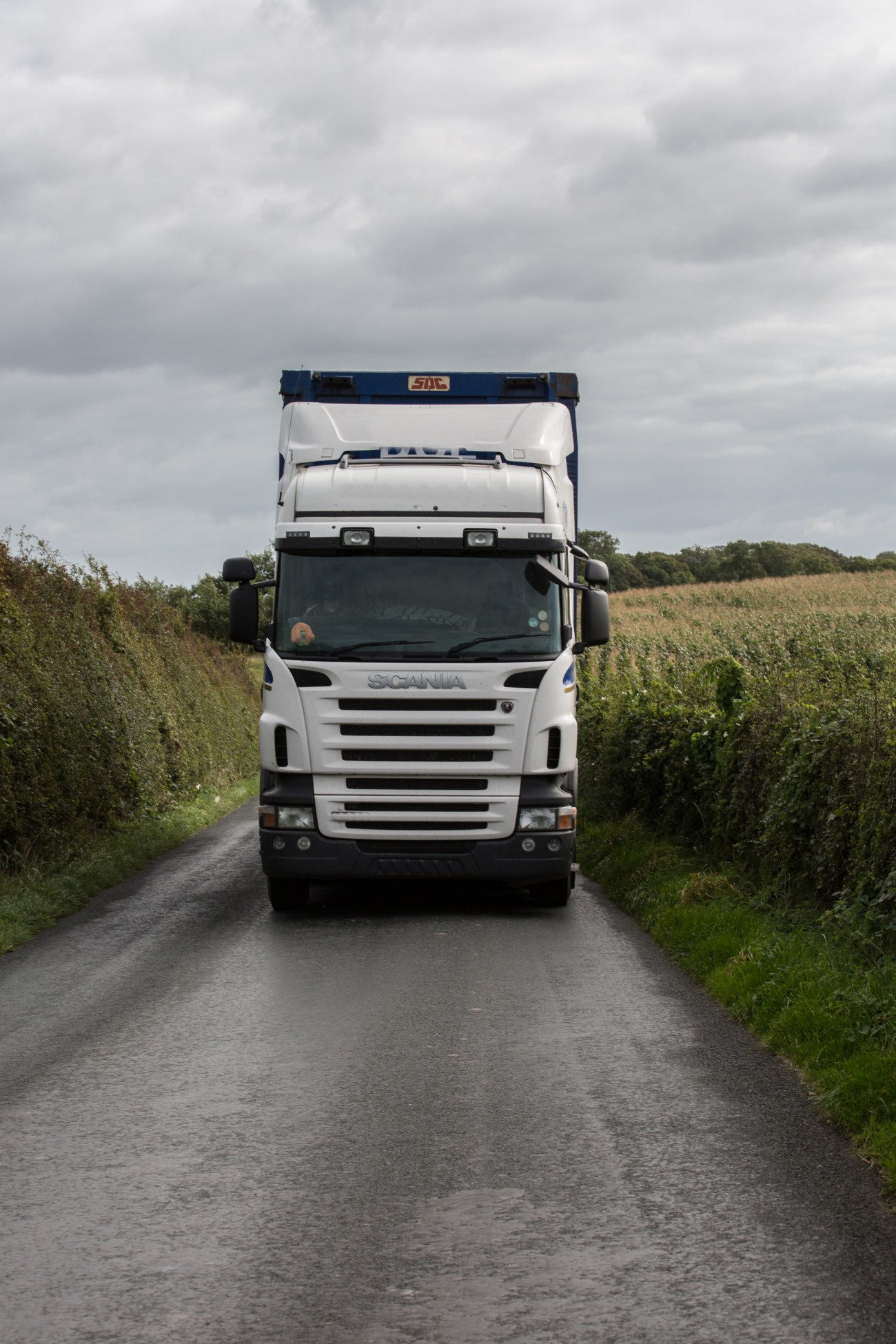
CPRE said heavy goods vehicles serving fracking pads would have the main impact on the tranquillity of the countryside. Rural roads were a defining feature of the English countryside, it said, linking communities and providing opportunities for leisure and tourism.
“It is critical that MPAs [mineral planning authorities] are empowered to protect this important resource from being turned into lorry lanes”.
The organisation said if fracking went ahead, the cumulative impact should be frequently assessed at national level, particularly for the impacts of HGV traffic.
Links
June 2017 CPRE policy guidance note on shale gas
November 2013 CPRE policy guidance note on shale gas
Categories: Opposition

 DRILL OR DROP?
Reading the article I’m assuming someone at CPRE picked up a book called “Policy for Dummies”.
Can’t wait for May to get the boot and get things moving quicker in terms of pro business.
Far too much air time being given to the left which is leading to the boiling pot of anarchy.
Lifelong Fylde conservative voters who object to radon’s radioactive progeny (fallout radionuclides from the flaring of 4,000 to 6,000 shale gas wells in ‘the largest gasfield in Western Europe’ for the next 30 year – the equivalent of 8 years of continuous flaring) are hardly a ‘boiing pot of anarchy’.
Rightly so they object strongly to the industrialisation of the countryside and being used as guinea pigs in the 210Pb and 210Po lottery, depending on which way the wind blows or the rain falls.
Washing the car and growing your own veg, or trout fishing, will never be the same again. Thanks to Cuadrilla and this Tory government.
Then there’s the fracking-induced earthquakes to consider …
~
Awesome report but unavoidable conclusion!
Other bodies need to study this and draw their own conclusions which will obviously result in the same actions if their minds are truly open!
Unlike that of GottaBkidding who is obviously just another industry plinker!
The policy isn’t much different from their policy on wind farms. Keep things out of sight, put things back as they were when you’re finished.
Multiple-pads, processing plants and pipelines in each gasfield will fragment the former agricultural land and it might not be possible to restore sites to what they once were. Industrialisation of the agricultural landscape is a valid concern.
Why might it not be possible to restore sites to what they once were? It’s been done plenty of times at old coal mines, all of which have a much bigger footprint.
“The boiling pot of anarchy” – seriously? How is this anonymous (and probably industry-funded) troll GottaBKidding still allowed to post on this discussion forum?
Ellie, because it gives us all a laugh?
The people running the site I’m sure will vouch for me not being either industry funded nor a troll. Unfortunately Ellie you live in a little bubble and don’t get the opportunity to meet people like myself. We are what you would class as the silent majority although I’m more the vocal type.
Ruth how about an article on the current situation with US Senate and Russia surrounding energy supplies to Europe. Any sanctions will reopen the debate for shale in Europe wherever it is viable. A game changer in the midst.
[Edited by moderator]
In a recent article with input from Centrica it was stated that “Some reports claim Russia supplies 15pc of the UK’s gas and others suggest the country is currently importing none from Moscow’s state-controlled energy companies.”
Who should we believe?
Did I say anything about Russia to UK?
Look like they divided the site. What is that square in the corner?? Interesting.
Isn’t it interesting that people who are in favour of fracking, like the still-anonymous GottaBKidding, always claim to be the voice of the ‘silent majority’. If the majority are indeed silent, how can you possibly know that they are pro-fracking? You know, because they’re, um, silent …
Opponents of fracking, however, can point to numerous independent surveys to show that fracking remains extremely unpopular. Even the Government’s own WAVE tracking survey 19 (link below) shows that fracking is only supported by 17% of the population surveyed – despite millions of pounds of taxpayers’ money being poured into promoting the industry. Therefore any claims from this anonymous contributor about representing ‘the silent majority’ are clearly complete nonsense, and the bogus tabloid ‘silent majority claim’ is the last refuge of a scoundrel.
Click to access Summary_of_key_findings_BEIS_Public_Attitudes_Tracker_-_wave_19.pdf
Are you having a laugh? Don’t you grasp that opponents to any subject are always the more vocal as they are trying to prove their point? The majority are either pro or don’t give a monkeys in which case won’t back your cause. When people see the footage of protestors they soon realise they are the same type as at Faslane etc etc. Keep on protesting by all means but quit with this nonsense preaching ‘we are the people’. It’s like Labour, basket case party that lost heavily even though the oppositions leader gave them a mile head start. You’re the minority.
Apologies if I have misunderstood your comment, wasn’t it Theresa May that had a mile ahead start?
Intelligent people never for one moment thought May would come across well during campaigning. However she still smashed our dear old and out of depth Corbyn.
May is a going bye bye to be replaced by proper Tory.
At last the CPRE has agreed with what many of us that oppose fracking have been saying for some time. And the best energy security in the world will be derived from renewables, which removes the dependency of the fossil fuel industry that has held people and governments to ransom for far too long. Yes, fossil fuels have played a major part in the advancement of society and for that we are grateful but like most good things its reign is coming to an end. No one believes that fossil fuels will disappear tomorrow, but with investment and political will, as many recent studies have shown (including the excellent, recent article in the New Scientist) the transition to renewables and a carbon zero economy is possible and will be achieved far quicker than the industry would have people to believe. The demand for gas and fossil fuels is falling, not increasing. There are sufficient reserves available now, irrespective of the fall outs in the Middle East. I would add that we sell weapons to the Saudi’s, give foreign aid to the Yemen, that the Saudi’s are bombing, Centrica has recently extended business ties with Russia’s Gazprom and Qatar, along with the Chinese, owns a huge stake in the UK national grid/gas pipe network. Downing Street has very recently hosted friendly talks with the Qatari government. So let us not pretend that fracking can resolve all these complex issues and furthermore, even if fracking proved viable, it would take years to establish an industry and by then the disagreement between Saudia Arabia and Qatar is likely to have been resolved long before.
Also consider the fact that shale gas could never give the UK energy independence, given the physical restrictions of a small densely populated country – as identified in studies such as the ReFINE report. Neither is shale gas likely to lower energy prices as stated by industry and economic analysts. Then there is the increasing concerns regarding climate change and how fracking may jeopardise the UK’s international and statutory obligations. So before those that support fracking start claiming we need to frack to keep our energy security, keep the lights on etc it is worth, yet again, pointing out that the UK is part of an extensive and well connected energy market and shale gas, which is still unproven, is not the panacea they like to portray it as.
They’ve got plenty of objections about wind farms as well.
CPRE are irrelevant in the planning process. They are a consultee but they can object all they want – it is the EA, Natural England and Highways that count. The CPRE are in the same box as the RSPB, Wildlife Trusts, Ramblers etc., consultees but not significant. They used to object to most onshore wind farms which were subsequently approved.
You do wonder who these anti people are Paul. They want to prop up foreign regimes financially then moan when they buy weapons from those funds. They want to install huge windfarms despite the RSPB providing statistics on the staggering number of wildlife that will be killed by them. And they somehow have the audacity to pretend they have a moral compass when it comes to caring for the planet! The ‘contradiction group’ would be a good title to band them with. I wonder how many of them have invested their own cash in renewable energy to speed along the process? I will hazard a guess…. Zero.
I am saddened that you make such negative and very sweeping statements, I have invested in renewable energy, so that disproves your theory.
KatT you’re more intelligent than the avg anti and you clearly have a reasonably well paid career. I am glad you’ve dipped your toe into investing and good luck.
Ellie-you should know that the most recent survey showed 70% questioned, either supported fracking or had no opinion either way. Sounds like a majority to me-either silent or vocal.
KatT-I have yet to see much reference from those in favour of fracking tests claiming any sort of panacea. What we support is that fracking for gas in the UK be tested for, in a test programme. It is the antis who keep referring to huge swathes of land being covered, in something which they claim will be unprofitable.
When you continue to misrepresent what is factual information that will not improve the for and against ratio, much the reverse.
Martyn, the government and industry have made claims many times along these lines; we need shale gas to keep the lights on, fracking will lower energy bills, the UK can replicate the US. There is plenty of evidence of this, some is even contained in the Conservative manifesto. Greenpeace won their case against the ASA, where David Cameron’s claims that fracking would lower energy bills was proved to be unsound. Fracking supporters are already claiming we should frack because of the issues with Qatar.
I also think no one can say how the “no strong feeling either way” percentage of the fracking surveys feel. You cannot lump them with support or object. And only when and if fracking takes place are you likely to, as clearly they don’t appear to have formed an opinion either way.
Martyn – clever game, but no banana. You should know that the most recent survey showed 81% either opposed fracking or had no opinion either way. ” “Of those who did offer an opinion, more people were opposed (30%) to fracking than supported it (19%).” Sounds like a majority oppose fracking – either silent or vocal.
Enough of this misuse of statistics:
The Guardian, October 2016
“Public support for fracking has fallen to new lows, a government survey has revealed.
Just 17% of people backed the process of extracting shale gas, compared with a third who opposed it, and just under half (48%) who had no opinion, the latest figures from the Department for Business, Energy & Industrial Strategy (BEIS) show.
It is the lowest level of support for fracking since the public attitudes tracker started asking about shale gas, and comes amid increased awareness of the process, with about four-fifths (79%) of those quizzed claiming to know something about it.”
That’s twice as many against it as for it. My own personal experience is that the more people understand the processes involved and their potential impact on the environment and the very real impact on our countryside, they decide against it. I was not involved in the 2013 demonstrations in Balcombe. I decided to find out about the subject myself and only then made my decision to oppose it.