Star Energy is seeking to export electricity generated at a site in the South Downs National Park.
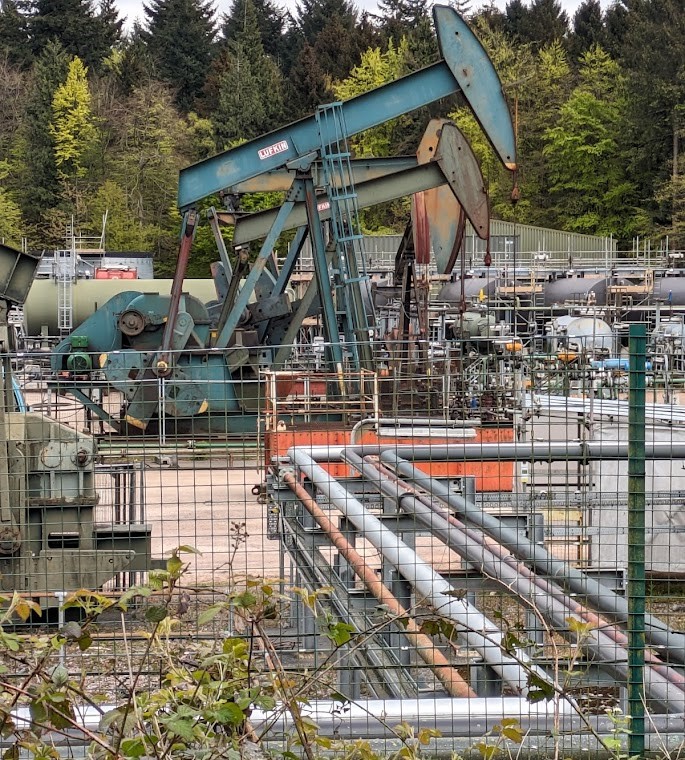
The company has applied for permission for an underground power cable from the oil and gas site at Singleton to the electricity distribution network.
It already has consent for two large gas generators at the site north of Chichester.
The application aims to reduce flaring and venting (burning and deliberately releasing) gas produced alongside oil at Singleton.
Some residents and local campaigners have long urged Star Energy to stop flaring and venting at Singleton.
They have also questioned why Star Energy is seeking permission for the cable now, given that consent for hydrocarbon extraction at Singleton expires in under seven years.
A public consultation on the cable proposal is open for comments. It runs until Tuesday 25 February 2025. The application number is: SDNP/24/05114/FUL. Comments can be submitted online.
Proposals
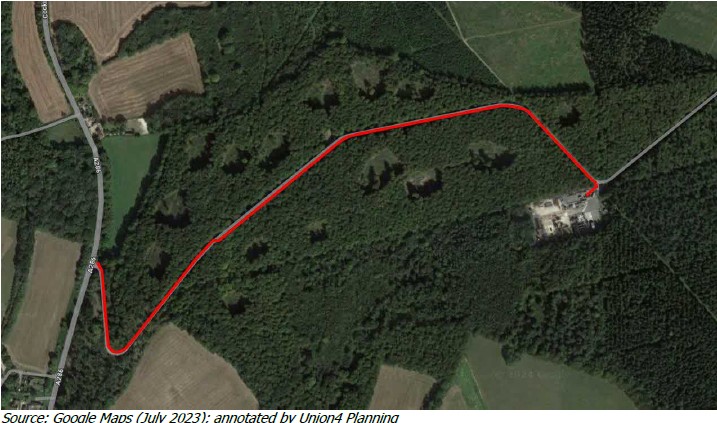
The application, if successful, would allow Star Energy to dig a 1m wide trench up to 1.2m deep to carry the 11kv electricity cable.
The cable would run in 6m long sections of duct from the site along the 1.5km access track through Singleton Forest to an existing transformer box at the junction with the A286.
From there, though not part of the application, the cable would go to a substation at Midhurst to the national grid.
Gas at Singleton
Singleton produces about 0.8-1.1m standard cubic feet of gas a day, Star Energy has said.
The gas is likely to be largely methane but could include volatile organic compounds (VOCs).
Some of the gas is currently used to generate electricity to run the site. The remainder is mostly flared. The site’s environmental permit specifies no limit on the volume of gas that can be flared.
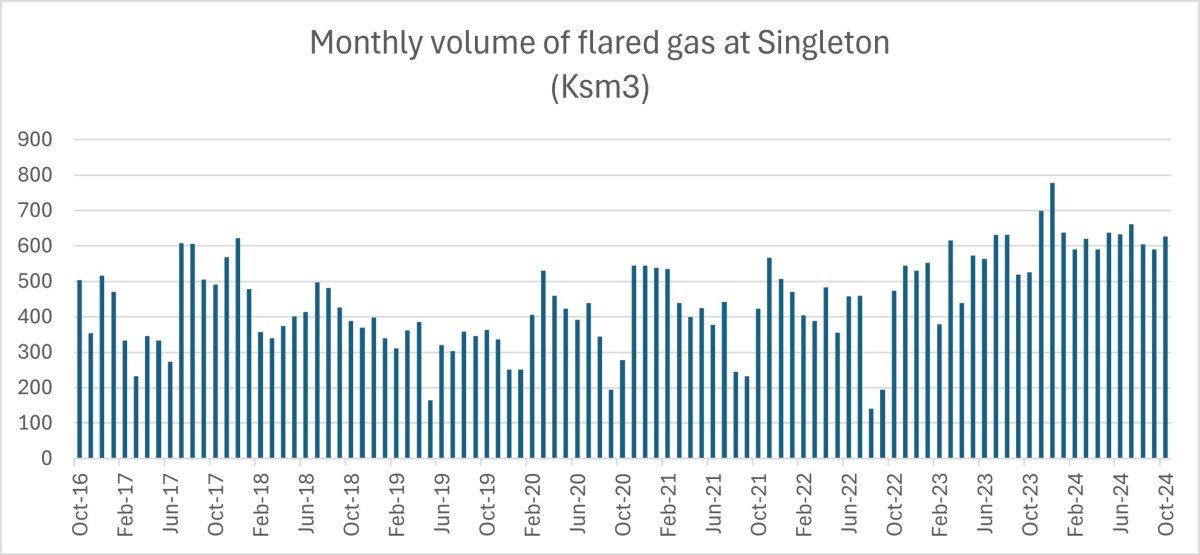
Official data shows that in the eight years from October 2016-October 2024, the site flared 43,372ksm3 (thousand standard cubic meters). In the same period, Singleton reported it vented 252ksm3 of gas.
But research by the Clean Air Task Force, using infrared cameras, also revealed evidence of methane leaks at Singleton from tanks, joints and pipes. DrillOrDrop articles from 2022 and 2024.
The UK has committed to zero routine flaring and venting at onshore and offshore sites by 2030.
Star Energy has had planning permission to generate electricity from gas at Singleton for more than 30 years.
It received consent to export compressed gas by tanker in 2008. A gas-to-wire project at Singleton was initially approved nearly 25 years ago. Neither scheme was implemented.
In October 2023, the company received consent for two larger generators, which required a higher capacity cable, leading to the current application.
The company said:
“The proposals will allow the export of the majority of the electricity generated on site, to the National Grid and ultimately will facilitate the cessation of gas flaring.”
Reaction
Emily Mott, of the Weald Action Group, said:
“Since 1993, operators have had permission to use gas associated with oil production at Singleton, yet for over 30 years, millions of tonnes of dangerous methane—enough to power thousands of homes—and other toxic VOCs [volatile organic compounds] have been recklessly vented and burned into the atmosphere.
“While we welcome Star Energy’s belated decision, their gross negligence has fuelled climate change which its wreaking havoc on the planet.
“We hope the Environment Agency will step up their game with robust emissions monitoring at onshore oil and gas sites. We are looking forward to restoration of the site as per planning in 2031.”
Derek Stewart Smith, of Singleton Forest Watch, who lives close to the site, has concerns about noise from the generators:
“Planning Permission has been granted by South Downs National Park Minerals Authority for two new 2.2 Mw generators at the Singleton oil well.
“The generators will create a high volume of sound (129dBA) and will require considerable attenuation to prevent disturbance to the local residences situated nearby the oil well.
“The generators will burn methane which has been allowed to be freely vented without restriction since the first oil well was drilled in 1988.
“There are six production wells, all producing oil, but the oil company has never considered it economic to take the gas away from the site and has opted to either burn it in the on-site flares or vent it freely into the atmosphere.
“The Environment Agency has never made any attempt to have the gas taken away for reprocessing and reuse. In fact it has issued a Permit allowing unlimited amounts of gas to be freely vented without restriction.
“Whilst the two generators will reduce the amount of greenhouse gas being disposed of at the site, any gas not consumed by the generators will still be vented or flared. thereby continuing to contribute to global warming.
“The Planning Permission granted for the installation and operation of the generators fails to make it mandatory for the noise levels to be fully attenuated so as not to disturb the local residents.
“Chichester District Council is the responsible Authority for noise prevention and a request has been made for the noise levels to be monitored to ensure the local residents will not suffer any disturbance.”
Updated 5/2/25 to include extension to deadline for comments in public consultation.
DrillOrDrop has closed the comments section on this and future articles. We are doing this because of the risk of liability for copyright infringement in comments. We still want to hear about your reaction to DrillOrDrop articles. You can contact us by clicking here.
Categories: Regulation, slider

 DRILL OR DROP?