The Texan company behind news of a giant gasfield in Lincolnshire confirmed today it is targeting shale.

Media reports earlier this month referred to drilling in “ancient mudstones” in the area around Gainsborough.
But today, at what was billed as the formal launch of the discovery, the chair and chief executive of Heyco Energy Group was clear about the target.
Speaking at conference organised by Lincolnshire County Council, George Yates described the Gainsborough Trough – the geological area under focus – as a shale basin.
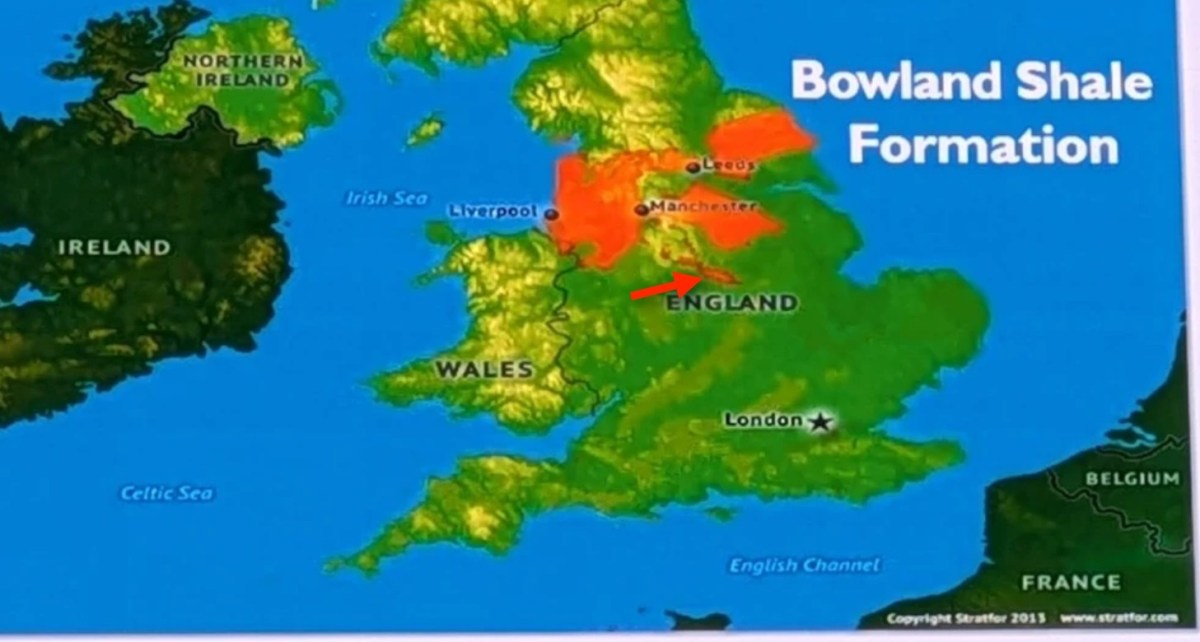
Extracting the gas would require fracking, currently covered by moratoriums in the UK
Less than half of Mr Yates’ 15-minute talk was about the Gainsborough gas discovery and he declined to do media interviews.
Mark Abbott, the managing director of Heyco’s subsidiary, Egdon Resources, which has licence interests in the Gainsborough Trough, also declined to answer questions.
New information
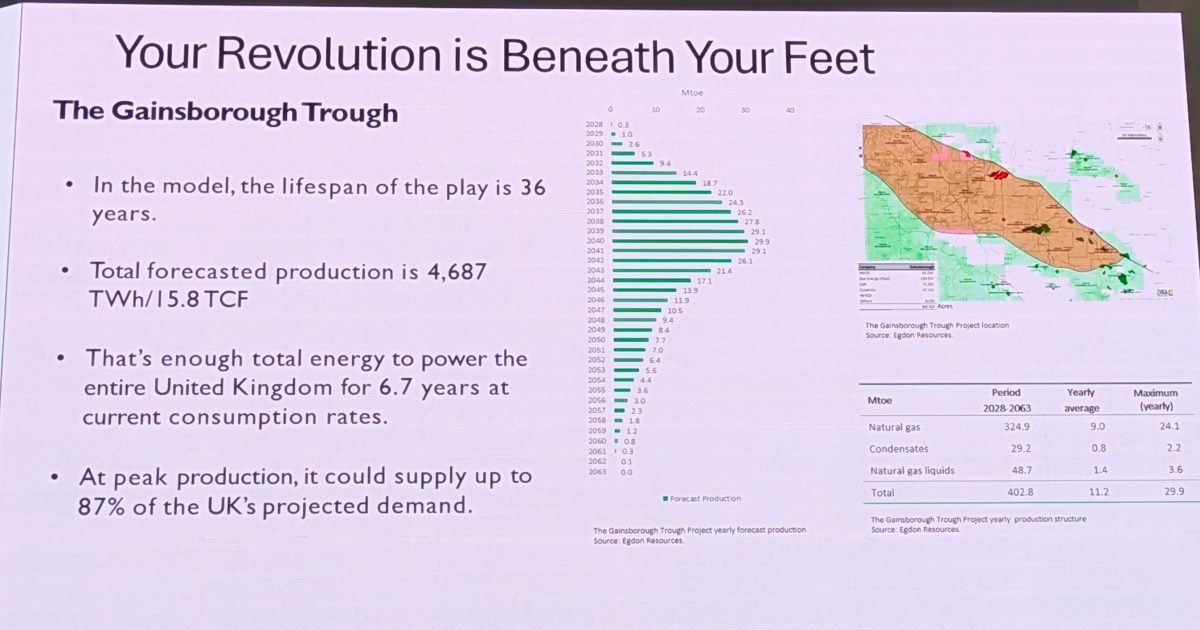
The presentation had estimates that had not been published in the previous media reports. Mr Yates said the Gainsborough field could deliver:
- 36 years of production, ramping up quickly with a long tail
- Total production of16 trillion cubic feet would be enough to meet entire UK gas needs for 6.7 years at current consumption
- 87% of UK gas demand could be met by Gainsborough in its peak production year
- 250,000 jobs created (direct and indirect)
- £1.4m contribution to national insurance
- 16.27 trillion cubic feet reduction in gas imports



The figures were from an economic assessment by Deloitte. Mr Yates described the results of the assessment as “outstanding”.
Asked about what development of the Gainsborough field would mean for UK gas prices, Mr Yates said:
“I am very confident about price declining in the UK. They’re really set to do it with the right policies that support volumes.”
He confirmed the Gainsborough Trough discovery had been proven by Star Energy’s Springs Road shale gas well at Misson in Nottinghamshire. This well was plugged and abandoned in 2024.
Referring to UK imports of liquified natural gas (about 27% of total UK gas imports), he said:
“The UK is already in the shale gas business. It is just not developing its own resources and it is buying retail instead of wholesale nor is it reaping any of the benefits like security and low prices”.
Much of the rest of Mr Yates’ of the presentation was about shale gas development in the US.
Amanda Suddaby, a member of SOS Biscathorpe, a group opposing Egdon Resources’ oil production plans in Lincolnshire, attended the conference. She said:
“It’s very disappointing that Lincolnshire County Council seem to be platforming something that goes against the moratorium on fracking in England and against legally-binding net zero targets.
“What we heard from George Yates wasn’t new. We’ve heard claims like this before about jobs and cheap energy. It’s typical of the oil and gas industry’s hype. It often amounts to very little or nothing at all in reality.
“Any claims that projects like this could reduce energy prices should be viewed with a huge pinch of salt because the soaring price of gas and our dependency on it are at the root of our high energy bills.
“The price of gas is set by international markets, over which we have no control. The best way to lower energy costs for people is to tackle energy waste, insulating leaky homes and rapidly scaling up home-grown renewables, which part of the conference seemed to be about. We have some of the best wind resources in the world, which will provide us with energy security as we strive towards a safer climate.”
Ms Suddaby added:
“We’ve had the debate about fracking already. Experts were consulted at length on the issue of fracking in the UK, which is entirely different in terms of geology and space to the United States. It was established that fracking is linked to earthquakes and it’s not appropriate in a densely populated country like the UK at any meaningful scale.
“Of course the industry will try to say that fracking is safe. They’ve done that before. And we’ve had independent research that came to the conclusion that it cannot be done safely in this country.
“They should not ignore the bigger picture that any exploitation of fossil fuels is positively dangerous in a climate crisis.”
DrillOrDrop has closed the comments section on this and future articles. We are doing this because of the risk of liability for copyright infringement in comments. We still want to hear about your reaction to DrillOrDrop articles. You can contact us by clicking here.

 DRILL OR DROP?