Another council has voted unanimously against plans to drill for gas at Burniston in North Yorkshire.
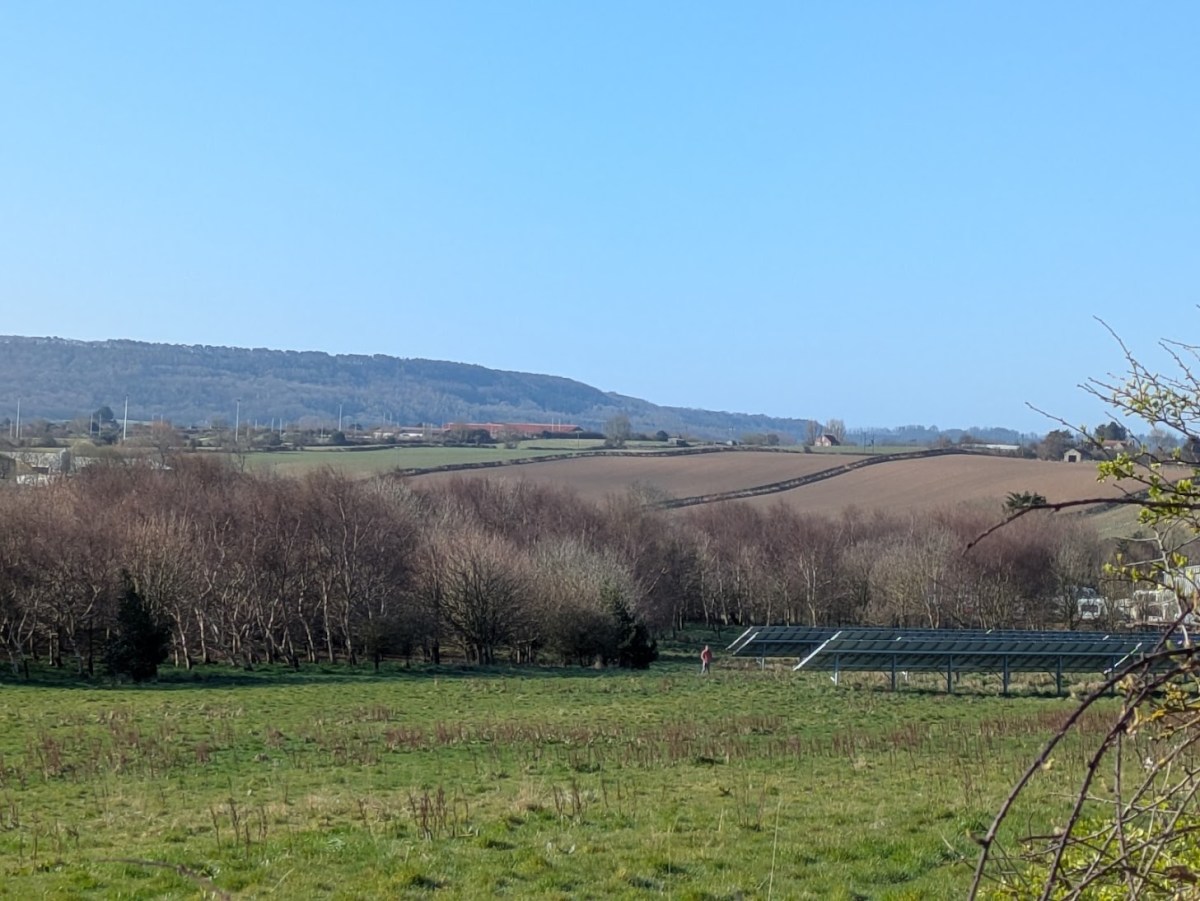
Last week, Burniston Parish Council voted by eight to nil to object to the scheme by Europa Oil & Gas.
Last night, nearby Newby and Scalby Town Council voted by 10 to nil to oppose the plans.
The town council’s extraordinary meeting discussed a 17-page report on the impacts of drilling the exploration well and carrying out a proppant squeeze, a small-scale form of hydraulic fracturing.
Newby and Scalby “strongly urged” North Yorkshire Council, which will decide the application, to refuse planning permission.
It said the application site was not “an appropriate location for this development, since it would have multiple unacceptable impacts on the local communities and the environment, which should be afforded a high standard of protection”.
Key issues
Hydraulic fracturing, seismicity and geology
The town council said:
“Many local residents have expressed their concerns about the risks of hydraulic fracturing at the application site, given the known fragility of this part of the coast, where there have been recent cliff-falls and landslips, and the known location of nearby faults, in particular the Peak Fault. Europa have given no indication in their application that they have considered these risks or produced any evidence addressing concerns about prediction and management of induced seismicity.”
The town council’s report also mentioned the Iron Scar and Hundale Point to Scalby Ness Site of Scientific Interest close by. “This scientifically valuable site should not be put at risk by development for hydraulic fracturing”, the council said.
Traffic
The application estimated there would be a total of 1,154 two-way heavy goods vehicle (HGV) journeys, averaging about eight or nine a day. The vehicles would be delivering construction materials, equipment and water and removing waste.
The town council said:
“The Town Council believes that the assumed level of HGV traffic in the planning application represents a significant increase on the present level of traffic using the Mill Yard site and that the application does not demonstrate that the proposed development would not give rise to an unacceptable impact on local communities, businesses and other users of the highway.”
It said Europa’s plans did not appear to have made suitable arrangements for on-site manoeuvring, parking and loading or unloading.
It also questioned whether the A165 was “safe and suitable” for the nature and volume of traffic generated by the site. The site access opens onto a 60mph single-carriageway road on a bend and opposite a garden centre.
The council was concerned about the impact on other road users:
“Footpaths in Burniston are narrow and are well-used by pedestrians, including children walking to and from school. Local residents have expressed fears that an increase in HGV traffic arising from this application could represent a danger to pedestrians, including from exhaust emissions and traffic noise.”
On the site access, the town council said it was unrealistic of Europa to say no changes would be needed:
“To allow for access of HGVs to construct and operate the site, it would be necessary to straighten and widen the access track, involving the removal of most if not all of the trees on the northern edge of the access track, and to lay an appropriate roadway some twelve to eighteen inches deep.”
It also said there was not enough room for a single HGV to access the site without removing existing trees.
Landscape
The proposed site is in the North Yorkshire and Cleveland Heritage Coast and close to the boundary of the North York Moors National Park.
The drilling rig would 38m high, half as tall again as Scarborough castle, the town council said, and twice the height of Scarborough Pier lighthouse.
It said the proposals were “certainly not compatible with the special character of the Heritage Coast”.
Duration
Europa has described its plans as short-term. But the town council said “the application should be considered as a long-term development of the site”.
It said Europa had indicated that if gas was available in commercially-viable amounts, the Burniston site would be exploited for 10-20 years and the company would apply for long-term planning permission
Farmland
The town council said it was concerned about:
“the potential for adverse effects on the agricultural land from particulate emissions, for example from flaring or engines, from leakage of chemicals and waste from the site and in particular from damage to the aquifer and water sources.”
It said it was not safe to approve the application because no guarantees could be given against adverse effects.
Missing information
The council also said the application did not include information on induced seismicity and geology, as required by planning policies.
The council said it was “simply too dangerous to approve” the application without:
- comprehensive 3D seismic survey
- confirmation of suitable geology
- compelling evidence that induced seismicity can be managed to an acceptable level
- detailed assessments confirming the security of the sub-surface structure of the site, the local aquifer and the SSSI
Air quality and noise
The town council described the results of Europa’s noise monitoring as “misleading”.
The company said the nearest homes were 350m-530m away. But the council said this was incorrect. Wayside Farm, for example, was about 200m from the site and Bridge Close was 320m.
The North Yorkshire Minerals Plan recommended a 500m separation distance between homes and hydrocarbon sites using hydraulic fracturing.
The company predicted the highest level of noise would be 51dB at Flatts Farm but no predictions were given for Wayside Farm or Bridge Close, the town council said. It called on North Yorkshire Council to commission its own assessment of baseline noise levels at homes nearest the site before deciding the application.
The town council said the Cinder Track foot and cycle path, as well as surrounding farmland, were also within the recommended separation distance from the site. It noted there was no air quality monitoring plan or health impact assessment in the application.
The town council also said that residents were not convinced by Europa’s conclusion that effects of pollution from site generators and burning gas would be “negligible” and “insignificant”.
It said:”
“information supporting the application does not bear careful scrutiny nor robustly demonstrate how in site-specific circumstances an unacceptable degree of adverse impact can be avoided.”
It called for an independent assessment of baseline air quality levels at homes nearest the application site, at the Cinder Track and surrounding farmland.
Other concerns
Lighting – Europa’s proposals were “quite inappropriate” for this edge of village rural location and would represent an unacceptable impact on the amenity of local residents, the town council said. The site would also “adversely impact on views from the National Park and impinge on dark night skies, detracting from the special qualities of the area.”
Ecology – Europa’s ecological appraisal was “disappointing”, the town council said, “in that the field survey appears to have been undertaken on a single day in June 2024”. The appraisal did not record many bird species reported by a local ornithologist on one day in March 2025. It also did not record deer, hares, badgers and foxes often seen around the site, the town council said.
Economic and social benefits – the town council described as “tenuous as Europa’s argument that the site would bring positive benefits to the local economy. There was no guarantee that local companies and suppliers would be used, it said. The town council acknowledged that the site could help reduce reliance on imported gas but it said it did not “believe this outweighs the disbenefits of the proposed development to our local communities”.
Greenhouse gas emissions – the town council questioned whether Europa’s assessment of emissions from construction and operation of the site complied fully with last year’s Supreme Court judgement in the landmark case brought by Sarah Finch on onshore oil and gas. Europa should have assessed the impact of emissions from burning gas produced at the site over its 20-year lifetime, it said.
- Responses to North Yorkshire Council’s public consultation are still being published online. DrillOrDrop is analysing all the published responses and will report on reaction to the planning application.
DrillOrDrop has closed the comments section on this and future articles. We are doing this because of the risk of liability for copyright infringement in comments. We still want to hear about your reaction to DrillOrDrop articles. You can contact us by clicking here.
Categories: Opposition, slider

 DRILL OR DROP?