The South Downs National Park has approved plans to route a high voltage cable from the Singleton oil site through ancient woodland to a connection with the national grid.
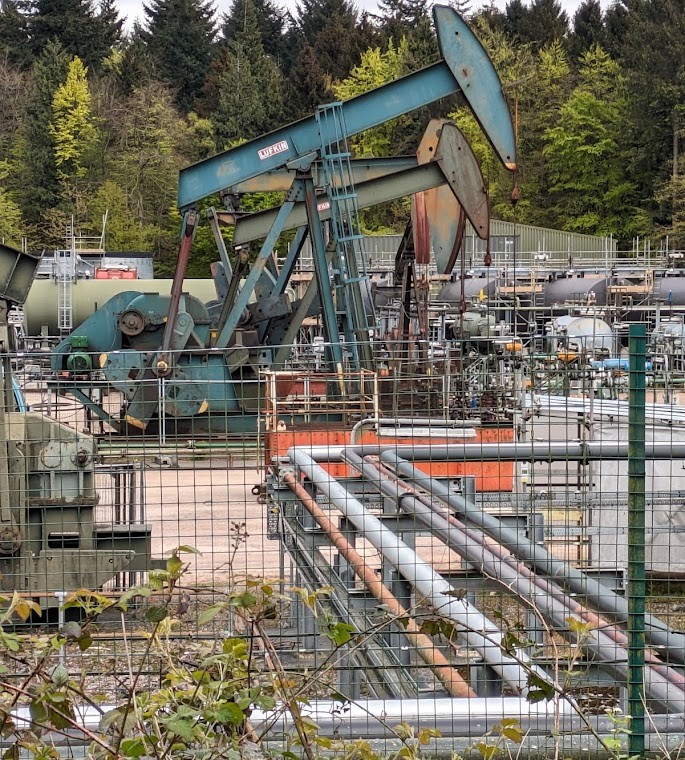
The park’s planning committee voted unanimously this afternoon to back the scheme, allowing the export of electricity generated from gas produced along with the oil.
The meeting heard that the cable would be buried 1.4m deep under the centre of the site’s access track for 1.4km to the A286 road. The work was expected to take three weeks.
Planning officers said the proposal would not result in the loss or damage to trees in the ancient woodland. The scheme would conserve the character and appearance of the area, they said, and was “acceptable in terms of neighbourhood amenity and highways safety.”
But there were objections to the proposal from the local parish council, environmental groups and some residents.
Philip Maber, who lives less than 1km from the Singleton site, described the scheme as a “mini power station application”.
Speaking to the committee, he said electricity generation at Singleton had “serious risks”. The fire risk was high, he said, and there would be severe noise pollution from the generators.
He also said burning the gas in a flare (flaring) or releasing it into the atmosphere (venting) would continue at Singleton in emergencies. But he said the definition of emergency was “vague” and enforcement was “uncertain”.
Emily Mott, of Weald Action Group and Singleton Forest Watch, told the committee the application was a “last ditch attempt to justify oil production”.
“Singleton is an aging oil site, not designed for gas production.”
The site began oil production in 1990. It currently extracts about 2% of UK onshore oil and less than 0.05% of total UK oil.
Ms Mott described the application as “misleading”. She said it was being presented as “minor amendment”, linked to previous successful applications for installing generators at Singleton.
But without the pipeline, the generators could not operate, she said.
“This is salami slicing to avoid proper scrutiny [of a full environmental impact assessment]”.
She said producing electricity from gas was not decarbonisation and it would not lower carbon emissions.
The committee heard that planning conditions required the full restoration of Singleton by 2031. Ms Mott said:
“By the time the infrastructure is built, only a few years will remain.”
The committee was also told that the two Singleton generators could produce 4,400kW of electricity but only 2,000kW could be accepted by the grid.
Ms Mott said unless all the electricity generated at the site was routed to the grid, the connection was a “cable to nowhere”.
Jonathan Rowlatt, speaking for the Singleton operator, Star Energy, said there would be no negative impacts from the cable and concerns about the application had already been addressed.
Categories: Industry, Regulation, slider

 DRILL OR DROP?