Long-awaited annual accounts for UK Oil & Gas plc show a £35m drop in the value of the company’s oil and gas assets.
The accounts, due six months ago, were released at 6pm yesterday – exactly a year after the end of the 2024 financial year.
Share trading in UKOG had been suspended when the accounts were delayed. The company announced today that the suspension had been lifted.
The accounts revealed that the value of the company’s oil and gas interests in the UK and Turkey had all been impaired.
The company’s chief executive, Stephen Sanderson, said the impairment reflected UKOG’s transitioning from oil and gas to hydrogen storage and geothermal energy. He said:
“With this transition at the forefront of our mind, the Company decided that it was correct to impair its petroleum assets at this point so that the decks are clear for the Company’s clean power future.”
Horse Hill
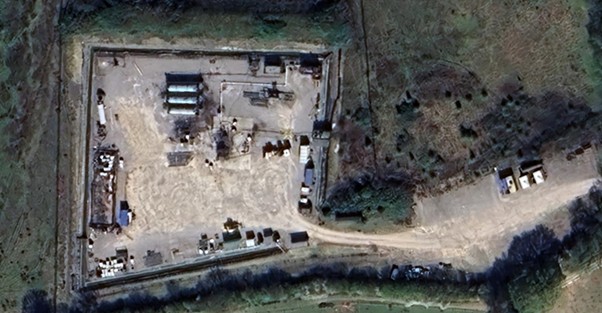
UKOG now has interests in just one UK oil production site – Horse Hill in Surrey. But this is currently shut-in after the Supreme Court quashed planning permission in a landmark climate ruling.
The accounts said UKOG expected to submit a new planning application for Horse Hill later this year and restore production in the first half 2026, if permission were granted.
They also said that if Horse Hill production resumed, oil was likely to flow at higher rates because of a build-up of reservoir pressure during the shut-in. Revenue from the site would contribute to UKOG’s clean energy projects, they added.
The accounts also suggested that the impairment of Horse Hill, UKOG’s most valuable oil asset at £20m, could be reversed in future.
Other sites
In July 2025, UKOG announced the sale of a subsidiary, which had small stakes in its other production sites at the Horndean and Avington fields in Hampshire.
The company failed to find a farm-in partner for its proposed gas site at Dunsfold/Loxley in Surrey and gave up the exploration licence, PEDL234, in June 2025.
That licence also included the Broadford Bridge site, which has no planning permission and has been mothballed for more than seven years.
The accounts said UKOG was working with Ceraphi Energy to develop an agricultural geothermal scheme using the Broadford Bridge borehole. The proposal would need planning permission and consent from the oil industry regulator, the North Sea Transition Authority. UKOG said it aimed to conclude an agreement with Ceraphi by the end of this year.
“Material uncertainty”
UKOG’s independent auditor said the group required additional funding to the final quarter of 2025 to meet ongoing cash requirements. This could be met from an equity placing and/or a credit facility. But the auditor said:
“there can be no certainty that such sources of funding will be obtained in the timeframes necessary”
The directors said:
“in order to both maintain its ongoing status as a going concern and to further progress its Clean Power and hydrogen storage projects the Group anticipates the need to enact an already advanced number of financing initiatives during the next 6 month.”
They said there “can be no absolute assurance that the funding initiatives will complete as planned or that the forecast inflows will materialise when required.”
They acknowledged:
“These conditions represent a material uncertainty that may cast significant doubt on the Company and the Group’s ability to continue as a going concern.
Key figures
Revenue from oil production: £1.1m (2023 1.5m)
Impairment of exploration and evaluation assets: £32.5m (2023 £402,000)
Operating loss: £37.8m (2023 £3.5m)
Loss before tax: £37.8m (2023 £4.1m)
Group loss for the year: £0.1m (2023 £0.3m)
Admin expenses: £2.8m (2023 £3.3m)
Net current assets: £2.1m (2023 £37m)
Net cash outflow: £1.8m (2023 £2.9m)
Cash and cash equivalents: £1.0m (2023 £1.9m)
Average daily production: 45 bopd (2023 92 bopd)
Fees and salaries: £456,000 (2023 £507,000)

 DRILL OR DROP?