The government said today there was no evidence of risk from lower volume fracking.
This suggests, for the first time, that the government’s proposed ban on fracking will not include lower-volume processes, such as proppant squeeze.
Ministers have committed to a full ban on high volume fracking, which is currently covered by a moratorium in England.
But until today, it was unclear whether ministers would extend the ban to forms of fracking not in the scope of the moratorium. Environmental campaigners had described this as a legal loophole.
The moratorium was introduced in 2019 after fracking at Cuadrilla’s Preston New Road site in Lancashire caused multiple earthquakes, some felt across the region. The moratorium prevents operations that use (or expect to use) more than 1,000m3 of liquid per fracking stage or 10,000m3 in total. The volume thresholds are defined in the 1998 Petroleum Act
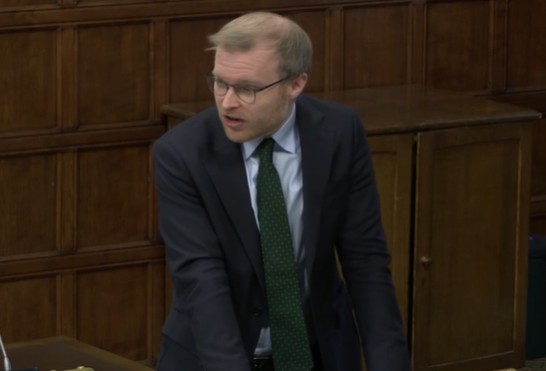
The energy minister, Michael Shanks, told a Westminster Hall debate this morning:
“the evidence base is not there at the moment, to suggest that low volume hydraulic fracturing activities have the same associated risks as fracking for shale gas.”
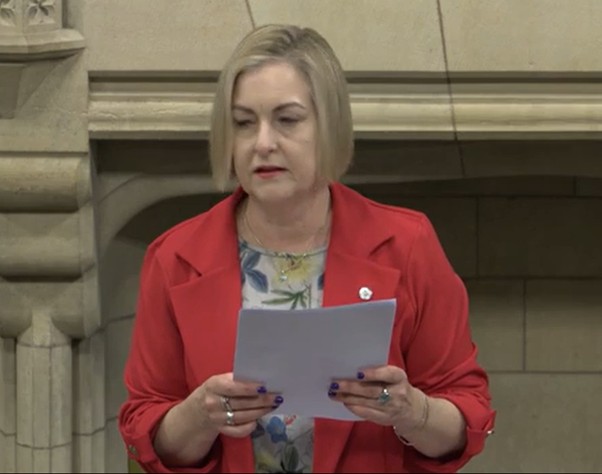
The debate was introduced by Alison Hume, the Labour MP for Scarborough and Whitby, who is fighting proposals for lower volume fracking by Europa Oil & Gas at Burniston in her in North Yorkshire constituency.
She said the legal fluid thresholds were “arbitrary and unhelpful”. She said:
“all forms of fracking carry significant risk with regards to seismicity, irrelevant of the volume of liquid proposed.
“Proppant squeeze carries the same intent and the same risks as higher volume fracking. It is fracking in all but name.”
She called for the legal volume definition to be replaced with “a flat prohibition”. She also said the government should consider amending planning legislation to prevent applications for any form of fracking. She said:
“if the government wants to ban fracking, it must be comprehensive and it must amend the definition of fracking to include smaller scale volumes of fracking.”
But Mr Shanks said there were just a “small number” of operations” that were currently outside the scope of the moratorium.
He said he would keep the legal volume definition under review.
Mr Shanks said he acknowledged “real concerns” from communities about lower-volume fracking:
“I don’t discount [these concerns] for a second.
“I do want to hear those concerns from across the country and I remain very open-minded, as does my honourable friend, my honourable friend, the Secretary of State, to new evidence coming forward to look at this definition.
“But for obvious reasons, it is important the government makes policy decisions based on evidence that can stand up to scrutiny if they were ever challenged in court. And so that evidence base is absolutely critical.”
He said he was “open to receiving objective evidence, from wherever that may come from, and we will review that”.
The debate had heard that Europa’s proposed fluid volume at Burniston is higher than the highest daily volume injected at Preston New Road before earthquakes suspended operations at the site.
Ms Hume said seismologists had warned that UK geology “responds unpredictably to even small injections”. She said:
“Any fracking contains risk, regardless of fluid volume.”
Reaction
Alison Hume told DrillOrDrop this afternoon:
“Proppant squeeze is fracking in all but name. I welcome the Government’s commitment to outlawing fracking at higher volumes, however it must go further and close the loophole that enables oil and gas companies to frack at lower volumes too. We know that small-scale fracking comes with multiple risks, including earthquakes, and contributes to climate change.
“I welcome the Minister’s commitment today to continue to review the evidence around small-scale fracking and remain open to new evidence. I will continue to campaign for a comprehensive ban on fracking and present any new evidence to the Minister around the harms associated with small-scale fracking. I hope that the Government’s requirement for more evidence does not mean we have to wait until the damage has been done to prove that all forms of fracking are harmful.”
In Burniston, the parish council chair, Richard Parsons, said:
“I have had the opportunity to listen to the Governments position on hydraulic fracturing as clarified by Mr Shanks today. We now know that lower level fracking, will not be included in any forthcoming changes to legislation.
“Mr Shanks has made it very clear he needs new evidence before changing the level at which the current moratorium is set.
“What Mr Shanks did not make clear was where he expects that evidence to come from. He leaves us with the impression that our communities can be used as guinea pigs in the process. Instead of ensuring that those who wish to carry out hydraulic fracturing provide the evidence that their processes are risk free, he seems content to allow our communities to bear the risk and if it all goes wrong, he might have a look at it again.
“This position is one of weakness. Quite simply all he needs to do is change the legislation to put the onus on those who wish to carry out hydraulic fracturing. If they can provide the evidence to prove their processes are safe for all, beyond all reasonable doubt, then its fine. If they can’t do that, they won’t be allowed to carry out their proposed hydraulic fracturing.”
Frack Free Coastal Communities, the group campaigning against Europa’s plans, said:
“Michael Shanks has, for the first time, stated clearly that low volume fracturing including proppant squeeze is not going to be within the forthcoming legislation to ban fracking. This will only cover high volume hydraulic fracturing for shale gas.
“This is very disappointing but at least we have the clarity we lacked before. He ‘remains open minded’ but will need to see new ‘objective evidence’ that low volume fracturing carries similar risks before reviewing this position. In the meantime, we can rely on the planning system, EA, NSTA, HSE to keep us all safe!”
Steve Mason, of the umbrella campaign group, Frack Free United, said the moratorium was imposed because of lower volume fracking at Preston New Road.
“The minister has fallen into the semantic trap set by the oil and gas companies. Stop defining lower volume fracking as something different. Fracking is fracturing rocks to release oil and gas, regardless of volumes.”

 DRILL OR DROP?