
Drone footage of Tinker Lane, Nottinghamshire, 2 January 2019. Photo: Eric Walton
This post has live updates from the parliamentary debate on government proposals to fast track fracking plans.
In May last year, the government announced plans to classify non-fracking shale gas sites as permitted development. This would allow operators to avoid the need for a full planning application and bypass the normal local authority decision-making process.
Ministers also proposed to designate major shale gas production sites at Nationally Significant Infrastructure Projects (NSIP). This would mean decisions would be made the local government secretary, rather than local councillors.
Today’s debate is the first time the proposals have been discussed in the main chamber of the House of Commons.
Statement from campaign groups
In a joint statement after the debate, Friends of the Earth, CPRE, FFU, 350.org, 38Degrees and SumofUs said:
“There have been 57 earthquakes in Lancashire since fracking started. Yet the government wants to rip up the planning rulebook and fast-track fracking without community consent.
“Today MPs from across the political spectrum voiced their outrage at these plans and condemned the fracking industry for attempting to weaken vital earthquake regulations.
“This industry is bad news for our climate, environment and local democracy, and proposals to fast-track fracking should be thrown in the dustbin where they belong.”
5pm: Verbal vote
The House votes in favour of the motion that it has:
considered use of permitted development and the nationally significant infrastructure project regime for shale gas exploration and production.
4.59pm: Wera Hobhouse, Lib Dem, Bath
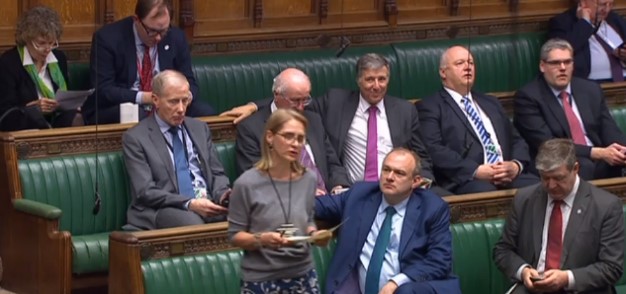
Wera Hobhouse, 28 March 2019. Photo: Parliament TV
Concluding the debate, she says fracked gas is a fossil fuel. She urges the government:
“Ditch fracking”
4.51pm: Kit Malthouse, housing minister

Kit Malthouse, 28 March 2019. Photo: Parliament TV
Mr Malthouse says no final decision has been made on whether to bring forward the proposals.
The consultation responses are being considered. They are part of a range of measures to speed up decisions on shale gas schemes, he says.
Sir Clive Betts asks the minister how decisions would be speeded up.
Mr Malthouse says permitted development would not apply to fracking schemes or affect regulation by the Environment Agency, Health & Safety Executive or the Oil & Gas Authority.
There could be controls on noise, height of structures or locations.
Kevin Hollinrake asks whether permitted development would allow developers to establish a well pad anywhere they wanted. Mr Malthouse says the consultation asked this question.
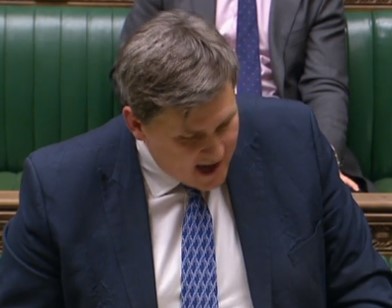
Kit Malthouse, 28 March 2019. Photo: Parliament TV
Communities should continue to be involved in planning decisions, he says.
we understand that communities feel that they are often not consulted closely enough before planning applications are submitted by developers to the local planning authority. That can lead to opposition to developments and a longer application process.
A separate consultation was launched by the government on compulsory pre-planning consultation, he says. Responses are also being considered.
Domestic gas production has a role to play in future energy supplies. There are potential benefits from the safe and sustainable exploitation of shale gas, he says. Decisions should be faster and fairer, he adds.
We remain expressly committed to ensuring that local communities are fully involved in planning decisions that affect them and to making planning decisions faster and fairer at the same time. We have now delivered on our promise to consult on how best to develop our planning processes for both the exploration and production of shale gas development, while ensuring that communities remain fully involved. We are currently considering the responses from those consultations and will respond in due course.
4.44pm: Roberta Blackman-Woods, shadow planning minister
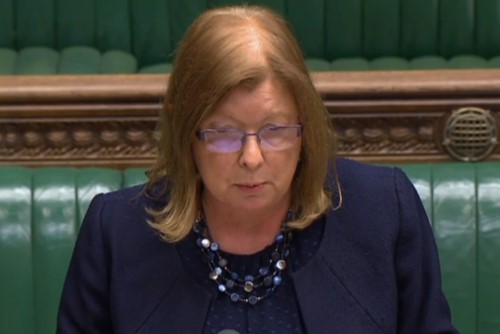
Roberta Blackman-Woods, 28 March 2019. Photo: Parliament TV
Ms Blackman-Woods says: “The Government should accept that fracking is both dangerous and exacerbates global warming.”
She says
In Labour’s opinion, fracking should never be allowed, and it should certainly not be approved via permitted development or the nationally significant infrastructure projects regime instead of achieving local planning permission.
The proposals bypass the local decision-making process and local people. It would be reckless, she says.
Currently, shale gas schemes need to go to the full planning system which analyses the impact on land use and communities. This should continue, she says.
The consultation on permitted development did not make it clear whether the impact on agriculture, safety, heritage, flooding or safeguarding land would be analysed or protected under the permitted development regime or what conditions might be required to be met.
She quotes the conclusion of the Royal Town Planning Institute:
“Blanket permissions for shale gas exploration in England are completely unsuitable and fly in the face of good planning”.
She asks where are the responses to the consultations on permitted development and NSIP.
We know most of the responses are against the permitted development proposal. Some have called this an “affront to democracy”, she says. People who live nearby have a right to be heard.
The permitted development proposal would fundamentally undermine the planning process, she says.
A permitted development right for shale gas exploration would fundamentally undermine the local planning process and stop councils consulting on issues that are relevant to frackingapplications, such as the potential for seismic activity, which we know has actually happened, and water pollution; the disposal of waste water; well construction and integrity; and water availability.
These serious areas of concern have not been addressed by the government.
The government should think again about the proposals and about fracking itself, she says.
Community and environmental groups have opposed the proposals but the government has ploughed on, she says. Labour will ban fracking and invest in renewables. We strongly urge the government to refuse the NSIP regime and permitted development for fracking.
4.38pm: Deidre Brock, SNP, Edinburgh North and Leith
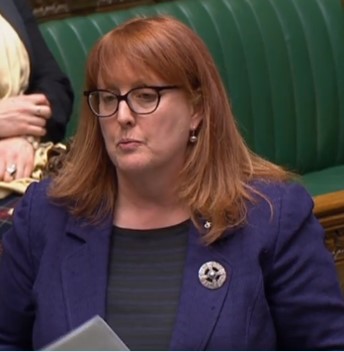
Deidre Brock, 28 March 2019. Photo: Parliament TV
She says extravagant claims are made about fracking and shale gas benefits. The government must balance this against evidence on climate change.
These are genuine concerns because there is evidence of impacts from other countries. There are calls for bans in the US and it has been banned in the Netherlands.
She says the UK government could learn from what she calls the cautious approach of the Scottish government.
“Perhaps a more thorough regulatory regime will reduce the likelihood of some of the worst public health and safety hazards that we have seen in the States and elsewhere, but frankly I would not trust this Government to ensure that the checks and balances were robust enough, and the rewards are simply not worth the risk.”
She says:
“the UK Government seem intent on slashing red tape and fast-tracking fracking through the planning process, bypassing local democracy and those pesky protestors who get in the way of things. I do not have a lot of faith in the Government to put public interest before that of big business.”
No amount of regulation will prevent shale gas being a new source of greenhouse gas emissions. Climate change is the biggest crisis that the planet is facing, she says.
She says school children are fed up of politicians who are stuck in the past, robbing the next generation of its future.
She says there is a long way to go to move away from fossil fuel dependence. Onshore fracking is the wrong direction for energy policy, she says.
There is a majority against fracking in the Scottish parliament, she says. She urges the UK government to put an end to this “damaging dash for gas”.
4.35pm: Matt Rodda, Labour, Reading East
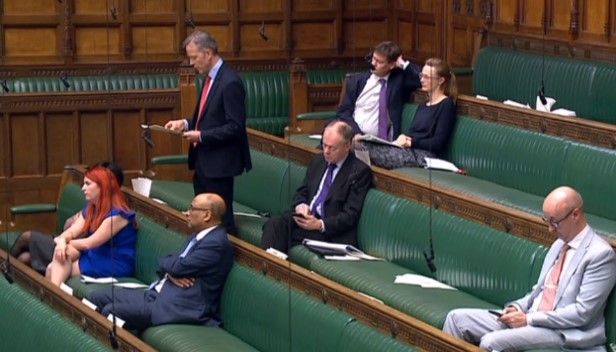
Matt Rodda, 28 March 2019. Photo: Parliament TV
We face a stark choice if we are not to face unstoppable climate change, he says. We have to stop exploitation for shale gas.
He says there are deep concerns about the local environment, particularly noise and the impact of major infrastructure projects. The very last thing the constituency needs is a major threat, he says.
He supports the concerns about the weakness of the planning system and the lack of government investment in renewable energy.
We have 12 years left to reduce carbon emissions. Communities have serious concerns about fracking.
Shale gas exploitation has to stop and stop now.
4.33pm: Geraint Davies, Labour, Swansea West
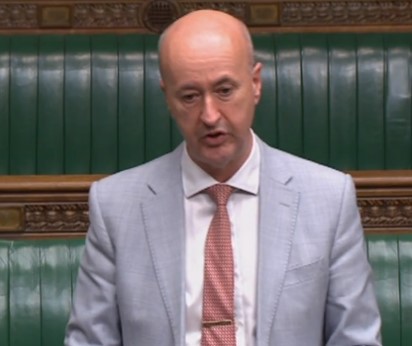
Geraint Davies, 28 March 2019. Photo: Parliament TV
He says we cannot go forward with fracking and fulfil our Paris Agreement on climate change. There are also issues of water quality and usage, he says. We don’t have the infrastructure to treat fracking fluid, he says.
Mr Davies says following Brexit, multinational companies will fine the UK if it tries to stop them from fracking.
4.30pm: Justin Madders, Labour, Ellesmere Port and Neston
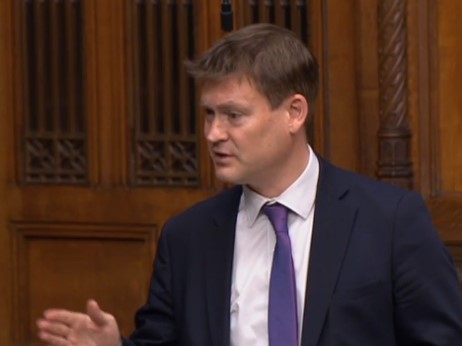
Justin Madders, 28 March 2019. Photo: Parliament TV
He says there is a growing consensus across the country against the proposals. They would make it easier to establish a shale gas site than a two-bedroom semi-detached house, he says.
The proposals read like a wish-list from the fracking companies.
How can the government’s fine word on climate change be consistent with the proposals on permitted development, he asks.
We are sleepwalking into a climate catastrophe. We need to shift away from fossil fuels now. If we don’t do it, it will be the next generation that suffers, he says.
4.27pm: Sir Clive Betts, Labour, Sheffield South East
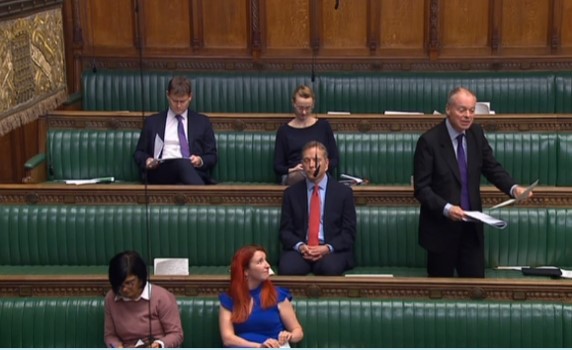
Clive Betts, 28 March 2019. Photo: Parliament TV
Sir Clive says the local government select committee opposed the permitted development proposals. Local communities should not be excluded from the planning process, he says.
He says NSIP would not speed up the application process. He says Lancashire County Council had to ask Cuadrilla for more information five times – the delay was not the council’s fault, he says.
Listen to the weight of opinion across the chamber, he says. It is a row-back from localism.
4.23pm: Kevin Hollinrake, Conservative, Thirsk and Malton
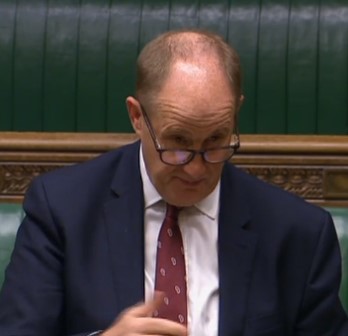
Kevin Hollinrake, 28 March 2019. Photo: Parliament TV
Mr Hollinrake says he does not oppose locally–produced shale gas. But he says he is against permitted development for these sites.
He says gas has a future. He is concerned about impacts on his constituency. He says it is compatible with the landscape if it is done properly with clear planning guidelines.
He says most people in his constituency do not know gas sites are there.
There should be government-backed remediation plan. Landowners should not have to pick up the tab, he says.
I am against NSIP and permitted development. It is the wrong thing to do. The government should withdraw its plans.
4.21pm: Thangam Debbonaire, Labour, Bristol West
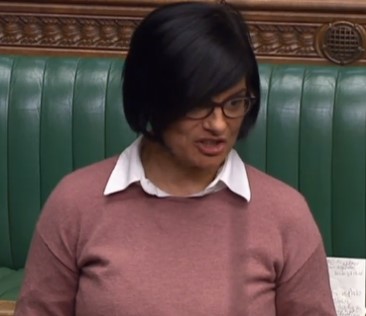
Thangham Debbonaire, 28 March 2019. Photo: Parliament TV
She says she will not be able to look the next generation in the eye about what she had done to prevent climate change if fracking went ahead.
She says every single decision we take should be considered on the basis of what it does to prevent climate change.
4.16pm: Lee Rowley, Conservative, North East Derbyshire
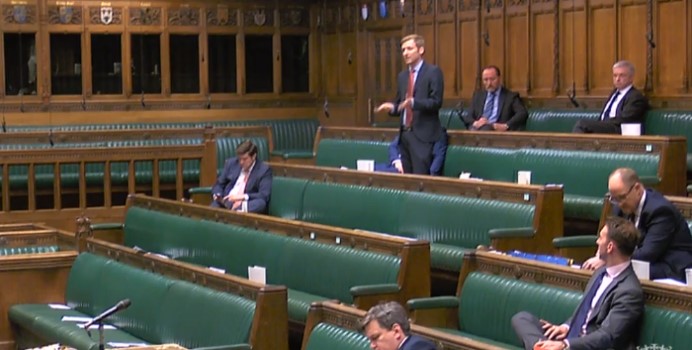
Lee Rowley, 28 March 2019. Photo: Parliament TV
Mr Rowley says there is a cross-party consensus that there is a problem with fracking in the UK. There is no majority for permitted development or NSIP for fracking and probably not for fracking at all.
He says he came to fracking as an agnostic. But he says when you start to unpick fracking it starts to fall apart. If the prospectus does not work we should put our effort into something else.
“If there was a traffic light system to be applied today in this house, it would be flashing red that there is no majority for permitted development.”
Mr Rowley says:
Fracking does not have a place in our future energy mix. The government should abandon it.
There is a people-problem, he says. As knowledge increases then opposition increases.
We have to give local communities their own say. The community in Marsh Lane in my constituency should not have to accept the industrial site in the greenbelt and lorry movements in their community.
He reads to the chamber the infrastructure that Ineos proposes to put on the site at Marsh Lane. He says the field next door had been rejected for a car boot sale.
4.14pm: Louise Haigh, Labour, Sheffield Heeley
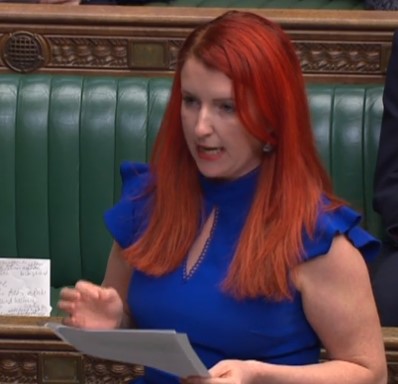
Louise Haigh, 28 March 2019. Photo: Parliament TV
She says the government has been taken in by the experience of the United States.
But she says fracking in the UK will live or die in the Bowland shale. One well has been introduced in this basin and this has been dormant because of fracking. Many million people live in the basin, she says.
“There can be no pretence to localism when the government is riding roughshod over the voices and rights of local authorities and local people.”
She says it is not too late for the government to rethink its approach.
4.10pm: James Heappey, Conservative, Wells
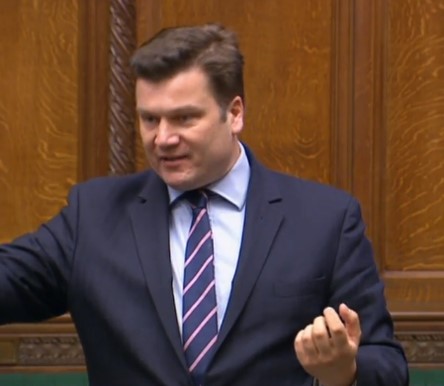
James Heappey, 28 March 2019. Photo: Parliament TV
He says he opposes fracking because he doesn’t accept the energy policy arguments.
He says there is a role for gas but not for fracking the UK energy mix because of the rapidly decreasing costs of renewables and storage and an upsurge in finds in the North Sea.
There are many more exciting opportunities if the government would just ditch fracking.
4.04pm: Sir Ed Davey, Lib Dem, Kingston and Surbiton
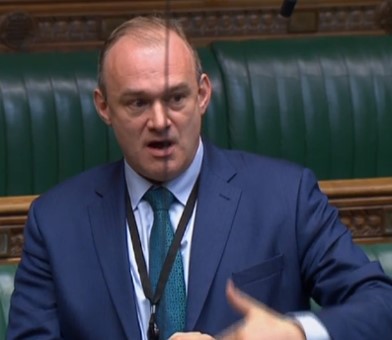
Sir Ed Davey, 28 March 2019. Photo: Parliament TV
Sir Ed Davey, as a former energy secretary in the coalition government, says he was cautious about shale gas. It had to be sensible regulated, he says.
Controls on seismicity and planning are in danger of being taken away, he says.
On the seismicity regulations, the coalition took evidence from scientists. We needed a precautionary approach because the experts were telling us that even a small seismic event could damage the borehole.
It was important to give that reassurance to the public and we decided we would go ahead but only with that cautious approach.
At the time, the coalition said it could look at the regulations in future, Sir Ed says. But he adds that a review had to be evidence-based. We have had very few fracking experiences. We don’t have anywhere near enough evidence to review that limit, he says.
He says he has got more sceptical about fracking over the years. After Paris, we have to got to push the renewable agenda further.
Without carbon capture and storage there is much less argument for fracked gas. With advanced renewable technology means we will need fracked gas.
“The relaxation of regulation, whether on seismicity or planning, is completely unjustified.”
He says permitted development is unnecessary. The case for fracked gas is much much weaker than it was a few years ago.
3.57pm: Nick Herbert, Conservative, Arundel and South Downs
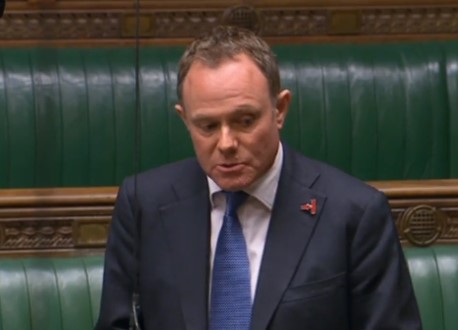
Nick Herbert, 28 March 2019. Photo: Parliament TV
He says there is oil extraction in his constituency. The sites are located sensibly and people do not get excited about them, he says.
Public interest in fracking in West Sussex is concerned about below-ground activity – impacts on ground water – and above ground – effects of traffic. People get most concerned when they are worried about large amounts of traffic.
A proposal for drilling at Wisborough Green was refused because of the impact of lorry movements on rural roads.
Mine concern is whether permitted development is appropriate for oil and gas exploration, he says. He doesn’t oppose permitted development in principle, he says.
The government’s proposal was in the manifesto, the chamber is told. Mr Herbert says other manifesto proposals have not seen the light of day:
It would be wise to keep in the bottom drawer firmly locked away
Local authorities should be able to decide proposals like this in their areas, Mr Herbert says.
There is no non-controversial way of generating energy in our country.
Large scale solar panels can excite just as much controversy as drilling.
I do not have an in principle objection to extraction of oil and gas, he says.
“There is concern about the potential random industrialisation of the countryside. We cannot allow that by one tick in a ministerial box.”
There has to be the ability of local authorities to decide on issues like traffic and put conditions on it, he says. The existing planning regime should be retained. This is not a proportionate or sensible policy.
3.50pm: Sir Mark Hendrick, Labour, Preston
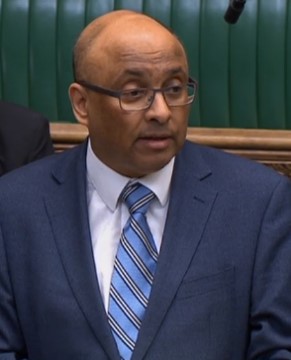
Sir Mark Hendrick, 28 March 2019. Photo: Parliament TV
He says he was originally agnostic about shale gas in Lancashire.
He says in April and May 2011, Blackpool experienced tremors because of fluid injection into a fault zone. Cuadrilla had mapped out of the faults and this would never happen again, Sir Mark says.
Cat Smith, Labour, Lancaster and Fleetwood, says her constituency are concerned that the traffic light system of regulations should remain.
Sir Mark says his constituents feel the same. The regulations require fracking would stop if earth tremors reached 0.5ML. Ed Davey was the energy secretary when the regulations were announced. He promised tough regulations, Sir Mark says.
Things turned out rather differently, he says. Sir Mark there have been earthquakes when Cuadrilla fracked recently He says the people of Lancashire have had enough.
The British Geological Survey have said the limit could rise to 1.5ML. That is not what was promised, Sir Mark says. Other scientists have said it could be raised higher. That is not acceptable, he says.
3.42pm: Mark Menzies, Conservative, Fylde

Mark Menzies, 28 March 2019. Photo: Parliament TV
Mr Menzies represents Fylde where Cuadrilla is fracking for shale gas at Preston New Road.
He says it was a former Labour government that put in place shale gas operations in Fylde.
Sir Ed Davey, Lib Dem, Kingston and Surbiton, (below right) says the coalition government put in place controls on shale gas operations.
Mr Menzies says permitted development is appropriate for a house conservatory, not an industrial site with thousands of truck movements.
He welcomes the refusal of permission for Cuadrilla’s proposed Roseacre Wood site. The traffic management plan did not work, he said. This reason would not be under consideration under permitted development.
For a reason why this proposal does not stack up, just turn to Roseacre Wood, he says.
Sir Greg Knight, Conservative, East Yorkshire (right), says to be consistent with wind farms, the government should not change the planning rules for shale gas.
Mr Menzies agrees that permitted development for shale gas would undermine public trust in the planning system. The proposal should be taken off the table because it is not sensible. The planning system should be reviewed to stop decisions dragging on for years.
There should be guidelines for what would be a suitable site for shale gas, he says.
Shale gas should only play a part if there is robust regulation and not something that is done to local communities.
Permitted development should not be a tool used by the shale gas industry, Mr Menzies says
3.30pm: Wera Hobhouse opens the debate
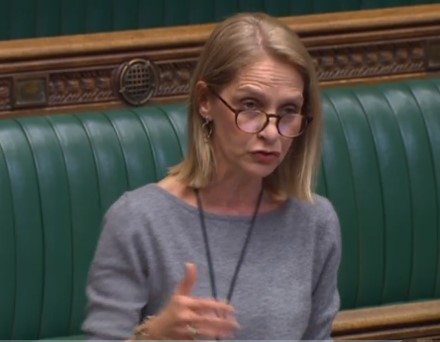
Wera Hobhouse, 28 March 2019. Photo: Parliament TV
Ms Hobhouse, Lib Dem, Bath, says two Westminster Hall debates on the issue showed that parliament had a view and wanted to be heard.
She says the government proposals are bad idea for two reasons.
Local communities would be deprived of a voice and supporting fossil fuels would contribute to climate change.
Kevin Hollinrake, Conservative, Thirsk and Malton, suggests that shale gas would displace imports.
Ms Hobhouse says this is the wrong argument. Shale gas is a fossil fuel.
Bill Esterson, Labour, Sefton Central, says:
“My local authority has now twice voted overwhelmingly against fracking in nearby West Lancashire, which affects my constituency as well, but the authority’s views are completely ignored by the approach the Government are taking. Does that not demonstrate that significant local interests should be taken on board?”
Stephanie Peacock, Labour, Barnsley East, says constituents don’t want fracking and should be listened to.
Ms Hobhouse says the UK was a leader in decarbonisation but is falling behind. She says the industry waste water and threatens the hot springs in her Bath constituency.
Kevin Hollinrake, Conservative, Thirsk and Malton, says the issue is where the gas comes from. He asks whether Ms Hobhouse’s house is connected to the gas main.
Ms Hobhouse says her home is connected to a community energy scheme. She says fracked gas is a fossil fuel and we should be investing money to renewable schemes.
Matt Western, Labour, Warwick and Leamington, says new homes being built now have gas boilers when they could have had heat pumps.
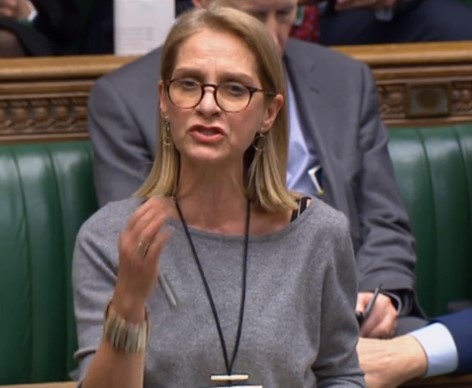
Wera Hobhouse, 28 March 2019. Photo: Parliament TV
Ms Hobhouse says fracking in the US has resulted in contamination of the water table. She says the government policy will take decisions out of local authority control.
Geraint Davies, Labour, Swansea West, says methane leaks from shale gas sites makes fracking worse than coal for global warming.
Ms Hobhouse says the local government select committee opposed the government’s proposals. She says 300,000 people have signed petitions against the proposals.
She says shale gas sites do not meet the criteria nationally significant infrastructure. Along with permitted development rights, this would take decisions away from local communities, bypassing those that are most affected.
The government favours fracking over renewables, she says. We have 12 years to complete the transition away from fossil fuels, she says. We must reinvest in renewable energy, she says. Communities across the county are asking for investment in renewables. We need a carbon zero target at our core. The government has gone in the opposite direction.
The government cannot prioritise big oil over climate change, Ms Hobhouse says. There is no time to lose.
Categories: Politics

 DRILL OR DROP?
Well, hope it gets better! Not a good start.
Indeed not a good start. Totally ignorant and irrelevant contribution from Hollinrake.
Thank you Ruth for your very detailed and well constructed report.
I see there are efforts by those who fear the result to plunge the debate once more into personalised abuse and deliberate division and ego fest.
The Brexit debacle shines out like a beacon of intelligent sanity compared to the anti anti antics we see here.
Now all we need, is a….
Fraxit!
Ordure! Ordure!
[Edited by moderator] Home Produced Fossil Fuels since the industrial revolution have transformed the global economic landscape, You cannot turn just off the lights with the flick of a switch. And expect without energy, that switch never be switched on again, imagine kiving a life at night in darkness, that dinner was never cooked and that house may never be warm!
That Planes stopped flying and that car you drive could not pick up the children from school, FACT!
The Climate has been changing since the dawn of time! Heard many earthquakes, erupting volcanos latterly, which produced lots of carbon in to the atmosphere! No so much anymore…
Eli-Goth – I couldn’t agree more – Ms Hobhouse clearly doesn’t have a strong background in energy in general and fracking in particular.
Renewables can never replace the amount of energy produced by oil, gas and coal. From the comments of some of the MPs, it makes one wonder, if they have any idea of where and how energy is produced and electricity is generated.
Object. Admins – Eli-Goth’s contribution is personally abusive, irrelevant and ignorant and should be deleted. Do it!
No leave it – it is good that people should see this kind of attitude which is sadly all too common amongst those backing fracking.
Yes. The attack poodles show themselves up for what they are … besides living in the past.
{Alan] Tootill: personally Abusive to who?, Where?
Do you believe the increasing world population can live on ONLY renewables indefinitely? with no other derivatives of producing / consuming alternative energy?
And that effect i must have touched a nerve. Truth!
P.S. I have earned a Science degree,
how about you?
[Comments removed by moderator]
“abusive to who(m)?”
Why to Ms Hobhouse of course – even the moderator agreed as he deleted your childish insult .
You may *have* a nerve. You haven’t managed manage to touch any.
I see from live TV there are not a lot of MPs present – clearly not high up on the agenda. I count 22.
Should not be granted PD.
For anti antis who have no idea about our North sea supplies. Up and running this year. Coming into your boiler soon.
John P. – culzean is not very big and it will go nowhere near filling the ever increasing gap between the amount we consume and the amount we produce
We can see where John is placing his portfolio!
Good luck with that John, but competition is good-especially for the consumer.
And they are farming down Laggan-Tormore which went way over budget:
“Total will offload a third of its equity in the Laggan-Tormore fields west of Shetland, Reuters reported, citing banking and industry sources.
It also intends to divest stakes in a number of smaller fields bought from Maersk Oil earlier this year, including Golden Eagle, Dumbarton, Bruce and Keith, the report said.
The Paris-headquartered company is currently embroiled in a dispute over pay and rotas with workers on a number of UK North Sea installations.”
Culzean came with the Maersk take over – Total laying off 300 north sea workers as part of the “deal”. Also a fatality after Total took over operatorship.
‘the amount we consume and the amount we produce’…………..and the amount we choose to export.
‘culzean is not very big’……..I consider 5% of UK consumption from 1 new development as substantial.
If culzean is ‘not very big’ what size would you put on the ten second propane burst from PNR?
John – why do you keep trying to deceive people about the amount of gas that the uk can produce from conventional resources – it might fool the simpletons who don’t do this for their day job but it certainly makes you look very silly to those that know about this subject
On your expert knowledge note – “There is no absolute knowledge. And those who claim it, whether they are scientists or dogmatists, open the door to tragedy. All information is imperfect. We have to treat it with humility” Jacob Bronowski, The Ascent of Man. Then John Stuart Mill argued that anyone who only knew their own side of the case knew little of that.
By the way John, which do you think is a bigger HS&E risk – Culzean which is HPHT or onshore UK shale? And which do you think has higher fugitive emissions? Total already has HPHT form in UK North Sea with a huge leak (blow out) at Elgin:
https://www.bbc.co.uk/news/uk-scotland-north-east-orkney-shetland-35159351
Well, that was an exercise in the uninformed masquerading as the informed!
The confirmation, together with Brexit, that boundary change should cull far below 600.
How much do we pay these clowns?
Excellent to see Condervatives opposing the government’s proposals. The numbers will be sufficient to defeat them. The last debate was better attended but given what has been taking place in parliament over Brexit, that isn’t surprising. I have read there are anywhere between 20 and 40 Conservative MPs willing to vote against the government on these planning proposals, which means it will be a dead duck. I certainly hope so.
The problem is that MPs will not have an opportunity to vote against these changes. It’s proposed that the changes to the Planning System will be implemented by Statutory Instrument through a negative procedure, meaning they are not required to be brought before Parliament for a debate or a vote.
So much for Localism and democracy under this government.
Is there a list anywhere of which MPs attended the debate?
5:25:00
Wera Hobhouse MP (Bath, Liberal Democrat)
15:41:22
Mark Menzies MP (Fylde, Conservative)
15:48:57
Sir Mark Hendrick MP (Preston, Labour (Co-op))
15:55:25
Rt Hon Nick Herbert MP (Arundel and South Downs, Conservative)
16:03:00
Rt Hon Sir Edward Davey MP (Kingston and Surbiton, Liberal Democrat)
16:08:21
James Heappey MP (Wells, Conservative)
16:12:29
Louise Haigh MP (Sheffield, Heeley, Labour)
16:19:51
Lee Rowley MP (North East Derbyshire, Conservative)
16:20:22
Thangam Debbonaire MP (Bristol West, Labour)
16:22:18
Kevin Hollinrake MP (Thirsk and Malton, Conservative)
16:25:26
Mr Clive Betts MP (Sheffield South East, Labour)
16:28:25
Justin Madders MP (Ellesmere Port and Neston, Labour)
16:31:20
Geraint Davies MP (Swansea West, Labour (Co-op))
16:34:12
Matt Rodda MP (Reading East, Labour)
16:36:52
Deidre Brock MP (Edinburgh North and Leith, Scottish National Party)
16:42:45
Dr Roberta Blackman-Woods MP (City of Durham, Labour)
16:49:54
Kit Malthouse MP, Minister of State (Housing, Communities and Local Government) (North West
The above all spoke (17)
About the size of my wife’s shopping list Malcolm. (And, she is quite frugal!)
There were also interventions and no more could have been accomodated for in the short 90 Minutes provided for the debate.
A good example of leading by example (to no avail)……
https://www.bbc.co.uk/news/science-environment-47723577
“The World Meteorological Organization (WMO) says that the physical and financial impacts of global warming are accelerating.
Record greenhouse gas levels are driving temperatures to “increasingly dangerous levels”, it says.
Their report comes in the same week as the International Energy Agency (IEA) reported a surge in CO2 in 2018.
However, new data from the UK suggests Britain is bucking the trend with emissions down by 3%.”