The life of a mothballed exploration site should be extended for another two years to allow an oil company to review data from two other wells in southern England, council planners have recommended.
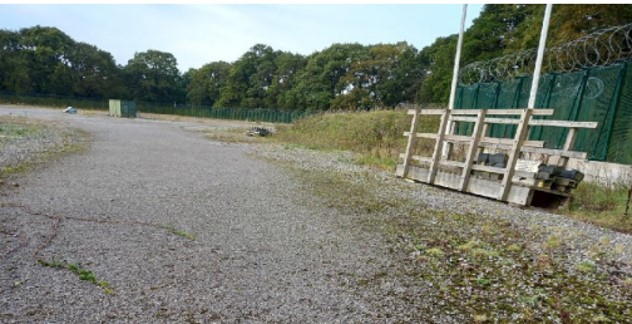
The Broadford Bridge site in West Sussex has been dormant since March 2018 and has already had its planning permission extended four times.
The operator, UK Oil & Gas, wants more time to analyse findings from wells at Horse Hill site, 30 miles away near Gatwick Airport, and at a yet-to-be built site 13 miles away at Loxley, near Dunsfold in Surrey.
A planning application to allow Broadford Bridge to remain until March 2026 will be discussed by West Sussex councillors later this month.
A report by planners, published this evening, said there was a “justified need” for the proposed extension and “the benefits of the proposal outweigh the disbenefits”.
The author, the council’s head of planning services, Michael Elkington, accepted that:
“The proposals would result in the continued retention of a site of an industrial character not wholly in keeping with its countryside location for a further two-years.”
But he said the site was not in a protected landscape, was “well-screened from public views” and was “temporary in nature”. He said “the potential for any negative impact on landscape character is largely limited”.
He also recommended that UKOG should be allowed to keep fencing, gates and cabins at Broadford Bridge until March 2026.
Broadford Bridge first received planning permission for oil and gas exploration in 2013. The well, drilled in 2017, had cement bond problems and UKOG announced in 2018 that sections of the well and surrounding formation could have been damaged.
Objections
A consultation on the extension application attracted 103 comments, all but one of which were objections.
Many objectors pointed to planning policies which require temporary minerals developments to be restored at the earliest opportunity.
But Mr Elkington said:
“There is a need for flexibility to take account of changing circumstances”.
He said at Broadford Bridge there were “mitigating factors”. These included a change of ownership (Celtique Energy to UKOG in 2016) and legal challenges (involving Horse Hill and Loxley), he said.
Objectors also called for UKOG to pay a financial guarantee or restoration bond to prevent the costs falling on the public if the company became insolvent.
Mr Elkington said:
“for minerals projects … financial guarantees are only justified in “exceptional cases” involving very long-term projects, novel approaches or reliable evidence of the likelihood of financial or technical failure.”
He said the industry regulator, the North Sea Transition Authority, reviewed an operator’s financial viability and capacity as part of the licensing process. He added:
“It is not, therefore, considered appropriate to secure a bond in relation to the present applications.”
Mr Elkington said drilling and well testing at Broadford Bridge had been completed and no physical work was planned during the time extension, apart from plugging the well and restoring the site at the end of the two years. He said:
“The applications for an extension of time to enable further detailed evaluation/appraisal of the hydrocarbon resource are considered justified and would not give rise to unacceptable impacts on people or the environment.”
There would be no change to the scheme, he said, “rather a delay as to when it would be carried out”.
- The meeting is on 19 March 2024 at County Hall, Chichester PO19 1RQ, starting at 10.30am. It will be streamed live at: http://www.westsussex.public-i.tv/core/portal/home
Link to planning committee agenda and report
DrillOrDrop has closed the comments section on this and future articles. We are doing this because of the risk of liability for copyright infringement in comments. We still want to hear about your reaction to DrillOrDrop articles. You can contact us by clicking here.
Categories: Regulation, slider

 DRILL OR DROP?