The decision to approve oil production in the Lincolnshire Wolds area of outstanding natural beauty (AONB) was unlawful, the High Court heard today.
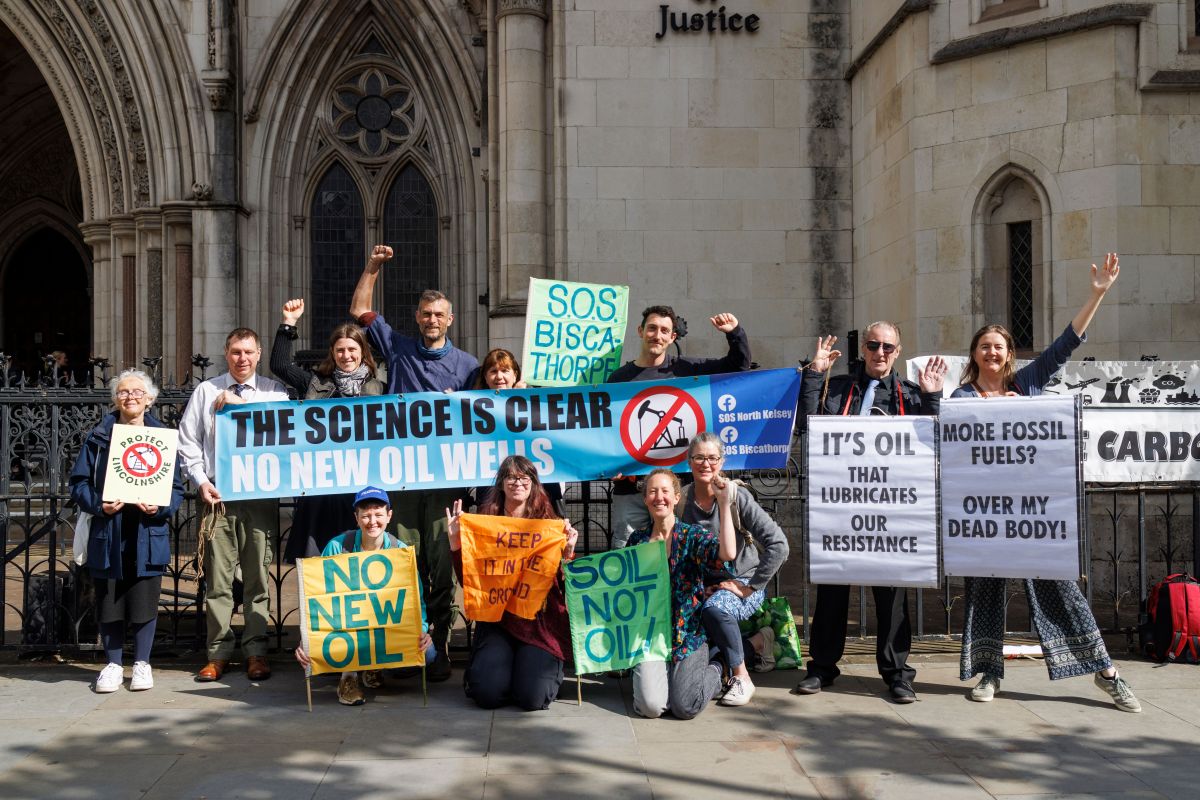
Lawyers for a local campaign group argued that the decision misinterpreted planning policy, used out-of-date law and relied on unevidenced assertions.
SOS Biscathorpe, has been fighting the plans by Egdon Resources for more than 10 years.
It brought a legal challenge against the department of levelling up, housing and communities, over the decision by a government-appointed inspector to allow long-term production at Biscathorpe.
The group’s barrister, Estelle Dehon KC, told the court in London that planning guidance permitted major development in AONBs only in exceptional circumstances and when it was in the public interest.
She said the inspector had misinterpreted the guidance and had failed to consider both these issues together.
The inspector had acknowledged that the Biscathorpe oil resource was uncertain. It would make no contribution to national security if exported and would “make only a miniscule contribution if used domestically”.
Despite this, the inspector said Biscathorpe oil may “reduce output from other countries” and this made the development in the public interest.
Ms Dehon said this conclusion was “supported by no evidence whatsoever”.
She said it was “irrational” for the inspector and the secretary of state to contend that the “miniscule annual amount of oil which may be extracted … could be capable of impacting the international oil market and causing other countries to reduce their output”.

The campaigners also argued that the inspector had not acknowledged a change in the law on how carbon emissions from the use of oil should be considered.
Ms Dehon said the inspector accepted Egdon Resources’ claim that there was no need to consider the greenhouse gas emissions from the use of any oil produced by Biscathorpe, known as downstream emissions.
But at the time of the inspector’s decision, this was out of date, Ms Dehon said.
The issue of downstream emissions has been challenged in the courts in a separate case brought by campaigner, Sarah Finch. The Supreme Court has yet to make its judgement. But the Court of Appeal has ruled that downstream emissions were “legally capable” of being considered as part of the EIA process.
The court also heard that the inspector had not considered the development of renewable energy schemes as a method of contributing to domestic energy production and security that did not involve oil production in an AONB.
The department for levelling up, housing and communities is defending the challenge. In a written submission it told the court that the decision, issued in November 2023, was lawful.
Richard Moules KC, for the department, said the inspector had considered the area’s AONB status but concluded that oil production was in the public interest:
“He recognised the strong policy protection for the AONB and the policy expectation in favour of conserving and enhancing the AONB.”
Mr Moules also said “in the circumstances of this application, development for renewable energy is not an alternative to oil production.”
DrillOrDrop has closed the comments section on this and future articles. We are doing this because of the risk of liability for copyright infringement in comments. We still want to hear about your reaction to DrillOrDrop articles. You can contact us by clicking here.

 DRILL OR DROP?