The recent landmark judgement over the climate impact of oil production is at the centre of the legal challenge, which began today against the UK’s first coal mine for 30 years.
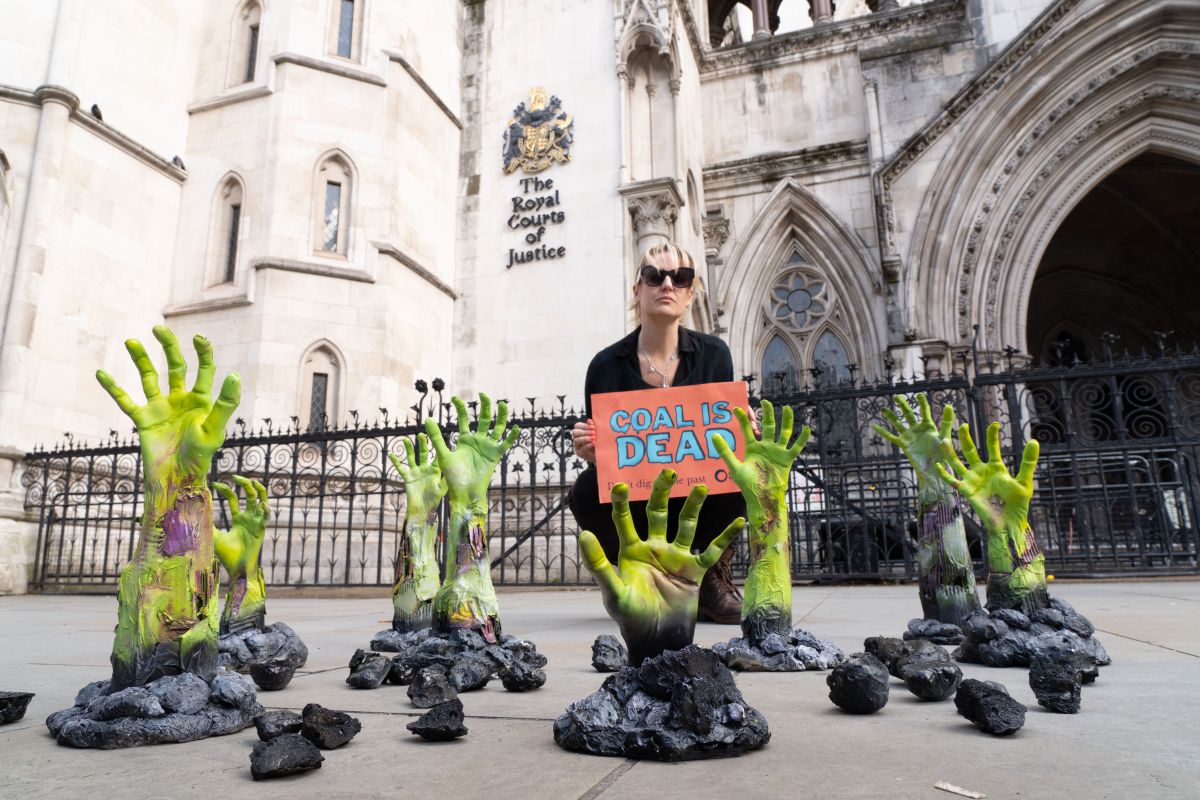
At a three-day High Court hearing, Friends of the Earth and South Lakes Action on Climate Change (SLACC) are arguing that the former levelling up secretary, Michael Grove, acted unlawfully in 2022 when he granted planning permission for the mine at Whitehaven in Cumbria.
He “failed to account for the significant climate impacts of the mine”, they said.
They have called for the planning permission to be quashed for several reasons, including that Mr Gove failed to consider the carbon emissions from burning the coal, amounting to 99% of the mine’s climate impact.
Last week the new government admitted that the permission for the coal mine was unlawful following the Supreme Court ruling on oil production in Surrey. It said there had been an error in law and asked the court to quash the approval of the coal mine.
But the would-be mine operator, West Cumbria Mining, is continuing to defend the planning permission.
Sarah Finch, who brought the Supreme Court case, said before today’s hearing:
“I’m very hopeful that the judge here will recognise that the Supreme Court’s decision on my case has a direct bearing.
“The environmental statement that the mine company have produced should have included those combustion emissions and that is the largest part of a fossil fuel production project.
“They only looked at the production itself which is about 1% of the total emissions. So I hope that my win will mean that this mine is ruled unlawful too.”
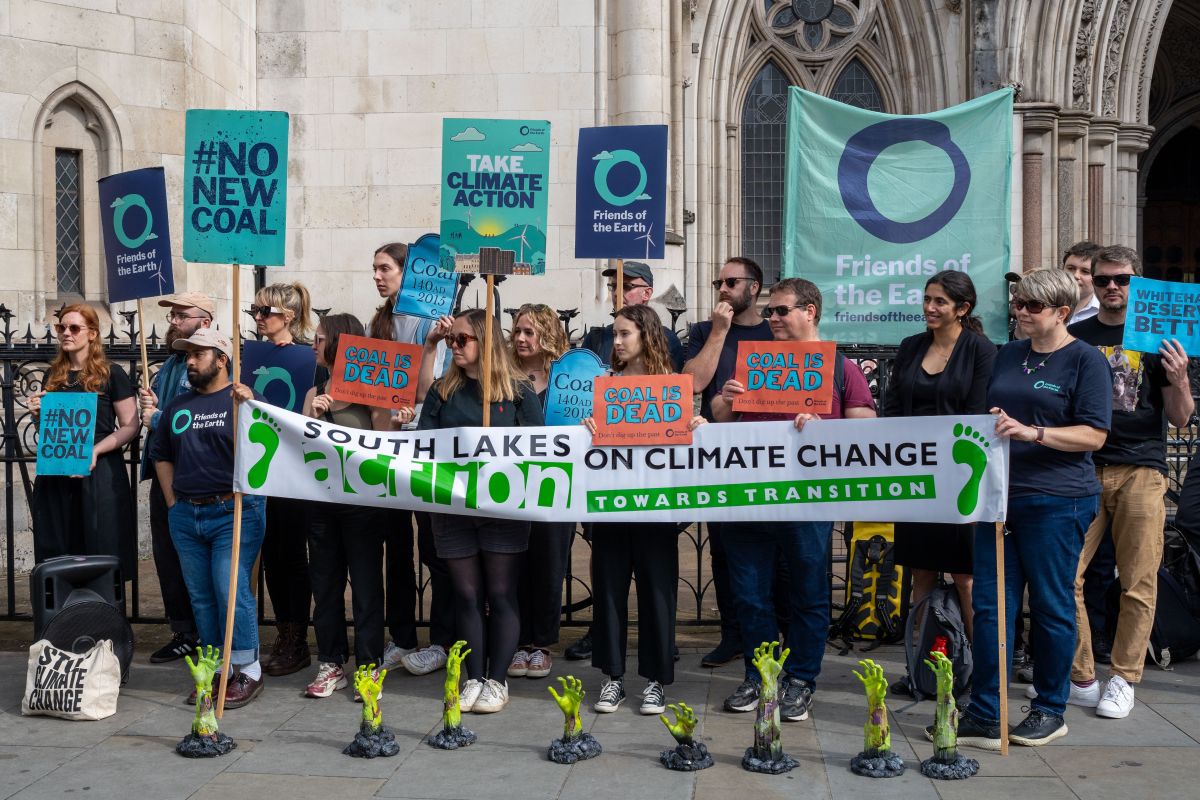
The court heard today that the mine would extract more than 60 million tonnes of coking coal between 2025-2049, at a rate of 2.78 million tonnes a year at full production.
Estelle Dehon KC, for SLACC, said it was “inevitable” that any coal extracted from the Cumbrian mine would be burned.
She said emissions from constructing, operating and decommissioning the mine had been estimated at more than 800,000 tonnes of carbon dioxide equivalent (CO2e), about the same as burning 788m litres of petrol.
Emissions from burning the coal, known as downstream emissions, would be 220 million tonnes of CO2e over the mine’s lifetime, she said. This is more than half the UK’s total emissions for 2022.
She said Mr Gove “fell into error in his analysis of whether downstream emissions of the mine were indirect significant effects of the proposal.”
“Mine diminishes UK’s role as global climate leader”
Ms Dehon also said there had been an error in law in discounting the international impact of granting permission.
The decision had been publicly criticised by the then chair and chief executive of the Climate Change Committee, the chief executive of Energy UK, the CBI’s chief economist, the chair of the National Infrastructure Commission, a former chief executive of British steel and the president of the COP26 climate talks.
Ms Dehon said in submissions to the court:
“The SoS [secretary of state] failed to grapple lawfully with the evidence, given by experts in international climate diplomacy, of the adverse international signal sent by the UK if it granted permission for a new mine. Diminishing the UK’s status and role as a global climate leader and effect of encouraging other countries to permit new fossil fuel developments, increasing global greenhouse gas emissions.”
Friends of the Earth said the decision “smacked of hypocrisy and undermined the UK’s international reputation”.
West Cumbria Mining has argued that the mine would have a net zero impact on the climate because carbon emissions from operating the mine would be offset, where offset credits are bought on the voluntary carbon market, or mitigated.
Paul Brown KC, for Friends of the Earth, described the offsetting scheme as “pure greenwashing”. He said the much larger downstream emissions from burning the coal had been specifically excluded from the offsetting scheme, without explanation.
In granting planning permission, the government said the mine would have a neutral or beneficial impact on global emissions because Cumbrian coal would “substitute” for American or Australian coal.
But Mr Brown said:
“The government said there was potential for a significant degree of substitution but nowhere is that quantified.”
He likened the government’s argument on substitution to a drug dealer’s defence, that emissions were harmful but if West Cumbria Mining wasn’t allowed to cause that harm, someone else would.
SLACC also alleged there had been an unlawful disparity in the way it was treated by the planning inspector and former Secretary of State. Friends of the Earth said the proposed offsetting scheme was inconsistent with government policy and did not comply with best practice.
“No net increase in carbon emissions”
James Strachan KC, for West Cumbria Mining, said in submissions to the court there would not lead to a net increase in greenhouse gas emissions because the use of coking coal extracted from the mine would be driven by demand for steel.
He said the mine’s approval would be positive for Britain’s global standing because it would meet a need for coking coal.
Mr Strachan also criticised some of the arguments in the legal challenge as “poorly disguised attacks on the planning judgements”. He said:
“SLACC’s allegation that the inspector and secretary of state discounted or ignored the international impact of granting permission is simply not credible and flies in the face of the decision.”
The hearing, before Mr Justice Holgate, is due to finish on Thursday. A decision is expected in writing at a later date.
This report was updated on 17 /7/24 with extracts from the West Cumbria Mining’s case due to be heard on the second day of hearing. This was because the remote feed from the court was not working on the second day. We will request a transcript .
DrillOrDrop has closed the comments section on this and future articles. We are doing this because of the risk of liability for copyright infringement in comments. We still want to hear about your reaction to DrillOrDrop articles. You can contact us by clicking here.

 DRILL OR DROP?