The campaigner behind last year’s Supreme Court judgement on climate emissions has called for strict new rules that would prevent most future oil and gas extraction.
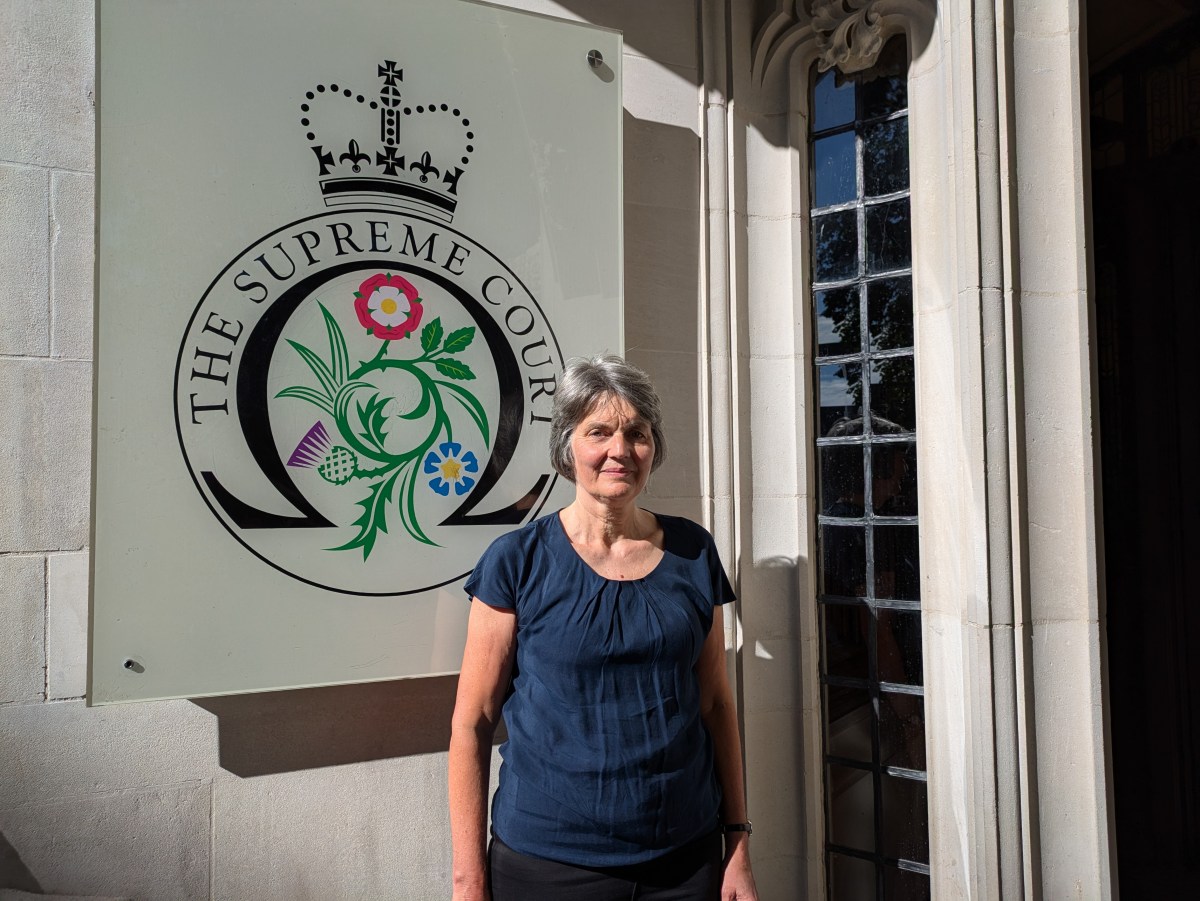
Sarah Finch, who brought the successful case against Surrey County Council over oil production at Horse Hill, was responding to a government consultation on new guidance on assessing emissions from burning hydrocarbons, known has scope 3, downstream or indirect emissions.
She said:
“Decision-makers must have all the facts in front of them so they can properly weigh up the true climate harm of new oil and gas developments.
“I believe the only conclusion to draw from a full and fair assessment of scope 3 emissions is that no new oil and gas fields are permissible in the UK.
“By publishing clear guidance that makes it impossible to allow new oil and gas exploration and extraction, except in truly exceptional circumstances, the UK would send ripples around the world, inspiring other countries to follow.
“That would be a sea change and a giant step towards a safer future.”
Before the Finch judgement, scope 3 emissions were not routinely considered in environmental impact assessments (EIAs) for onshore or offshore oil and gas developments.
Since then, permissions have been quashed for several onshore projects and some offshore schemes look less certain. Details
The government consultation, which closed yesterday, was for offshore oil and gas fields. But Ms Finch said guidance should also be issued for onshore sites.
“I recommend that the supplementary guidance should equally apply to the regulatory regime for onshore fossil fuels.”
But she said:
“The supplementary guidance must ensure a robust EIA regime that does not give developers loopholes to avoid assessing scope 3 emissions or to downplay their impact.”
She said the guidance must not allow developers to use the substitution argument to avoid assessing emissions. This assumes there would be a reduction in oil and gas production elsewhere if a proposed project went ahead. Ms Finch said this argument had been dismissed by the courts.
The Supreme Court judgement said there should also be a presumption that all hydrocarbons extracted would be combusted. It said no pollution control regime or mitigation measures by the developer could be relied on to prevent unavoidable combustion emissions.
“Clarity and consistency”
Ms Finch supported the consultation response from the Weald Action Group (WAG), on whose behalf she brought her legal challenge.
WAG called for “clarity and consistency” for local authorities about how they should assess scope 3 emissions for onshore projects.
The group also criticised parts of the government’s draft guidance, including:
- The proposed baseline for assessing existing emissions is unclear and masks the true climate impact of proposed new oil and gas projects
- Guidance on calculating of scope 3 emissions is overcomplicated by allowing developers to decide how to break down emissions for assessment
- Advice on evaluating the significant effects of scope 3 emissions is too vague and includes factors that are not relevant
- Guidance on the impact of emissions on climate is insufficient and lacks clarity about what is required from the developer
- Requirement to state whether emissions are likely to occur in the UK or elsewhere is irrelevant and should be deleted
- Guidance on the cumulative effects is too narrow and gives no clear information about what should be included
- Mitigation measures must not be used as justification to exclude the full climate impact of a project
- Developers must not be allowed to rely on carbon capture, usage and storage as viable emission mitigation measures
The government is expected to publish the final guidance in March 2025.
DrillOrDrop has closed the comments section on this and future articles. We are doing this because of the risk of liability for copyright infringement in comments. We still want to hear about your reaction to DrillOrDrop articles. You can contact us by clicking here.
Categories: Legal, Regulation, slider

 DRILL OR DROP?