More than 150 small earthquakes in Surrey in 2018 and 2019 might have been triggered by oil operations, according to a new study, published today.
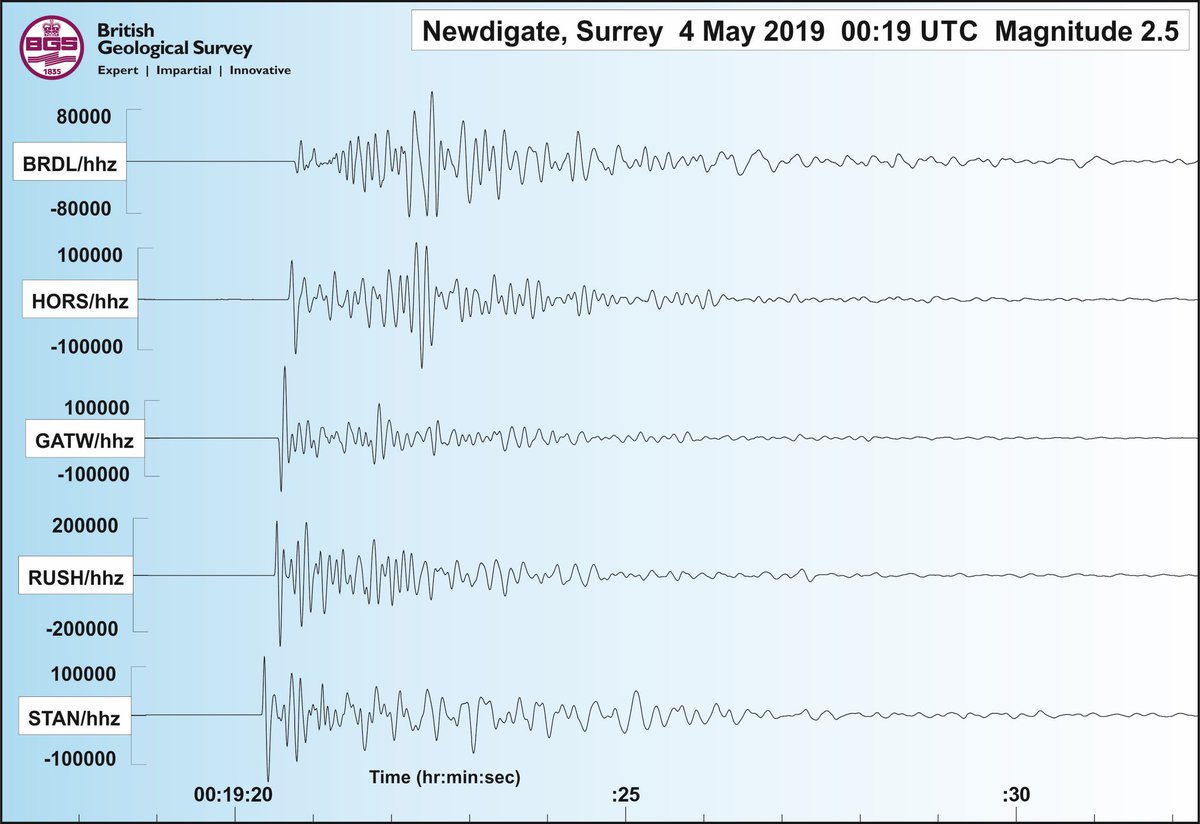
Researchers at University College London found that the earthquakes, centred on Newdigate from April 2018 until early 2019, generally coincided with oil extraction at Horse Hill about 5km away.
The lead author Dr Matthew Fox, said:
“Our study suggests there is a link between the earthquakes and oil extraction at Horse Hill but we cannot rule out that this link is a coincidence. More work needs to be done to understand if this is cause and effect. However, our findings indicate it is plausible that oil extraction triggered the earthquakes.”
The British Geological Survey recorded 168 earthquakes over nearly two years around Newdigate. They measured 1.34-3.18ML.
Residents reported damage to their homes, including small cracks in walls and ceilings, as well as beds and buildings shaking. The largest earthquake was reported by 900 people across an area of about 10km.
Today’s study, published in Geological Magazine, ran more than a million simulations estimating the frequency of earthquakes based on the timing and volume of oil extraction.
It also accounted for the two different rock formations from which oil was extracted: the Portland and Kimmeridge.
The model looked at changes to the fluid pressure in rock from which oil was extracted. Pressure changes can potentially spread underground to intersect a fault. The speed of movement of the pressure change depends on the rock’s permeability.
It showed that extraction from the Portland formation at Horse Hill may produce earthquakes with a delay of a few days. But extraction from the less permeable Kimmeridge may produce fewer earthquakes and with a delay of tens of days.
The study also showed that earthquakes that happened before Horse Hill extraction began could be linked to preparatory work. This could include well activities, such as annular pressure checks in early April 2018. Or the earthquakes could be related to oil extraction at another site, Brockham, 10-20km away, the study said.
The model showed that time delays between fluid pressure changes and linked seismic activity were common in nature.
But it failed to explain the sharp increase in cumulative earthquakes at the time Horse Hill production returned to the Portland. The researchers said:
“This highlights that there is not a simple relationship between pressure changes in the well and earthquake frequency.”
The researchers also said the study highlighted the importance of seismic monitoring of areas where oil extraction might occur before work started.
At Newdigate, seismometers were installed only after the first larger earthquakes. Smaller earthquakes that might have occurred before the instruments were installed would not have been recorded.
The study’s co-author, Professor Philip Meredith, said:
“Caution should be the byword. It is no good saying you don’t have a problem when you potentially do.
“There has been no significant seismic activity in Surrey for decades, so these earthquakes were unusual events. However, unusual events do happen in nature, so we can’t rule out the possibility that the timing associated with the oil extraction was a coincidence.”
The Newdigate area had not previously experienced earthquakes for at least 50 years and the cause of the seismic activity divided geologists.
DrillOrDrop reported in 2018 on a workshop by the then Oil and Gas Authority, which concluded there was no evidence that the local hydrocarbon industry had induced the seismic activity.
But Stuart Haszeldine, professor of carbon capture and storage at Edinburgh University, who attended the workshop, said the earthquakes passed almost all the tests used to decide whether they were induced by human activity.
He and two colleagues at Edinburgh University, later linked the Surrey earthquakes to Horse Hill. They said:
“Our assessment supports the concern that Horse Hill oil exploration triggered the [2018] earthquakes.
“Future oil exploration and production close to critically-stressed faults in the Weald is likely to result in similar earthquake events.”
UK Oil & Gas plc, the parent company of the Horse Hill operator, has always rejected a link between oil operations and the earthquakes. A company spokesperson said:
“This is an incident that was answered and dealt with many years ago when the BGS seismologists were satisfied it was a natural event associated with movement on a deeper unassociated fault many kilometres deeper and distant from the site.
“Our focus is now on renewable energy and the storage of hydrogen in salt caverns in Dorset and East Yorkshire, fully in step with the government’s Clean Power 2030 target.”
Oil extraction at Horse Hill stopped in October 2024 after planning permission was quashed in a landmark legal case. The Supreme Court ruled that Surrey County Council should have considered the full climate impact of production at Horse Hill before approving planning permission.
DrillOrDrop has closed the comments section on this and future articles. We are doing this because of the risk of liability for copyright infringement in comments. We still want to hear about your reaction to DrillOrDrop articles. You can contact us by clicking here.

 DRILL OR DROP?