The UK must swap oil and gas for clean electricity to meet its next set of carbon reduction targets, the government’s climate advisor said today.

The Climate Change Committee (CCC) said that by 2040 UK emissions must drop by 87%, compared to 1990 levels.
Nearly two-thirds (60%) of these emission reductions would come from replacing fossil fuelled cars and heating systems with electric vehicles and heat pumps under the CCC’s advice.
Industry’s sources of heat would also be replaced with electric options, the CCC said, with industrial use of electricity rising to 61% by 2040, compared with 26% in 2022.
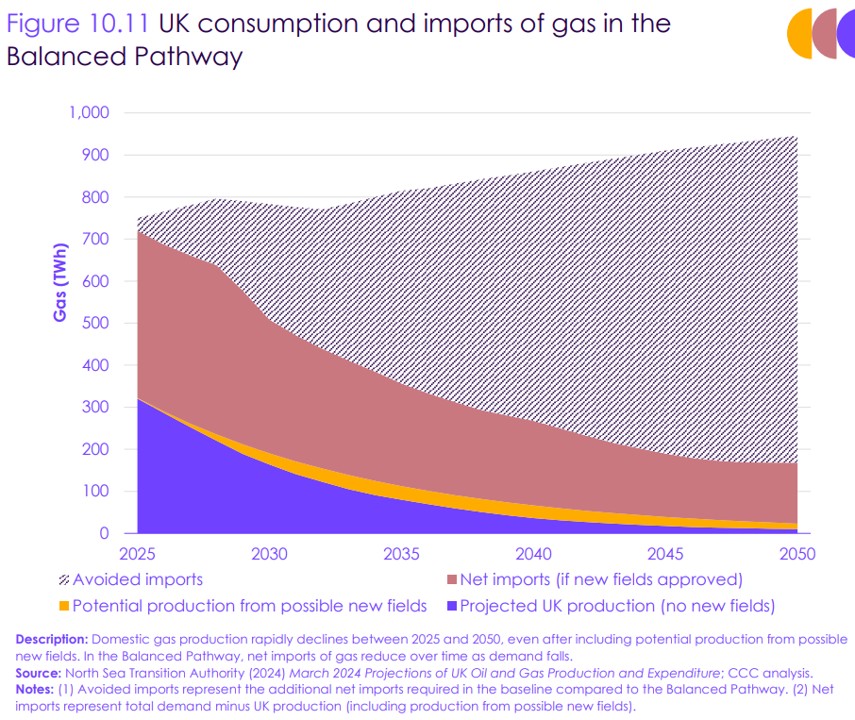
The proposals would see a steep decline in the consumption of oil and gas, “substantially lower than it is today”, the CCC said. Compared with 2025 levels, oil consumption would fall by 84% by 2050 and gas by 77%. Output of oil and gas and associated industries would also fall.
The CCC said three-quarters of cars and vans and two-thirds of heavy goods vehicles would be electric by 2040. This is up from 2.8% of cars and 1.4% of vans.
Half of all homes would be heated with a heat pump by 2040, the CCC said. This would need the annual rate of installations to rise from 60,000 in 2023 to nearly 450,000 by 2030 and around 1.5m by 2035.
The CCC said the emissions reductions were feasible and would result in cheaper bills. Household energy bills and driving costs would both be £700 a year cheaper, it estimated.
The CCC added:
“As well as being low carbon, electric technologies are highly efficient. Ending the combustion of fossil fuels in boilers and cars leads to cleaner air in homes and neighbourhoods.”
Decarbonisation would also result in lower imports and improved energy security, the CCC said. Under the advice, called the “balanced pathway”, average household energy bills in 2040 would be 15 times less sensitive to a future spike in gas prices, like the one following Russia’s invasion of Ukraine. The CCC said:
“The UK’s energy will be predominantly home grown, reducing our reliance on imported fossil fuels. This will shield households and businesses from damaging price shocks. In the balanced Pathway, total net energy imports fall from 867 TWh in 2025 to 202 TWh in 2050.”
Today’s advice to government is part of preparation for the seventh carbon budget, required under the Climate Change Act.
The CCC has recommended UK greenhouse gas emissions for the period 2038-2042 should be limited to 535MtCO2e, including emissions from international aviation and shipping.
It said this was “ambitious but deliverable”.
The CCC said the roll-out of technologies needed to achieve the emissions cuts was similar to what has already been achieved in the Netherlands and Ireland. It was also similar to previous technology roll-outs in the UK, such as mobile phones and internet connections.
The CCC estimates that the net cost of delivering the emissions cuts would be an average of 0.2% of GDP per year.
Professor Piers Forster, the CCC’s interim chair, said:
“The Committee is delighted to be able to present a good news story about how the country can decarbonise while also creating savings across the economy. For a long time, decarbonisation in this country has really meant work in the power sector, but now we need to see action on transport, buildings, industry and farming. This will create opportunities in the economy, tackle climate change, and bring down household bills.”
“Our analysis shows that there is no need to pitch action on climate change against the economy. We will need Government and business to deliver the investment, but we are confident that this Seventh Carbon Budget offers a secure, prosperous future for the UK.”
The CCC said large parts of the UK economy would see little impact. But it said there would be significant change in some sectors, particularly oil and gas, and some parts of farming, there will be significant change. It said:
“Government needs to engage with affected communities to develop proactive, funded plans to support those affected.”
The CCC called for key actions including:
- Making electricity cheaper by removing policy levies from electricity bills
- Removing barriers to heat pumps and electric vehicle charging points
- Provide confidence to consumers and investors
- Support for households to install low carbon heating
- Show how government will support business
- Clear information for households and businesses
Parliament must approve or reject the level of seventh carbon budget by 30 June 2026. The government must then bring proposals and policies on how the budget can be met.
Reaction
Bill Esterson MP, chair of the energy security and net zero parliamentary committee, said:
“The Climate Change Committee’s 7th Carbon Budget makes clear the huge prize to be won from a keen focus on the clean energy transition. The question is not only about the increased likelihood of cheaper energy bills, hundreds and hundreds of pounds cheaper, as we progress towards the goal – it’s about avoiding massive hikes to bills from the next price shock inherent in being reliant on fossil fuels. No one can look at recent geo-political developments and imagine that further gas price shocks are not coming. The UK spent £40 billion of taxpayers’ money cushioning the rise of just one winter’s energy bills in 2022. With public finances and services stretched to breaking, we simply cannot afford to lose any more time.
“To win the gains of cheaper energy from low carbon technologies, we need to capture the public’s imagination – to incentivise and win them over to the clear advantages in the clean energy sector, that will bring costs down significantly. And to make the most of the advantages available needs investment: significant, sustained and steady. The CBI has said that the UK’s green sector is now growing at 3 times the rate of the wider economy. The CCC has set out a pathway to spread that growth, productivity increase and skilled job creation through our economy. This is the future and we must invest in it, make the unambiguous case and bring the public with us.”
Mike Childs, head of policy at Friends of the Earth, said:
“These recommendations are a blueprint for growing a resilient and healthy economy that will improve peoples’ lives with warmer homes, cheaper bills, less air pollution, and more money in their pockets.
“Extreme weather events globally – like those that recently hit Los Angeles and Valencia – are already causing enormous hardship and economic damage. The Office for Budget Responsibility has warned the costs to the UK economy could reach tens of billions a year if we fail to tackle global heating.
“The good news is that climate action doesn’t just make environmental sense, it boosts the economy too. New research published earlier this week showed that the UK’s net zero sector grew 10% last year, while the rest of the economy struggled.
“It would be short-sighted and economically reckless if the Chancellor fails to back the green economy in the forthcoming Spending Review. She must invest in the future by insulating our heat-leaking homes, improving public transport, greening industry and developing the nation’s huge homegrown renewables potential. Failing to do so will leave the UK lagging behind in the global race to develop the industries of the future, while passing on enormous costs to future generations.”
DrillOrDrop has closed the comments section on this and future articles. We are doing this because of the risk of liability for copyright infringement in comments. We still want to hear about your reaction to DrillOrDrop articles. You can contact us by clicking here.

 DRILL OR DROP?