The government failed to respond directly to a parliamentary petition about lower-volume fracking for onshore oil and gas, a group of MPs has said.
More than 10,200 people signed the petition which called for the government’s promised ban on high volume fracking to include currently allowed operations that use lower volumes of liquid.
Under the petition rules, the government must respond if a petition receives more than 10,000 signatures.
The response was issued last week. But local campaigners described the response as “inadequate”. MPs have also asked the government to make revisions.
The committee which oversees the petitions system, said:
“The Petitions Committee … has considered the Government’s response to this petition. They felt the response did not respond directly to the request of the petition. They have therefore asked the Government to provide a revised response.
“When the Committee receives a revised response from the Government, we will publish this and share it with you.”
The petition said:
“We want the ban to be extended to cover activities with smaller volumes of liquid”.
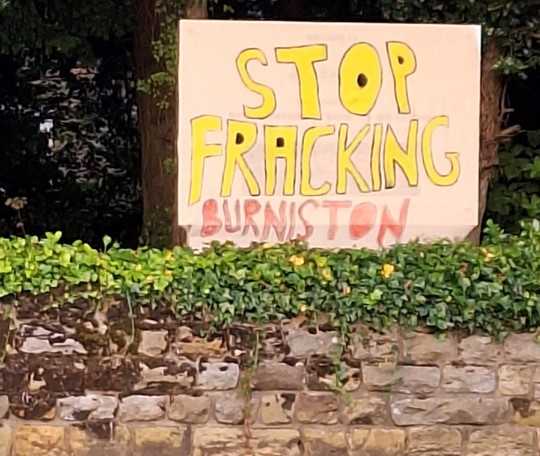
Many signatures were from the area around Burniston, near Scarborough, where Europa Oil & Gas has applied for permission to carry out a proppant squeeze, a form of lower volume fracking.
The petition added:
“There are companies who have submitted planning applications to use what we see as “small-scale fracking” to extract oil and gas. Little is known of the potential risks of this activity. We ask the government to close what we feel is a loophole to help protect communities from harm. We believe not doing so could slow the essential transition towards clean, renewable energy.”
The response from the Department of Energy Security and Net Zero (DESNZ) mentioned a commitment to end new onshore oil and gas licensing in England. It also referred to the current moratorium on high volume hydraulic fracturing, the use of low volume fracturing in conventional oil and gas operations and details of the regulatory system.
It concluded:
“We are aware of local concerns raised by the petition around low volume hydraulic fracturing and are keeping regulation under review.”
It did not, however, answer the request in the petition.
The petition’s author, Clare Topham, said today:
“This is a national issue not a local issue and the response shows a lack of respect to the 10,000 people who signed the petition hoping for an honest answer from our government.”
Chris Garforth, of the campaign group, Frack Free Coastal Communities, in North Yorkshire, said:
said:
“It’s good that the committee of MPs that runs the parliamentary petition process has seen that the government’s response is inadequate. We agree with that assessment and look forward to receiving a more considered response that properly addresses the issues raised in the petition.”
He said:
“We expect DESNZ, in its further response, to at least acknowledge the current state of knowledge (and ignorance) about low volume fracking and address the specific ‘ask’ of the petition – that small-scale fracking be banned for onshore oil and gas development.”
Professor Garforth added:
“The response repeats statements that have already been discredited. It suggests that ‘fracking’ refers only to ‘high volume hydraulic fracturing for shale gas’. That is incorrect as made clear in para. 5.129 of the North Yorkshire Minerals and Waste Joint Plan (MWJP) and confirmed in the legal opinion from Estelle Dehon KC in July 2025.
“It also implies that low volume hydraulic fracturing is intrinsically safe and well regulated by planning authorities, NSTA, Environment Agency and Health and Safety Executive. If only that were true! In the specific case of Europa Oil & Gas’s proposal for gas drilling and hydraulic fracturing at Burniston, North Yorkshire’s planning committee and the Environment Agency are having to decide whether to grant planning permission and environmental permits respectively without the detailed geological data that are set out in planning guidance and the MWJP.
“Minerals Planning Guidance says Minerals Planning Authorities should satisfy themselves that the mitigation of seismic risks can or will be addressed.
MWJP (para. 5.154) says, apropos Policy M17, that where hydraulic fracturing is involved ‘proposals should be supported by compelling evidence that induced seismicity can be managed and mitigated to an acceptable level. This should include information which demonstrates the known location of any faults and an assessment of the potential for induced seismicity to occur as a result of the proposed development.
“Europa have not provided evidence or supporting information with their planning application and environmental permit application and we have written to the planners asking what advice they have sought from the NSTA about mitigation of seismic risk. This is particularly important because the NSTA’s own research concludes that it is not possible to predict the seismic response to hydraulic fracturing in relation to site characteristics, fluid volume, rate or pressure; and that where induced seismicity has occurred, mitigation measures have shown only limited success. This begs the question of how the NSTA or any other regulator can give meaningful assurances that the risk of induced seismicity from proposed hydraulic fracturing can and will be effectively mitigated.”

 DRILL OR DROP?