The UK government has confirmed there will be no new licences for onshore oil and gas in England.
The formal announcement came in a response to a consultation earlier this year mainly on the future of the North Sea.
The127-page North Sea Future Plan, from the Department of Energy Security and Net Zero (DESNZ), reaffirmed Labour’s manifesto commitment not to issue any new oil ad gas licences, both onshore and offshore.
The document said:
“We will cease issuing new licences to explore new fields. By doing so, we will demonstrate global leadership and set an example on tackling climate change. We will continue to support existing producers.”
It said:
“Continued reliance on oil and gas would leave British consumers exposed to unstable fossil fuel markets and the risk of unexpected price shocks. The transition to clean energy will boost our energy security and help keep bills lower for consumers.”
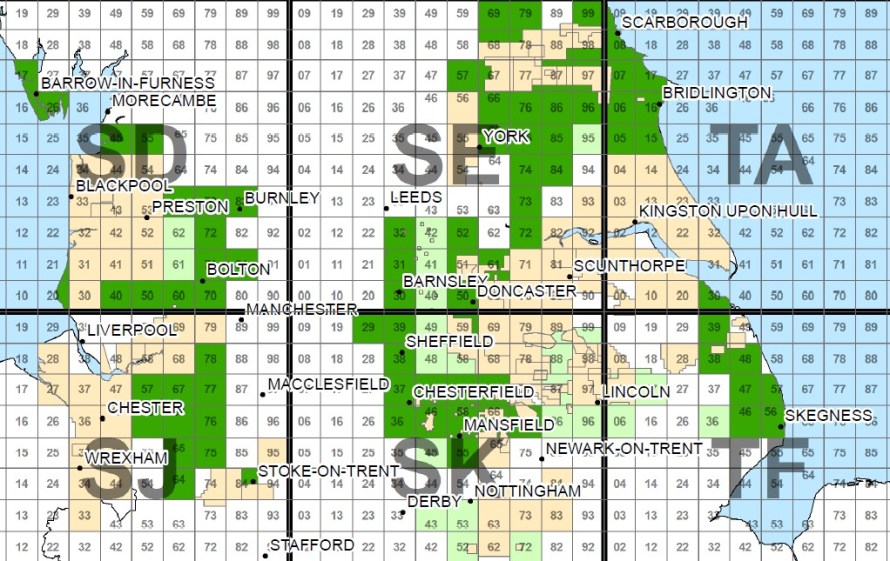
The most recent onshore licensing round offered 88 PEDLs (Petroleum, Exploration and Development Licences) in 2016. Of these, only 10 still exist. The rest have been relinquished by the onshore industry.
The government’s licensing policy is in contrast to a bill published by the Sunak Conservative government two years ago, which required annual oil and gas licensing grounds to support UK production.
The DESNZ report said approaches to onshore and offshore licensing were being kept “as consistent as possible”.
“The government will deliver legislation in due course to end new future onshore licensing in England, while ensuring that a range of potential future non-petroleum activities related to the energy transition, such as gas, carbon dioxide or hydrogen storage, and geothermal energy are not impacted.”
Current licences would continue to be managed by the North Sea Transition Authority (NSTA), the government said.
It said the decision not to issue new onshore licences would “progress the government’s commitment to ban high volume hydraulic fracturing for shale gas extraction”.
“For existing onshore licences, the effective moratorium against the approval of fracking consents (“Hydraulic Fracturing Consent”) by the DESNZ Secretary of State will remain in place.”
The document said:
“To go backwards and issue new oil and gas exploration and production licences would not help our energy security and would not enable us to provide global leadership in climate action in line with the science.
“We want to embrace the opportunities of the future and drive forward the clean energy transition.”
The document added:
“We will not seek to revoke existing licences nor restrict consenting decisions for projects with licences, which will remain subject to the usual scrutiny.”
The onshore industry will not generally benefit from new transitional energy certificates that will be introduced for the North Sea.
These will be issued to manage existing offshore fields for their lifespan, the government said.
They will give the holder exclusivity over an area of the seabed next to or very near an existing block. Production, but not exploration, from the area covered by the certificate would be allowed.
The government said certificates could be issued onshore to manage incidental production of oil and gas where a field was being developed for hydrogen storage or carbon capture, usage and storage (CCUS).
Consultation
The consultation on the government’s policy received 375 responses, plus 504 campaign responses and several petitions.
Responses were from what was described as a “broad range of commercial, public and third sector stakeholder organisations”. They included oil and gas producers (both onshore and offshore), renewable energy companies, firms working in CCUS and hydrogen, as well as academics, trade unions, environmental and industry groups, education providers, community groups and individuals.
Of the responses, 49% strongly disagreed and 23% disagreed with the government proposals. 7% neither agreed nor disagreed, 12% agreed and 9% strongly agreed.
The report said there was limited feedback specifically about onshore oil and gas. It included views that new onshore licensing should be allowed, as well as no development of existing onshore fields.
The report added that some respondents agreed that the proposals would allow the UK to set an example globally in tackling climate change. There were also stronger views:
“[others] put forward a view that oil and gas licensing potential should be maximised for as long as possible. Others wanted the government to go much further and cease consenting decisions for fields which are already licensed.”
Other energy announcements
Yesterday’s budget had a range of energy announcements including:
- Windfall Tax (energy profits levy) remains
- The Treasury will pay 75% of the cost of the renewables obligation for households for three years from April 2026
- The Energy Company Obligation, a government energy efficiency scheme designed to tackle fuel poverty and reduce carbon emissions, will end
- The government wants to “improve” the price of electricity relative to gas – to be announced through the warm homes plan
- New 3p per mile charge for battery electric cars and 1.5p per mile for plug-in hybrids from April 2028
- Fuel duty – the tax on petrol and diesel – does not rise again for the five months from April-September 2026
- From September 2026, the 5p cut in fuel duty introduced in 2022 will be reversed, returning to 2022 levels by 2027

 DRILL OR DROP?