The government’s climate advisor has said the moratorium on fracking in England should not be lifted without an “in-depth” climate review.
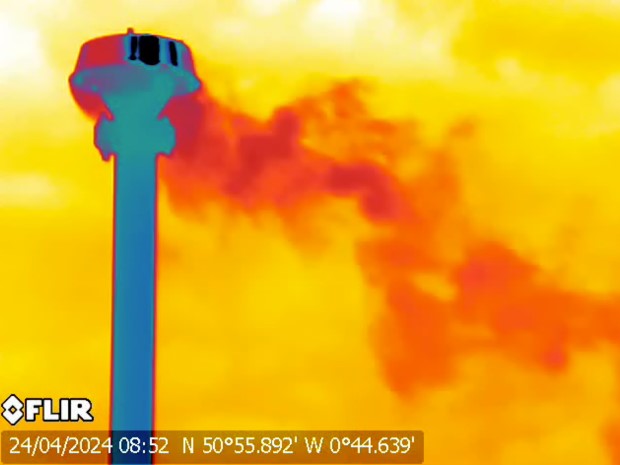
Photo: Clean Air Task Force
In a letter to the energy secretary, Ed Miliband, the Climate Change Committee (CCC) said its previous advice on fracking from 2021 remained.
The advice to ministers on the climate impact of onshore oil and gas is required by law every five years under the 2015 Infrastructure Act.
The latest letter, from the CCC’s chair, Nigel Topping, said of onshore shale gas:
“we have not been able to identify any substantive developments in the evidence base regarding production levels or emissions intensity.
“Therefore, our previous advice remains valid. The restrictions on fracking should not be lifted without an in-depth, independent review of the evidence on climate impacts and other factors, underpinned by new research.”
The government has promised to ban fracking. But it has not publicly announced when this will happen, or which types of fracking would be included.
A petition for a legally-binding ban on fracking, launched today by Friends of the Earth, had nearly 26,000 signatures at the time of writing.
Plans for lower-volume fracking in North Yorkshire prompted a campaign for operations, such as proppant squeeze, to be added to the ban.
Last year, Reform UK, which supports fracking, told energy companies to get ready to frack for shale gas.
Kemi Badenoch, now opposition leader, also suggested that the Conservatives could lift the ban on fracking.
“Cut emissions”
The CCC letter said onshore gas accounted for 0.6% of total UK gas production and 4% of UK oil production in 2024.
It said emissions from conventional onshore oil and gas were “a small contributor” to UK carbon budgets and the ambition to reach net zero emissions by 2050.
But it said:
“There is scope for emissions reduction through measures such as reduced methane leakage, reduced flaring and venting, and electrification (where not already in use).”
It advised Mr Miliband:
“Your department, working with the relevant regulatory authorities, should ensure appropriate policy to facilitate the reduction of production emissions associated with UK oil and gas fields consistent with carbon budgets and Net Zero.”
The CCC estimated that emissions from onshore fields in England in 2025 were 0.09MtCO2e/year. This was expected to fall to around 0.03MtCO2e/year by 2050, as a result of closure of onshore sites as they matured or became exhausted.
The CCC added that any combustion of oil and gas, regardless of source, would need to remain in line with projected cuts in emissions if carbon budgets and Net Zero were to be met.
The UK’s seventh carbon budget predicted that primary demand for oil and gas in the UK would fall from 1.476TWh to 286TWh in 2050. The letter said:
“This is driven by the increase used of more energy-efficient electric alternatives to fossil fuel technologies, including electrical vehicles (EVs), heat pumps, and industrial electrification.
“As the costs of low-carbon alternatives decrease, demand for oil and gas is expected to decline substantially”.

 DRILL OR DROP?