More information has been released about plans for a lower-volume frack at the West Newton A oil and gas site in East Yorkshire.
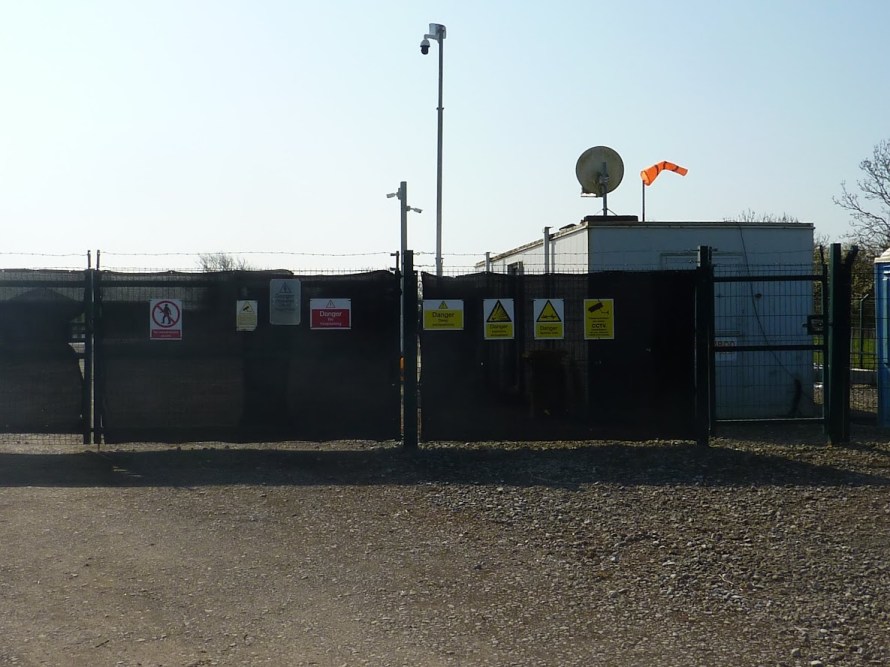
The details came in response to a Freedom of Information request by a local campaigner.
The documents, released by the Environment Agency, include the key hydraulic fracture plan (hfp).
This is required for all forms of fracking, where liquid and proppant are injected at pressures high enough to fracture rocks.
The hfp is intended to assess the risk of any seismic activity caused by fracking and set out how induced seismicity would be dealt with.
The West Newton A hfp was listed as a pre-condition in the variation of the environmental permit for fracking at the site.
The hfp must be approved by the Environment Agency and the North Sea Transition Authority at least three months before fracking begins.
Email correspondence, included in the FOI response, showed that the West Newton A hfp had been submitted to the North Sea Transition Authority and recommended for approval in February 2026. It was sent to the Environment Agency on the day the permit variation was granted (16 February 2026).
Once all permits, consents and approvals are in place, the site operator, Rathlin Energy, must inform the Health and Safety Executive at least 21 days in advance of activity.
Details
Location
The West Newton hfp confirms fracking would be carried out on the West Newton A-2 well, drilled in 2019 to a depth of 2,061m at the site off Fosham Road.
The hfp described the operation as a single stage treatment for main reservoir stimulation entirely within the target Kirkham Abbey formation. The operation was also described as “a small-scale propped hydraulic fracture”.
Duration
The fracking operation would last under 30 minutes, the hfp estimated.
Purpose
The hfp said the fracking operation was
“designed to create channels of communication through the near wellbore formation, the natural permeability having been impeded by formation damage as a result of the initial drilling and completion operation”.
The hfp confirmed previously published details that formation damage had been caused by water-based fluids. The damage reduced the flow of hydrocarbons into the West Newton A-2 wellbore.
The hfp said:
“In order to overcome near wellbore damage and improve the flow rate from the Kirkham Abbey reservoir, Rathlin plans to re-enter the well to pull the existing completion and run a new completion string, undertake a low volume reservoir stimulation and flow the well.”
Volumes
The hfp said the fracture would use 12.5 tonnes of proppant.
The maximum volume of injected fluid would be 85m3. Of this, 15m3 would be used in an initial diagnostic fracture injection test (DFiT). Less than 70m3 would be used for the main stimulation, the hfp said.
The total proposed volume of fluid is far below the 1,000m3 limit per fracking stage set in the 1998 Petroleum Act as the definition for associated hydraulic fracturing. This higher-volume form of fracking is currently subject to moratoriums across the UK. Lower-volume fractures are still permitted by law.
Fracture size
The hfp predicted the length of fractures would be 15m laterally from the well bore and less than 3m vertically.
The fractures would “extend beyond the zone of impaired permeability to provide connection to the reservoir”, the hfp said.
Pressures
The hfp stated that the bottom hole and surface pressures in the well were expected to be less than 5000psi (pounds per square inch).
Faults
The hfp described this part of East Yorkshire as a “region with relatively low rates of natural seismicity”.
It said there had been four seismic events within 22.5km of the West Newton A site from 2009-2022. They measured from -0.249M to -0.449M.
But the hfp said the most notable event in a 100km x 100km study area based on West Newton was the 5.2M Market Rasen earthquake of 2008. This was 50km south of the A-2 well and was felt widely across England and Wales.
A 3D seismic survey carried out in 2014, covering 41sq km, identified 16 faults within 3.8km of the A-2 well. But the hfp accepted there may be other faults below the resolution of the data.
One fault (KA3) was interpreted within 1km of the A-2 well. Another, KA6, was said to be about 1.09km away, with a maximum throw of about 24m. This was said to be “well beyond the effective fracture envelope”.
Another, fault BP2, approximately 3.5km long, was described as a “significant litho-stratigraphic and unconformable boundary” between Permian carbonates and evaporates.
Seismicity risk
A risk assessment on induced seismicity concluded:
“given the small scale of the proposed stimulation, combined with the stress state and proximity of the faults to the proposed zone of stimulation, the probability of triggering an induced seismicity event that is measurable at the surface is highly unlikely”
It also said:
“the probability of the proposed stimulation triggering an induced seismicity event that could be felt by the public (0.8M) is negligible”
It said the largest most likely seismic event would be -2M, which was described as “too small to be detected with microseismic monitoring array at the surface”.
The assessment, by Outer Limits Geophysical, said there was a 99% likelihood that a 0.8M event would not be exceeded.
The hfp concluded that installation of a seismic monitoring array was “not warranted” because of the short duration of the proposed injection. This meant there would be insufficient time to initiate any traffic light system, the standard measure to deal with seismicity, before stopping the operation.
The document added:
“it will not be possible to monitor or locate fracture propagation or height growth through micro-seismic monitoring .”
It proposed an:
“alternative monitoring plan based on extensive modelling performed and calibration to real time pressure recordings and leak-off as determined during a DFiT prior to the proppant squeeze.”
The document said:
“Provided the model assumptions prove valid, we would conclude that the fracture growth predicted by the model is also valid and that the fractures have remained within the target formation.”
Other operational details
The hfp said the operation would use oil-based fluids because the Kirkham Abbey Formation had been shown to be “highly sensitive and easily damaged” by water-based fluids.
The well would first be circulated with oil-based fluid to ensure that the current water-based suspension fluid in the well was not injected into the formation.
Once the wellbore was full of oil-based fluid, approximately 4m3 would be pumped into the formation to establish the breakdown pressure.
A step test, using 11m3 of oil-based fluid, would determine the pressure needed for fracture propagation and other issues.
If the results were different to the predictions used in a model, the model would be adjusted, the hfp said.
Community
The hfp said Rathlin Energy intended to discuss the operation with the West Newton community liaison group “in advance of the operation being conducted”.
Other stimulations
The hfp said there had been 14 small-scale reservoir stimulations within the 100km x 100km study area.
The most recent was in 2021 at the Wressle-1 well in North Lincolnshire. This injected 150m3. No induced seismicity was reported, the hfp said.
A-2 fracture history
Rathlin Energy first announced plans for a lower-volume frack at West Newton A in September 2024.
In June 2025, the leading investor in the project, Reabold Resources, estimated the operation would go ahead in the next four to nine months.
The permit variation for the operation was approved after another eight months (February 2026).
The Environment Agency has not confirmed whether it has approved the West Newton A-2 hfp.
Categories: Regulation, slider

 DRILL OR DROP?