Two years after the UK’s strongest fracking-induced earthquake, there’s no agreement on how to manage shale gas risks, an exploration company said today.
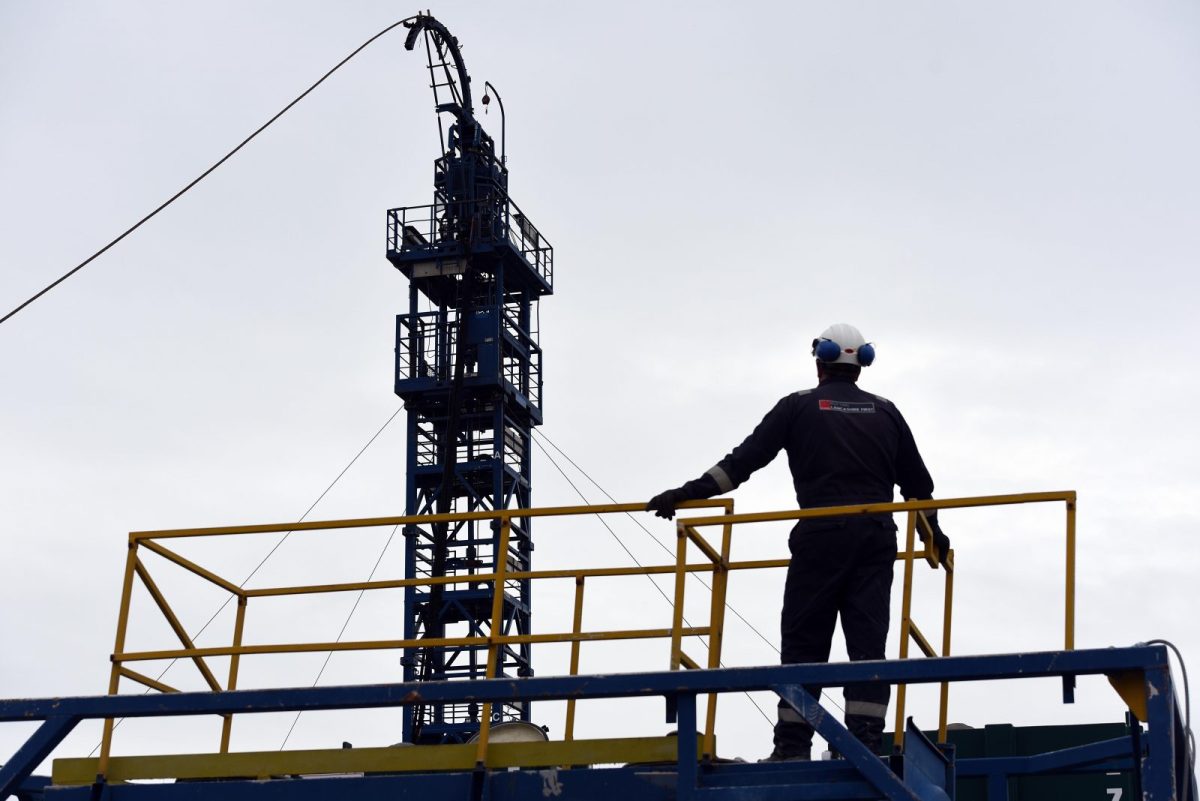
Regulators suspended fracking at Cuadrilla’s Preston New Road site on 26 August 2019 after a 2.9ML earthquake induced by operations.
It was felt across the Fylde region of Lancashire and experts received nearly 200 reports of damage.
The government later imposed a moratorium on fracking across the whole of England.
This remains in place and ministers have said it would be lifted only when “compelling new scientific evidence is provided which address the concerns about the prediction and management of induced seismicity”.
The industry and regulators have been negotiating on what research would address government concerns.
But Francis Egan, Cuadrilla’s chief executive, said today:
“Agreement has not yet been reached on the extent of the work required”.
Mr Egan was writing in annual accounts of Cuadrilla’s parent company, AJ Lucas, published today. He said:
“Cuadrilla has continued to engage with the Regulator and with other industry players on the definition of appropriate technical work-scopes concerning the prediction and management of seismicity induced by hydraulic fracturing.
“Efforts continue to define an agreed path forward.”
Mr Egan said the 2.9ML earthquake was caused by a fault that could not have been detected on existing 3D seismic survey data.
He said well integrity at Preston New Road had not been compromised.
He also described as “de-minimis” the modelled property damage.
There were 197 reports of damage to the British Geological Survey (BGS). Cuadrilla has not revealed how many complaints it received, nor the value of any damage or compensation paid.
The BGS said it also received several thousand reports from people who felt the earthquake. It recorded the seismicity at intensity level 6, or “slightly damaging”. The highest intensity level is 12 (completely devastating) and the lowest is 1 (not felt)
In today’s accounts, Mr Egan said the BGS level 6 was “difficult to justify”.
Operations and tax refund
DrillOrDrop reported earlier this year that Cuadrilla had received research and development tax credits. Today’s accounts said the company had been paid A$4.3m by the UK tax authorities in the year to June 2021.
This contributed to the A$19.6m in cash flow from AJ Lucas operations in the year to June 2021, compared with A$2.0m in 2020.
Mr Egan said there had been “little or no operational activity” at Cuadrilla’s sites.
Despite the moratorium, Cuadrilla was permitted to continue testing wells at Preston New Road. But in response to a freedom of information request by DrillOrDrop, the Oil & Gas Authority confirmed there was no current consent in place for an extended well test at the site and no application was under consideration.
Mr Egan also said there were “significant cost reductions”. Total UK net costs for were A$1.1m, up slightly on the A$1.0m in 2020. The company had met all its UK licence commitments and obligations, he said.
According to the accounts, AJ Lucas paid Mr Egan A$53,348 (about £28,195) in the year to June 2021. He was appointed to the AJ Lucas board in May 2020. He holds more than 330,000 shares in Cuadrilla. He is also a director of the trade body, UK Onshore Oil & Gas.
Shale gas and climate change
Mr Egan said the ongoing growth of imports of liquified natural gas was “incompatible with the need to address the UK’s contribution to climate change”. He said:
“Failure to develop UK onshore natural gas could add an extra 145 million tonnes CO2e to the UK’s carbon footprint, simply due to provenance of LNG imports to the UK from the Middle East, US, North Africa or Russia.”
Mr Egan said the carbon intensity of onshore gas production had been forecast at 13.8gCO2/kWh. He said this was less than a quarter of the average carbon footprint of liquified natural gas (LNG) imported from Qatar, calculated at 60.7 gCO2/kwh by University College London.
He added that Cuadrilla had assessed the geothermal potential of its UK wells. It would “utilise this as part of a broader assessment of potential alternative uses both for existing sites and wells”, he said.
Ruth Hayhurst will be reporting for DrillOrDrop from the COP26 climate conference in Glasgow in November

 DRILL OR DROP?
All good news there then 😊
Agreed Jono
Net imports of natural gas fell by 12% in 2020. If we can accelerate the drive for insulation, renewable energy and ‘green’ hydrogen* then our demand for natural gas will continue to fall.
* i.e. not blue or grey hydrogen
And therein lies the point that the advocates of UK onshore oil and gas either ignore or fail to understand; the need to reduce our energy needs, no matter how they are generated.
Maybe the drop in net imports of natural gas in 2020 had something to do with a large chunk of industry being shut, David!
You seem to ignore that industry uses a lot of gas, it is not all about domestic use.
And, Malcolm you do make me laugh! Reduce our energy needs? Strange when antis are touring around the countryside in their gas guzzlers and XR leaders sticking with their diesels to take the kids to rugby! And, how will all the hoards get to Glasgow?
Don’t think that many will accept their energy use should be reduced when they see others telling them to do so, but not matching their words with their own actions.
But, the advocates of UK onshore oil and gas do understand that using that source instead of imports does indeed reduce energy needs-that needed to transport energy into the UK. Goodness, it might appear that the advocates of UK on shore oil and gas are the ones doing what you state is a need, whereas the antis are ignoring those potential energy reductions simply because it conflicts with a dogma! CJR seems to understand the benefits of local production, but I suspect somehow that would mysteriously not apply to fossil fuel.
Strange that Egan should be so concerned about the carbon footprint of importing gas…. especially as the current government are gung ho about deveoping trade links with many countries so far away that our national carbon footprint will be a lot higher than it would have been had we stayed in the EU. Egan’s logic may look pro climate but it is also pro his bank balance lets face it.
RIP fracking.
HMG: Now please permanently close down all plans for fracking development
But explore the potential of geothermal energy in the North of England & elsewhere:
https://www.sciencedirect.com/science/article/pii/S009830042030635X#!
RIP fracking? Dr Frank you had better read up on geothermal energy….have a look at the current projects in Cornwall.
https://wattsupwiththat.com/2020/12/14/the-geothermal-energy-revolution/
https://okgeography.wordpress.com/2020/10/01/tremors-in-cornwall-evoke-recent-controversies-lessons-for-deep-geothermal-from-fracking/
Click to access 184.pdf
https://news.stanford.edu/2019/05/23/lessons-south-korea-solving-geothermals-earthquake-problem/
But the Traffic Light System used by Cuadrilla is not required to be used by UK geothermal projects, in fact the ongoing projects in Cornwall have very little legislative control – perhaps because they come under the “green” umbrella?
Paul:
Thanks for these interesting (if depressing.) references.
But If only the PNR fracking induced earthquake had been limited to magnitude 1.5 ?
But it is still ‘RIP fracking.’ because the industry cannot guarantee preventing fracking induced earthquakes.
Moreover, do you still believe (whatever your own views on how wonderful fracking is) that any future UK government is going to pursue fracking in the context of the global climate emergency ?
Dr Frank – If the Government pursues geothermal energy they will have to allow hydraulic fracture stimulation in geothermal wells. What you call fracking is a process; no different in geothermal wells to shale wells such as PNR. Lots of water with some additives pumped at high rates / high pressure to fracture the rocks / open existing fractures. The Government has a moratorium on shale gas fracking – it seems they don’t on geothermal well fracking which the documents I linked to show has similar potential for induced seismicity albeit without the TLS control.
Personally I do not see the UK Government changing the moratorium for shale gas fracking – in the Fylde at least.
Ahh, geothermal!
With, or without, fracking? And, induced seismic events? Wasn’t there a recent issue down in Cornwall?
With, or without, the subsidence experienced in Germany?
Peter-make sure your house insurance is beefed up!
(HMG can not permanently close down plans. HMG is not permanent and next HMG can do what it wants, and does not need to follow previous HMG. Opposition party manifestos are usually full of such suggestions. Even new leaders of a party in power do the same. There may be a parallel universe which fuels anti excitement, but the real world is what dictates reality.)
What was Malcolm posting about reducing energy needs? 11.06pm?? Daylight is available to reduce energy needs, but often ignored by those advocating others do something, using artificial light and a plastic keyboard, feeding into a fossil fuel dependent Internet!
This lark of engagement in a conversation is very illuminating. Looks as if XR are beginning to suffer the consequences that go with it, as well.
Yes very true. The tremors / earthquakes, are categorised as Man made Earthquakes, if not exaggerating.
Ultimately, the Earth Matters.
Thanks
Mr Egan has never acknowledged the amount of fugitive methane in production going to atmosphere, as if it never happens. It has been proved this makes fracking worse than burning coal to generate electricity.
Methane emissions from gas production at the UK and Norwegian Continental Shelf is 0.03%, on a global scale, methane emissions were stated to be 0.23% in 2019.
If a study uses a figure of 3.5%, which is more than 1000 times higher than the actual level, the realism in the assumption would be misleading, but one could claim to be better off burning coal or burning a certain colour of hydrogen would be worse than natural gas.
Those interested in these issues should research the good news that Germany is investing $Billions in Green Hydrogen production. They are funding Solar and wind power in Namibia and Australia. All spare power will be used to produce green hydrogen, which will be exported to Germany.
Fracking never was and never will be required.
Reblogged this on Keep Cumbrian Coal in the Hole and commented:
If Fracking is Bad (it is!) then Coal Mining is Badder (It is!!). So it is Incredible that despite coal mining being worse than fracking for induced earthquakes (it is!!!) this inconvenient fact has been universally ignored – by all but the nuclear safety campaigners who first opposed the Cumbrian Coal Mine in 2017 and who shockingly are the only ones shouting about induced earthquake risks so near Sellafield. The Secretary of State in asking for evidence to be produced by the Public Inquiry into the first deep coal mine in the UK in 30 years has conveniently ‘forgotten’ to include earthquake risk and the “expected subsidence” of the Irish Sea .
Perhaps be more worried about the munitions dumped in the Irish Sea, reference “expected subsidence” of the Irish Sea!
That is a very old chestnut. I recall the “concern” that the North Sea was going to vanish if drilling for gas and oil was allowed.
Not sure that a rinse and repeat will work-especially when there are all the scientists talking about rising sea levels.
Talking of scientists, transporting of hydrogen from Namibia and Australia to Germany?? So, maritime emissions are currently higher than those of Germany, and now Germany is working to make sure that remains so! Good news Steven? Don’t think so. And, Germany relying upon others for their energy, including Russia, may find energy security is something that they will have difficulty with. Wonder if they will increase the size of their navy to provide the security? No sign of that.
Quote: ‘Today’s accounts said the company had been paid A$4.3m by the UK tax authorities in the year to June 2021.’
I wonder precisely what ‘our’ tax receipts have been paid to Cuadrilla for, when there had been “little or no operational activity” at Cuadrilla’s sites in the tax year 2020-21 and precious little in the previous 2019-20 either, since they caused the seismic activity. I’m sure we can all think of better ways of spending that much tax, rather than to a bunch of cowboy O&G operators with little idea about the geology they worked with, even if we have cause to be grateful for their incompetence.