Preparation for fracking at a site in a North Yorkshire village saw nitrogen oxides pollution peak to levels comparable with the morning rush hour in North Kensington, research has revealed.
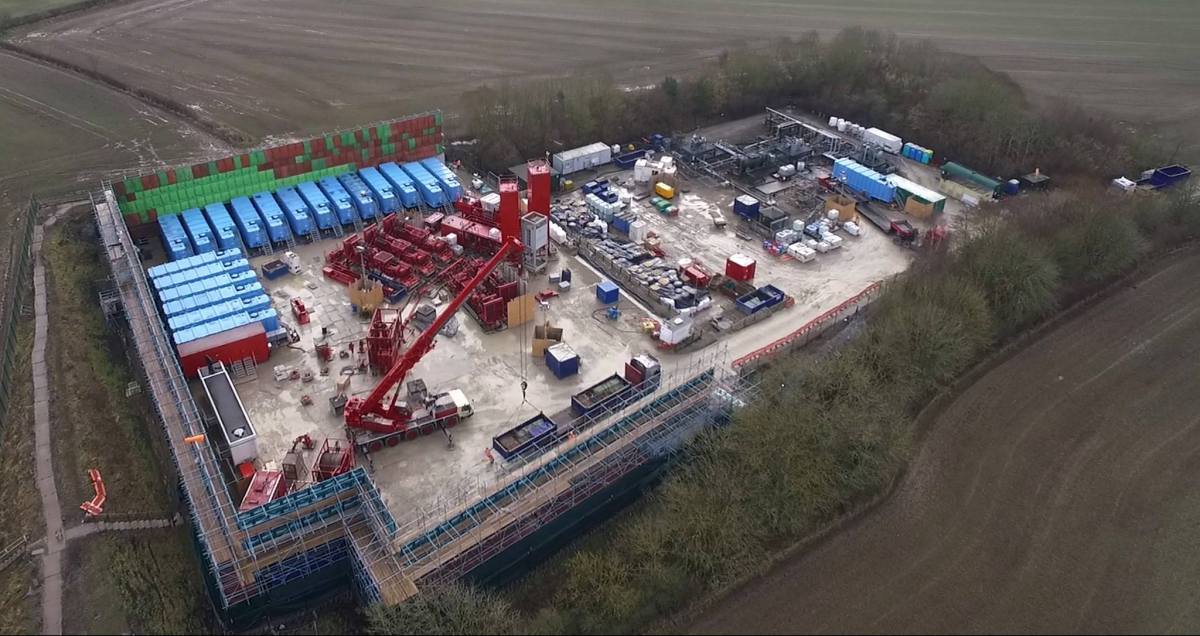
The well at Kirby Misperton was not fracked because consent was never granted. But the site was prepared over a period of nearly five months.
During this time, scientists from York and Manchester universities monitored air quality 45m from the well head. They recorded 274% increases in nitrogen oxides (NOx) over what would have been expected if site preparation had not happened.
They said wellpad preparation was a key phase in shale gas extraction and should be included in environmental assessments.
“This [pre-operational phase] is rarely investigated as air quality evaluation typically focus on the extraction phase.”
The researchers said the preparation phase is often longer than hydraulic fracturing and can represent a significant proportion of the well’s lifecycle.
The Kirby Misperton research previously reported that most of the air pollution was from vehicle emissions.
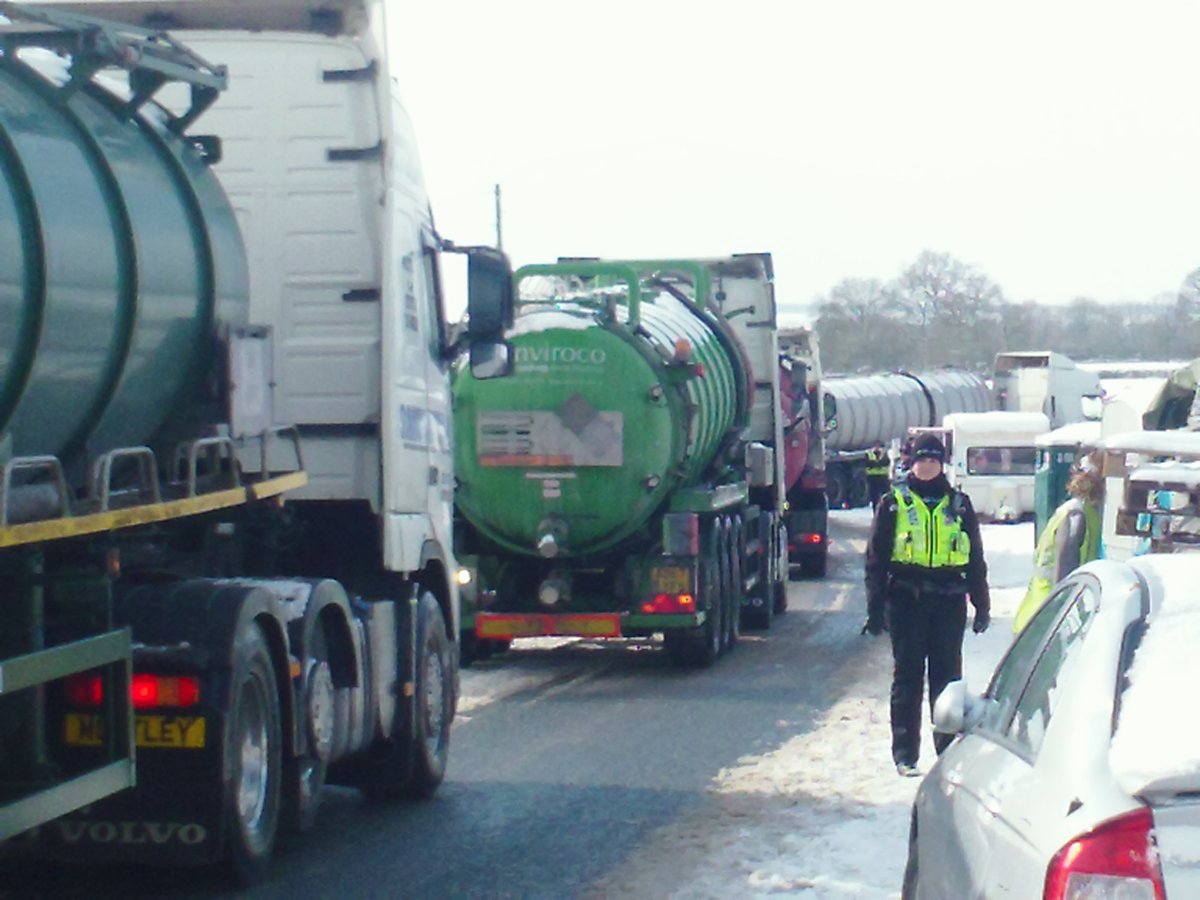
In the latest study, researchers said the increase in traffic generated by preparation stages at fracking sites was often noted but the impacts were rarely quantified. They said:
“Constructing and operating a shale gas well requires a large amount of above ground infrastructure and equipment, which must be transported to the well pad.
“The resultant traffic load and subsequent on-site activity introduces an additional source of air pollutants to the local environment prior to any hydraulic fracturing.”
The researchers said there were “significant changes in the on-site infrastructure occurred at KM [Kirby Misperton] during September 2017”.
Equipment brought onto the site included drilling rigs, pumps, compressors, diesel generators, storage containers. A sound barrier of shipping containers was also constructed.
The study said:
“In addition to the increase in equipment and activity on the site itself, traffic volume due to delivery trucks increased, along with additional idling vehicles in close vicinity to the site from protest activities, as well as a high volume of policing and media interest.”
The planned Kirby Misperton frack was in a pre-existing well on an already-constructed site.
But the study, to be published in Science of the Total Environment, said:
“for brand new wells, the preparation phase would be significantly longer since it would include building the above ground infrastructure, which may require clearing trees, levelling the surface, constructing access roads and laying the well pad itself.
“Therefore an extended period of preparation is likely to result in larger changes than those reported here.”
NOx pollution can damage lung tissue and contribute to breathing and respiratory problems.
The research had previously found that the components of NOx changed as preparation work began at Kirby Misperton.
Before the pre-operational stage, nitrogen dioxide (NO2) was in higher concentration than nitric oxide (NO) from exhaust pipes. This suggested that NO emissions from the nearest main road had time oxidise to NO2 before it was recorded by the monitoring equipment on the fracking site.
In September 2017, the trend reversed and NO began to dominate the NOx. This suggested that the NO vehicle emissions were mainly on the fracking site and did not have time to oxidise into NO2 before they were recorded .
The researchers said the air pollution levels at Kirby Misperton were below UK limits. But they said: “if pre-operational activities were extended and persisted for an entire year, it’s expected that nitrogen dioxide would have exceeded World Health Organisation guidelines for 2021″.
Other recent health studies
Exposure to unconventional oil and gas development and all-cause mortality in Medicare beneficiaries
Longxiang Li, Francesca Dominici, Annelise J. Blomberg, Falco J. Bargagli-Stoffi, Joel D. Schwartz, Brent A. Coull, John D. Spengler, Yaguang Wei, Joy Lawrence & Petros Koutrakis
Nature Energy February 2022
This study looked at more than 15 million Medicare beneficiaries in all US unconventional exploration regions from 2001-2015 and their exposure to air pollution from unconventional oil and gas wells. The researchers found evidence of a statistically significant higher mortality risk from living near and downwind of the wells. The results suggested that primary air pollutants from unconventional oil and gas exploration could be a major exposure pathway with adverse health effects in the elderly.
Unconventional Oil and Gas Development Exposure and Risk of Childhood Acute Lymphoblastic Leukemia: A Case–Control Study in Pennsylvania, 2009–2017
Cassandra J. Clark, Nicholaus P. Johnson, Mario Soriano Jr, Joshua L. Warren, Keli M. Sorrentino, Nina S. Kadan-Lottick, James E. Saiers, Xiaomei Ma, and Nicole C. Deziel
Environmental Health Perspectives, August 2022
This study by Yale School of Public Health found that young children living near fracking wells at birth were up to three times more likely to develop leukemia. It concluded that the risk was highest for those living with 2km of a fracking site and who were exposed before birth. The findings were based on more than 400 cases of acute lymphoblastic leukemia, from a sample fo around 2,500 children in Pennsylvania aged 2-7.
Assessing Unconventional Oil and Gas Exposure in the Appalachian Basin: Comparison of Exposure Surrogates and Residential Drinking Water Measurements
Cassandra J. Clark, Boya Xiong, Mario A. Soriano Jr.Mario A. Soriano, Jr, Kristina Gutchess, Helen G. Siegel, Emma C. Ryan, Nicholaus P. Johnson, Kelsie Cassell, Elise G. Elliott, Yunpo Li, Austin J. Cox, Nicolette Bugher, Lukas Glist, Rebecca J. Brenneis, Keli M. Sorrentino, Julie Plano, Xiaomei Ma, Joshua L. Warren, Desiree L. Plata, James E. Saiers, and Nicole C. Deziel
Environmental Science & Technology, January 2022
This study, also by Yale researchers, found that in Pennsylvania, 10 organic compounds related to unconventional oil and gas development were detected in the drinking water of at least 20% of homes, while in Ohio, six were found in at least 20% of homes. None of the chemicals exceeded the maximum contaminant limits in either state. 17 inorganic chemicals related to unconventional oil and gas were found in at least 20% of Pennsylvanian homes, while 14 were found in Ohio homes.
Human carcinogenic risk analysis and utilization of shale gas water-based drilling cuttings in road materials
Chao-qiang Wang, Shen Chen, De-ming Huang, Qi-cong Huang, Min-jie Tu, Kai Wu & Yan-yan Liu
Environmental Science and Pollution Research, September 2022
This Chinese study found that an unacceptable risk of cancer from skin contact with particulates from the use of water-based drill cuttings on roads. The researchers said the cancer risk was acceptable from exposure to single pollutants benzo(a)anthracene, benzo(a)pyrene, benzo(k)fluoranthene, and indeno(1,2,3- cd)pyrene. But the cumulative carcinogenic risk of exposure to dibenzo(a,h)anthracene particles via skin exposure was not acceptable, the study found.

 DRILL OR DROP?
So building sites, roadworks, airports, bus stations, railway stations etc. must be nitrous oxide polluters as well. A before and after value or even a graph would be useful. With COP27 coming up there are so many make believe climate related press releases being published. Lets face it with 26 COP’S over the years, there has been no change in the rate of increase of atmospheric carbon dioxide. Waste of time.
that was people in cars driving at 20 miles a hour
stupid idiots
It is interesting how many of those that support fracking rely on unscientific nonsense to justify their ignorance and resort to ad hominem attacks. That speaks volumes.
Ignorance is what the anti frackers promote, while consuming the very energy of gas on a daily basis, KAT!
Absolutely Kat.
This is no coincidence.
Precisely those tactics of ad hominem attack were used against climate scientists by the global warming deniers.
55 Tufton Street, Westminster https://www.theneweuropean.co.uk/55-tufton-street-sw1-taxpayers-alliance/
The same playbook was also used by the tobacco industry several decades ago against medical professionals who reported the association between cigarette smoking & lung cancer.
Absolutely Kat.
Further relevant peer-reviewed references:
Air Pollution
Soeder, D.J. (2021). Fracking and Air Quality. In: Fracking and the Environment. Springer, Cham. https://doi.org/10.1007/978-3-030-59121-2_5
https://link.springer.com/chapter/10.1007/978-3-030-59121-.
The air pollution associated with fracking falls into three main categories: (1) particulate matter, (2) organic gases, and (3) nitrogen oxides. Particulate matter or PM is defined by the EPA as a mixture of solid particles and liquid droplets found in the air. These are generally divided into two size classes: PM10 consists of particulates with diameters of 10 micrometers or less, and PM2.5 consists of even smaller particles with diameters equal to or less than 2 ½ micrometers. Broadly speaking, PM10 is dust, and PM2.5 is smoke. The smaller the particle, the deeper it can travel into the lungs. Sources of PM include diesel and other engine exhaust, tire, brake and road dust, and silica dust from proppant sand. Organic gases include volatile compounds like benzene, toluene, ethylbenzene and xylenes, and light hydrocarbons such as methane, ethane, propane, and butane. Nitrogen oxides or NOx are a byproduct of high-temperature combustion
Allshouse WB., et al. Community noise and air pollution exposure during the development of a multi-well oil and gas pad.
Environmental science & technology 53.12 (2019): 7126-7135. https://pubs.acs.org/doi/abs/10.1021/acs.est.9b00052
Hydraulic fracturing, which requires frequent truck trips to move supplies and diesel engines to power the process, had the highest median air pollution levels of PM2.5 and Black Carbon and experienced the greatest number of heavy trucks per hour compared to other phases.
Asthma exacerbations:
Bushong A et al Publicly available data reveals association between asthma hospitalizations and unconventional natural gas development in Pennsylvania. PLoS ONE 2022, 17(3): e0265513. https://doi.org/10.1371/journal.pone.0265513
https://journals.plos.org/plosone/article?id=10.1371/journal.pone.0265513
Publicly available data at the county-level supports an association between an increase in asthma Hospital Admission Rates (exacerbations) and fracking in the rural counties of Pennsylvania.
Rasmussen SG et al, Association between unconventional natural gas development in the Marcellus Shale and asthma exacerbations, JAMA internal medicine, 2016, vol. 176, no. 9, pp. 1334–1343, https://search.proquest.com/openview/38707d6ad223efa2d5ac7f3bb8873a76/1?pq-origsite=gscholar&cbl=2043523
Residential fracking activity metrics were statistically associated with increased risk of mild, moderate, and severe asthma exacerbations. Meaning fracking activity near patient residences was associated with increased odds of mild, moderate, and severe asthma exacerbations.
Adverse birth outcomes
Caron-Beaudoin E et al, Volatile organic compounds (VOCs) in indoor air and tap water samples in residences of pregnant women living in an area of unconventional natural gas operations: Findings from the EXPERIVA study, Science of The Total Environment,2022,805, 150242, ISSN 0048-9697,
https://doi.org/10.1016/j.scitotenv.2021.150242.
https://www.sciencedirect.com/science/article/pii/S0048969721053195
Fracking has been shown to release volatile organic compounds (VOC). A range of VOCs was found in indoor air and tap water from 85 pregnant women in an area with fracking activity.
The density of fracking wells was associated with indoor air toxins including acetone and benzene, toluene, ethylbenzene and xylene (BTEX) and chloroform,
Tran KV et al, Residential Proximity to Oil and Gas Development and Birth Outcomes in California: A Retrospective Cohort Study of 2006–2015 Births. Environmental Health Perspectives 2020, Vol. 128, No. 6
https://ehp.niehs.nih.gov/doi/full/10.1289/EHP5842
Proximity to higher oil & gas production in California was associated with adverse birth outcomes among mothers residing in rural areas.
Willis MD et al, Associations between residential proximity to oil and gas extraction and hypertensive conditions during pregnancy: a difference-in-differences analysis in Texas, 1996–2009, International Journal of Epidemiology, Volume 51, Issue 2, April 2022, Pages 525–536, https://doi.org/10.1093/ije/dyab246
Living within 1 km of an oil or gas extraction site during pregnancy is associated with increased odds of hypertensive conditions during pregnancy.
Whitworth KW et al, Maternal residential proximity to unconventional gas development and perinatal outcomes among a diverse urban population in Texas Plos One 2017 2017 Jul 21;12(7):e0180966. doi: 10.1371/journal.pone.0180966. PMID: 28732016; PMCID: PMC5522007.https://doi.org/10.1371/journal.pone.0180966
Supports an association between maternal residential proximity to UGD-activity and preterm birth and fetal death.
Stroke mortality
Hu C et al Spatiotemporal Correlation Analysis of Hydraulic Fracturing and Stroke in the United States
Int. J. Environ. Res. Public Health 2022, 19(17), 10817 https://pubmed.ncbi.nlm.nih.gov/36078531/
The analysis shows that fracking is moderately correlated with male stroke mortality at ages over 65 in most states of fracking, Furthermore, the correlations between fracking ALE and stroke mortality in men appear to be higher than in women near the Marcellus Shale, including Ohio, Pennsylvania, West Virginia, and Virginia, .Within two kilometers of the fracking mining activity, the level of benzene in the air was found to be significantly correlated with the fracking activity in Colorado
Heart disease:
Denham A et al Acute myocardial infarction associated with unconventional natural gas development: A natural experiment. Environmental Research, 2021; 195: 110872 https://pubmed.ncbi.nlm.nih.gov/33581094/
Cumulative fracking is associated with increased AMI hospitalization rates among middle-aged men, older men and older women as well as with increased AMI mortality among middle-aged men. Our findings lend support for increased awareness about cardiovascular risks of UNGD and scaled-up AMI prevention as well as suggest that bans on hydraulic fracturing can be protective for public health.
McKenzie LM et al, Relationships between indicators of cardiovascular disease and intensity of oil and natural gas activity in Northeastern Colorado, Environmental research, 2019, vol. 170, pp. 56–64, https://www.ncbi.nlm.nih.gov/pmc/articles/PMC6360130/
Natural gas extraction emits pollutants that are associated with cardiovascular disease, the leading cause of mortality in the United States. There was an association between intensity of extraction activity and cardiovascular disease indicators.
…..and while working very hard, Eli-Goth, to see this “very energy of gas” (sic) replaced by something considerably less harmful to all. Not clear though how they promote the ignorance you mention.
The ‘hole’ in UKGov budget stands at about £50 billion. UKGov defence cost is about £50 billion. UKGov (BEIS) figures show UK spent £50 billion to import oil and gas in 2021.
If we are spending £50 billion in importing oil and gas, how are we going to replace something I which we clearly see as requiring the purse of £50B? Without the understanding of what the ‘something less harmful would be’?!
https://www.newyorker.com/magazine/2021/05/31/the-dark-side-of-congos-cobalt-rush
Less harmful may exist, but there’s nothing which causes NO HARM!!
Very true, Eli-Goth.
However, it’s only when you face up to the nature of what we, the planet, face if the expected minimum of 2.4C warming is reached, that the futility of monetary arguments really hits home.
“Constructing and operating a shale gas well requires a large amount of above ground infrastructure and equipment, which must be transported to the well pad.
“The resultant traffic load and subsequent on-site activity introduces an additional source of air pollutants to the local environment prior to any hydraulic fracturing.”
As GeoffB has noted above, the equipment used to construct a wellsite and mobilise equipment is the same as would be similar to any similar sized construction activity. Schools, hospitals, housing, roads, wind farms, HS2, etc. will all have similar (mostly much larger) nitrous oxide footprints. The issue is basically the number of construction vehicle movements.
“The researchers said the air pollution levels at Kirby Misperton were below UK limits. But they said: “if pre-operational activities were extended and persisted for an entire year, it’s expected that nitrogen dioxide would have exceeded World Health Organisation guidelines for 2021″.
This implies that any construction activity which has a duration > an entire year (entire??) will exceed WHO guidelines. There are many projects which take > year. Perhaps we should shut them all down?
Not sure what the point of this article really is? Should we stop building / constructing anything going forward? No new schools or hospitals, no new onshore wind farms?
For those who did not elect to live close to a fracking site, such as the homes at 300 metres from PNR, Little Plumpton:
Construction activity may be a relatively small contribution to the air pollution.
Then there is fracking itself: Thousands of diesel HGV truck movements, onsite numerous diesel compressors and generators. Fugitive emissions of geogenic benzene, a potent carcinogen, as well as other toxic volatile organic chemicals.
For heaven’s sake, headline news, LOTS OF LORRIES GIVE OUT FUMES, do we need a new academic study to show that. Maybe if the lorries ran off compressed natural gas as buses in Reading do the pollution would be less.
Mind you the way the price and supply shortages of diesel are progressing the lorries will be off the road anyway. You will have noticed the increasing price disparity between diesel and petrol. That’s because we import 50% of our diesel and a lot of that came from Russia. That import is being correctly banned in the U.K. and the EU. The USA is also short of diesel and whatever the “special relationship” Biden will ban US exports of to save his political hide. So an unholy scramble for vital diesel supplies. No wonder Sunak isn’t going to COP, He’ll be saving the jet fuel. November and December are the months diesel will hit the fan. It’s grim.
Shalewatcher:
Hydraulic fracturing itself requires very frequent truck trips to move supplies and diesel engines to power the process, with the highest median air pollution levels of PM2.5 and Black Carbon and experienced the greatest number of heavy trucks per hour compared to other phases.
Allshouse WB., et al. Community noise and air pollution exposure during the development of a multi-well oil and gas pad. Environmental science & technology 53.12 (2019): 7126-7135. https://pubs.acs.org/doi/abs/10.1021/acs.est.9b00052
The air pollution associated with fracking and other oil & gas operations falls into three main categories: (1) particulate matter, (2) organic gases, and (3) nitrogen oxides. Particulate matter or PM is defined by the EPA as a mixture of solid particles and liquid droplets found in the air. These are generally divided into two size classes: PM10 consists of particulates with diameters of 10 micrometers or less, and PM2.5 consists of even smaller particles with diameters equal to or less than 2 ½ micrometers. Broadly speaking, PM10 is dust, and PM2.5 is smoke. The smaller the particle, the deeper it can travel into the lungs. Sources of PM include diesel and other engine exhaust, tire, brake and road dust, and silica dust from proppant sand. Organic gases include volatile compounds like geogenic benzene (carcinogen) and toxic toluene, ethylbenzene and xylenes, and light hydrocarbons such as methane, ethane, propane, and butane. Nitrogen oxides or NOx are a byproduct of high-temperature combustion.
Soeder, D.J. (2021). Fracking and Air Quality. In: Fracking and the Environment. Springer, Cham. https://doi.org/10.1007/978-3-030-59121-2_5
Frank, the issue is not risk, it’s relative risk compared with other sources of energy. What is the pollution footprint of the construction of a new nuclear power station for example? It’s not quite as simple as just saying lorries delivering to fracking sites give out pollution, therefore we should ban fracking. Equally energy policy involves a cost/benefit analysis. My local Tesco’s gets about 10 deliveries of various sorts during the day from polluting lorries. Do we ban shopping, no we accept risk because of the overwhelming benefits to food supply.
Just to repeat the four strands of energy policy are…
1.Environmental factors such as carbon and pollution.
2. Cost to the consumer
3. Energy security
4. Energy reliability
Each source of energy has it’s own profile in term of these four factors and the relative weight given to each factor is a political decision. For example the price of diesel fuel is rising close to £2 a litre and is likely to rise much higher. Obviously this will feed in inflation levels and will cut through very quickly into media and political discourse. You will see very quickly that Cost will add weight compared to Environmental factors. In the 2nd World War we drilled 100 oil wells in the Gainsborough trough to supply RAF planes, nobody gave a toss about polluting lorry supplies to the wells, why because of the benefits.