The Environment Agency has begun a consultation on plans for reservoir stimulation, also known as a proppant squeeze, at Rathlin Energy’s West Newton-A oil and gas site in East Yorkshire.
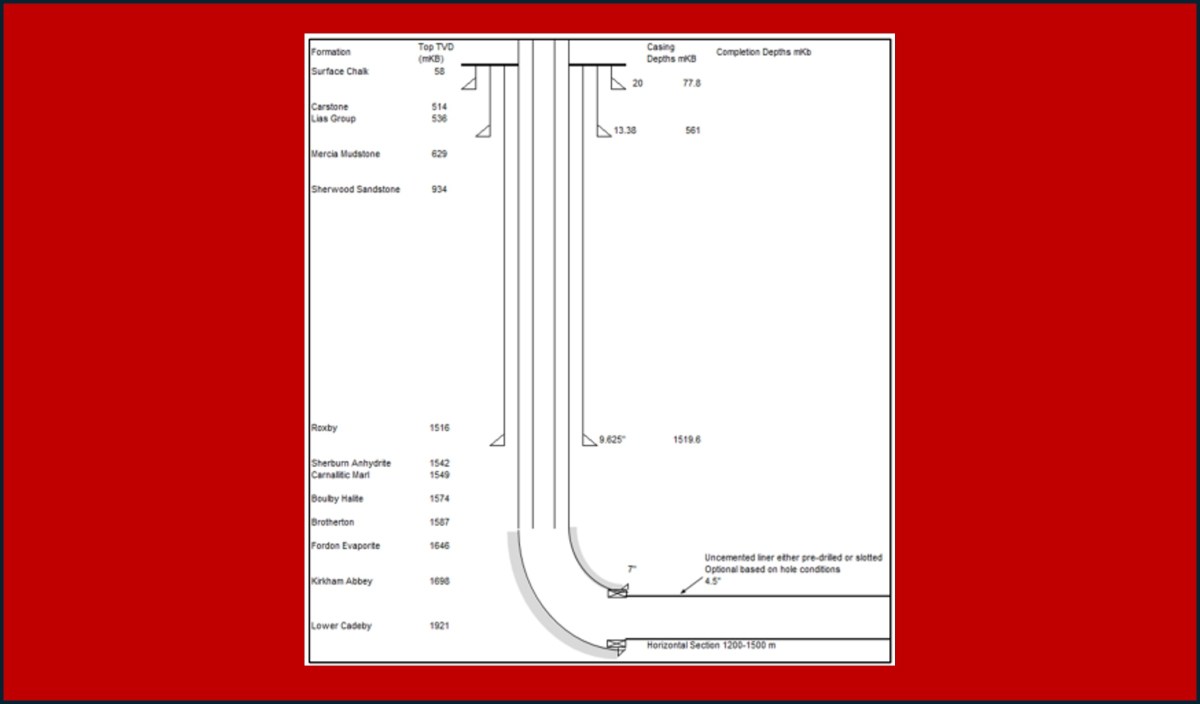
The company is seeking permission to inject liquid and proppant into the rocks surrounding a well to increase the flow of oil or gas. It first announced the plan in September 2024.
The operation is regarded by the Environment Agency as a small-scale form of hydraulic fracturing because the injection pressure is high enough to fracture rocks.
The moratorium on fracking in England, or fracking legislation, does not apply because the volume of fluid is below the statutory limited. But operators usually have to get approval for a hydraulic fracturing plan, which sets how they will minimise seismic risks.
This is the third onshore site in the region to seek consent recently for reservoir stimulation, proppant squeeze or small-scale hydraulic fracture.
Egdon Resources was granted permission in September 2024 for a similar operation at Wressle, near Scunthorpe. The permission was quashed this month following a Supreme Court ruling on climate emissions from onshore oil and gas production.
Proposals for gas exploration at Burniston, another Egdon site in North Yorkshire, also include a proppant squeeze.
Details
The non-technical summary, which accompanied Rathlin’s application to vary the West Newton-A environmental permit, said:
“Analysis of the well test data and further laboratory testing has indicated the need to undertake a small scale reservoir stimulation in order to overcome skin damage, which is a build-up of fine particles from the drilling operation invading the formation and blocking the natural permeability of the formation.”
The document says the reservoir stimulation would “extend beyond the near wellbore damage, providing some degree of secondary benefit in the form of enhanced permeability within the target formation”.
Rathlin Energy said it wanted to pump 60m3-70m3 of fluid and 12.5 tonnes of proppant into the West Newton-A2 (WNA-2) well. This is about half the volume planned for the proppant squeeze on two wells at Wressle.
The proposed pressure for the WNA-2 stimulation is 9,000psi (pounds per square inch). This is the same level as planned for the first proppant squeeze at Wressle, but greater than that (6,000-8,500 psi) proposed for high volume fracking at the KM8 well at Kirby Misperton in North Yorkshire.
Rathlin does not use the term proppant squeeze or small-scale fracking in the main part of its non-technical summary. But it acknowledges that reservoir stimulation is “a very low volume hydraulic fracture stimulation” and is “also referred to by others as a proppant squeeze.
The company said the operation would happen once and last under one hour.
It also said 30%-50% of the fluid would return to the surface and would then be taken to a waste treatment facility for disposal. The remainder, up to 70%, would remain in the rock formation, the company said.
The application also includes a request for the retention of stimulation fluid in the rock formation.
The consultation, which includes other changes to Rathlin’s environmental permit (see below), runs for just over six weeks.
Peter Stevenson, area environment manager at the Environment Agency, said:
“We will carry out a detailed and rigorous assessment of Rathlin Energy’s permit variation application. Our regulatory controls for the onshore oil and gas industry are in place to protect people and the environment.
“We may only refuse a permit application if it does not meet one or more of the legal requirements under environmental legislation, including if it will have an unacceptable impact on the environment or harm human health. If all the requirements are met, we are legally obliged to issue a permit.
“We welcome comments from the public and interested groups on local environmental factors that people feel are important.”
Current permissions
Rathlin currently has an environmental permit which allows it to drill, test and produce oil and gas at West Newton-A. The non-technical summary sets out the activities that are currently permitted.
- Wash and squeeze operation – decision document EPR/BB3001FT/V005
- Extension of the site to allow for oil and/or gas production – Schedule 7 of issued permit EPR/BB3001FT/V005
- New site layout – Schedule 7 of issued permit EPR/BB3001FT/V005
- New surface water management process – Activity AR7 and also noted in activity AR1 of permit EPR/BB3001FT/V005
- New radioactive substances activity permit for the extended site – RSR standard rules (SR 2014 No. 4) permit is already issued
- Generation of electricity from gas in a generator – Activity AR3 of permit EPR/BB3001FT/V005
Site expansion
The West Newton-A well site was constructed in spring 2013. The first well (WNA-1) was drilled that year and tested in 2014. WNA-2 was drilled and tested in 2019.
According to the non-technical summary, Rathlin is proposing to drill up to six new boreholes from the A site and potentially re-enter the two existing boreholes. (The site currently has planning permission for four new wells.)
Rathlin said the new wells would begin as a vertical or deviated borehole drilled from the surface. They could then “kick off” and deviate to a horizontal section.
The drilling fluid would be approved by the EA before drilling begins, the company said. But it added:
“Rathlin is proposing to use a number of drilling additives which have been the subject of approval within previous applications to the Environment Agency.”
Other key proposals
Contingency side-tracks The company said each well may require a contingency side-track “in the unlikely event of a sub-surface well constraint”. It said it was “impossible to predict the size or depth of a side track that would be needed to bypass the constraint”.
Clean-up and solvent treatment After drilling, Rathlin said the new wells would be cleaned to remove debris. The company said a solvent treatment pre-flush may be needed to remove the build-up of hydrocarbons in the near wellbore area. This usually involves pumping 15m3 of ethylene glycol monobutyle ether into the well in a carrier fluid of 5% potassium chloride brine.
Wash and squeeze Rathlin said acid or alkali may be pumped into the formation through the borehole to improve the flow of hydrocarbons. It said the operation was designed to remove scale or similar deposits from perforations and well-completion components. The acid or alkali could be squeezed into the near formation several times to clean out perforation channels. The used acid would be treated using sodium carbonate and used alkali with citric acid, both at the surface.
Well testing Rathlin said the wells would be tested to evaluate the commercial viability of the reservoir. These operations may be carried out in several isolated zones that had potential for oil and/or gas. During testing, any formation water, oil, condensate and gas would be separated. Oil and condensate would be stored onsite before being transported to a refinery. Produced water would also be removed to a licensed treatment facility. Gas would be burnt in ground flare.
Nitrogen and carbon dioxide lifting Rathlin also said it may inject nitrogen and/or carbon dioxide into a well to help the initial flow of oil and gas. Nitrogen would help to displace borehole fluids, while carbon dioxide would help remove near wellbore debris, as well as fluids. If the wells could not flow naturally, the company said it may use pumps to mechanically lift oil and gas to the surface, it said.
Consultation responses and deadlines
Comments to the West Newton proposals can be made online, by email to pscpublicresponse@environment-agency.gov.uk or by phone on 03708 506506.
The deadline for comments is Friday 3 January 2025.
- DrillOrDrop reported two months ago on Rathlin Energy’s annual accounts, which revealed that the company did not have enough money to meet its commitments in East Yorkshire. The company said it was looking for new funders and may seek to delay obligations. There has been no update from the company on its finances since then.
Updated 27 November 2024 to clarify that operations under the previous heading Other Changes had already been permitted.
DrillOrDrop has closed the comments section on this and future articles. We are doing this because of the risk of liability for copyright infringement in comments. We still want to hear about your reaction to DrillOrDrop articles. You can contact us by clicking here.
Categories: Regulation, slider

 DRILL OR DROP?