Emissions from oil produced at two proposed new wells at a site near Scunthorpe would contribute to climate change, officials have said.
But they ruled the likely impact wasn’t enough to require a detailed environmental study to support a planning application.
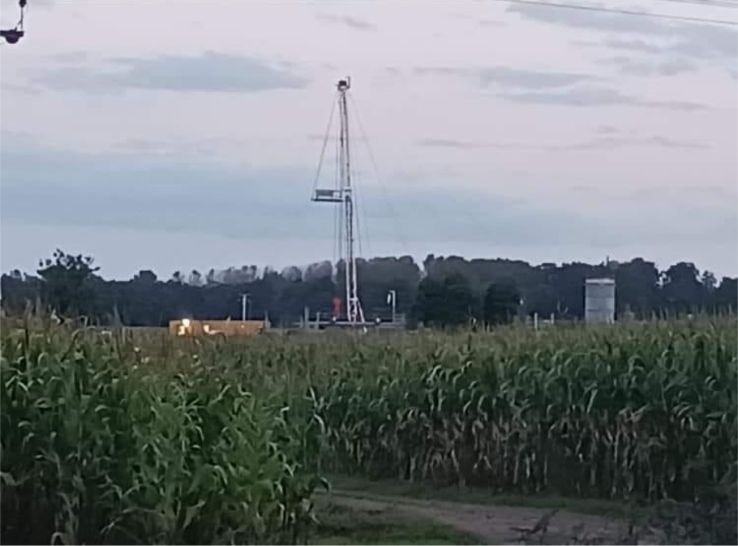
The decision came in a screening opinion by North Lincolnshire Council to the operator of the Wressle site, Egdon Resources.
Andrew Law, a senior planner at the council, told Egdon:
Whilst the proposed development would have adverse impacts on climate change, they would not be on a scale to qualify as significant and therefore an environmental impact assessment (EIA) is not required on climate change grounds.”
Egdon has estimated that the two new wells would produce 138,285 tonnes of oil and 122,221 tonnes of gas by the end of 2039.
This is in addition to 41,233 tonnes of oil in 2025-2034 from the existing production well at Wressle.
If the new wells were approved, Egdon estimated the Wressle site would add 918,000 tonnes of carbon dioxide equivalent (tco2e) in greenhouse gas emissions.
But Mr Law said the projected total emissions from Wressle “do not account for more than 5 per cent of any pertinent UK, combined regional or regional carbon budgets at any time during the project’s operational life span”.
He added that the proposal
“would not significantly impact attainment of any relevant carbon budgets”.
Mr Law concluded:
“The proposed development is not likely to result in significant environmental impacts.
“The planning authority hereby adopts a screening opinion that an EIA is not required in this instance.”
This is the second time the council decided an EIA was not needed for the new Wressle wells.
In September 2024, the council granted planning permission for the development. But this was quashed less than two months later following a Supreme Court judgement.
In a landmark ruling, the court said decision-makers should take into account the climate impacts of burning fossil fuels, known as downstream or scope 3 emissions. Until then, only the emissions from operating a site had been considered.
Egdon’s methodology was criticised as flawed in comments to the council. They said it failed to consider the impact of existing and proposed projects and the remaining space left in carbon budgets.
On other environmental issues, Mr Law said the new wells would have no significant impacts on noise, air and water quality, contamination, landscape, wildlife, built heritage and the effects on traffic and transport.

 DRILL OR DROP?