Councillors have opposed controversial plans to drill and frack for gas in the village of Burniston, near Scarborough.
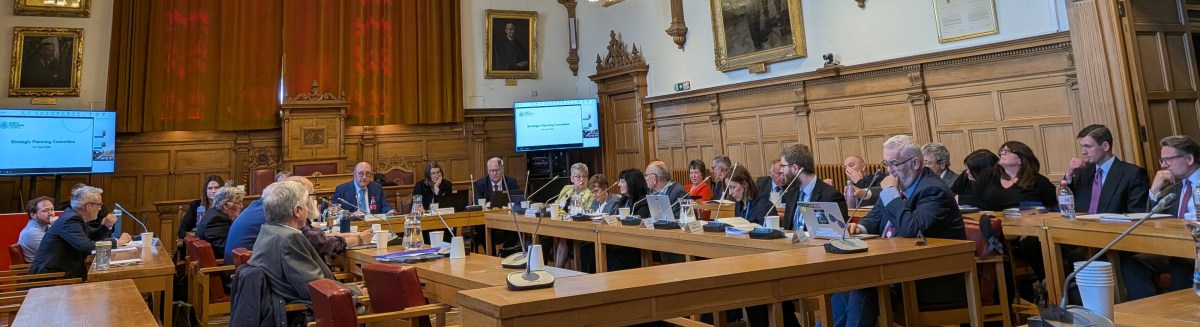
Members of North Yorkshire’s strategic planning committee voted almost unanimously, with just one abstention, against an appraisal gas well and proppant squeeze, a form of lower-volume fracking.
Councillors rejected the application this afternoon because they said it represented major development on the North Yorkshire Heritage Coast, against local policy.
The meeting decided there would be an unacceptable impact on residents living within 500m of the site and the development was against mineral policy because of lighting and the rig height would harm the North York Moors National Park, which is protected by a 3.5km buffer zone.
Councillors said there would be an unacceptable impact on tourism and offered no definite economic benefits. The proposal was also contrary to the council’s climate commitment.
The decision overruled the recommendation of officials, who had said the plans, by Europa Oil & Gas, should be approved.
Councillors voted for a “minded to” refuse decision.
The formal decision will be deferred until the local government minister has reviewed what should be included in the detailed environment statement that accompanied the application. This follows a request by Friends of the Earth earlier this month.
The vote, which came after more than four hours of discussions and presentations, was greeted with cheers from the public gallery.
Europa Oil & Gas said it would appeal.
Official support
Principal planner, Amy Taylor, told the meeting:
“The application is recommended for approval as it is considered on balance that there were no material planning considerations that warrant its refusal and there would be no unacceptable adverse environmental impacts resulting from the proposed development.”
She said noise, air quality, lighting, vibration and other impacts on local residents and the landscape would be controlled by 36 conditions.
She reported that the North York Moors National Park authority had not opposed the development, about 800m from its boundary, despite its concerns about the principle of the development for climate change.
But Ms Taylor said the plans were acceptable in climate change terms.
Local opposition
The meeting heard that all the local parish and town councils opposed the scheme, including Burniston, Newby & Scalby, Cloughton and Scarborough.
Other objections included Yorkshire Wildlife Trust, Salby and Newby Village Trust, Frack Free Coastal Communities, Frack Free Scarborough, Frack Free Ryedale, North Yorkshire Moors Association, CPRE and Friends of the Earth.
Key concerns included earthquakes, water contamination, increased traffic, noise, air pollution, climate change and damage to landscape, wildlife, recreation and tourism.
A large rally of opponents gathered outside the meeting. Only 20 members of the public were allowed into the council chamber to watch the meeting.
There are two formal complaints against the way the application was handled by council officials.
Proppant squeeze
The company’s scheme proposes to drill from farmland on the edge of Burniston, close to fragile cliffs on the North Yorkshire heritage coast.
Site construction is expected to last seven weeks, followed by two weeks to mobilise drilling equipment and five weeks for drilling with a rig up to 38 m high.
As part of its testing programme, Europa plans to carry out up to four stages of lower-volume fracking. The operations aim to release gas by creating fissures in the rocks surrounding the wellbore.
The company denies this is fracking. It says its operation does not propose to use the volume of fluid high enough to qualify for associated hydraulic fracturing (1,000m3 per fracking stage or 10,000m3 in total). These operations are currently prevented in England under a moratorium
Ms Taylor told the meeting that proppant squeeze was “fundamentally different” from higher volume fracking.
But campaigners have argued that Europa Oil & Gas is exploiting a legal loophole which allows operators to carry out fracking despite the moratorium.
They have pointed out that 500m3 of fluid that could be used in each stage at Burniston would exceed that injected by Cuadrilla at Preston New Road in Lancashire in 2019, which caused earthquakes felt across the Fylde region.
Councillors question plans
Many of the 12-person planning committee appeared sceptical at times about Europa’s proposals. Members spent more than 90 minutes asking questions about the application.
Cllr Andy Brown (Green), who proposed refusal, said the application contradicted policy on the North Yorkshire heritage coast, which states that major development was unlikely to be accepted unless it contributed to the area’s protection. This was a prime reason for rejection, he said.
Cllr Brown also said the application was covered by the region’s mineral plan policy on fracking. There were 38 homes within 500m of the site, he said.
There was no adequate assessment of seismic impact, he said. Fugitive releases could not be prevented by conditions. The flare stack would be on the site for 15 weeks. That was a lot of impact, he added.
He said the site could be seen from the North York Moors National Park. We do not have adequate information of light pollution from the flare stack, he said. There was also no assessment of the impact on tourism, he said. It would have a negative impact, he said.
There were also concerns about the the risk of earthquakes, possible methane leaks from the site, stability of the local cliffs, the economic impact, light pollution and the effect on tourism.
Opposition speeches
Chris Garforth, of Frack Free Coastal Communities (FFCC), said:
“Today is a major test of the council’s commitment to reduce carbon emissions; a test too of your minerals plan, key provisions of which this proposal ignores, notwithstanding the officer’s assertions”.
He said:
“To be clear, this application is a type of hydraulic fracturing or fracking, as defined by your minerals and waste joint plan”.
He said many of the objections concerned seismic risk from fracking.
The minerals plan asked for an assessment of the potential for induced seismicity and compelling evidence that it can be managed and mitigated to an acceptable level.
But he said:
“There is no assessment, no evidence – compelling or otherwise – in the application nor the officers’ report. Therefore, as the decision maker, how can you be satisfied that other regulatory regimes will work effectively as national planning guidance tells you to be?”
He also said there had been no health impact report, against council policy.
Gas from North Yorkshire would not bring domestic energy security. The only economic benefit would be for the company’s investors and shareholders.
The proposal would blight the landscape, which attracts visitors to the heritage coast
Katie Atkinson, planning consultant for FFCC, said the application was “strewn with errors and inconsistencies”.
“The company says it will restore the site after appraisal. But the planning documents also say it will retain equipment on site.
“Meanwhile, the proposed planning conditions are inadequate to protect residents’ health and amity, including night time noise levels which the World Health Organisation says are harmful to health through the lack of sleep.”
She said 920 residents live within 1km of the site.
She added:
“We believe the application is contrary to several national planning policies and several of our own minerals local plan policy and your responsibility to further the purposes of the national park. We ask that you refuse this unwanted and unnecessary proposal.”
Helen Bore, vice-chair of Newby and Scalby Town Council, said there were noted geological faults around the drilling site.
She said local planning policy required that proposals should be supported by detailed evidence about seismic risk. No such evidence exists, she said.
She said the industrial development was out of keeping with the local environment. It is in heritage coast and near the Cleveland Way. Where is the high level of protection in this application, she asked.
She also asked how North Yorkshire Council could be certain that Europa Oil & Gas, a company on the junior stock market, would have the funds to restore the site. She asked for a cash-backed bond before planning permission was approved.
She also said Europa’s suggestion that the proposal was short-term and temporary was “seriously misleading”.
Councillors were making the decision on behalf of local people, she said. She asked them to refuse the application and for there to be a recorded vote.
Karen Fanthorpe, a member of Cloughton Parish Council, challenged that the application was temporary and time-limited. Europa had always been clear that they intended to drill for oil on the coast, she said.
She described the current application as a “foot in the door”. Future applications would be harder to resist because the area had already been industrialised, she said.
The local community would get no benefit but bear all the costs, she said.
She also said there were key issues missing in the planning report:
- geological faults
- potential impact on UK energy security – we expect it to be less than 1%
- climate change
- mineral waste dump under Scalby that has not been consulted upon
- financial robustness of the company
Demand proper answers on this matter before a decision is made, she said. Future generations are relying on you. She also called for a financial bond.
The chair of Burniston Parish Council, Richard Parsons, said the application was the first step in the industrialisation of a piece of beautiful countryside.
He said two 25m wind turbines had previously been refused on landscape grounds. The site is not suitable for a development of this nature, he said.
He said there had been a recent cliff fall near the site. You have responsibility to be sure the site is suitable and secure, he said.
You are expected to make a decision without the evidence. The responsibility lies here and now, he said.
For our residents, this application means night lighting, within sight of the dark skies area, as well as dust and vibration. This would destroy the peace that Burniston represents. People will not come to see an industrial site on a hill.
You must not be fooled by the words temporary or short-term, he said. He urged them to protect our coast, our economy and our community. He urged them to refuse the application. This is the wrong proposal, in the wrong place at the wrong time.
Cllr Derek Bastiman, who represents Burniston on North Yorkshire Council, told the meeting he had lived in the Burniston area all his life.
He said the government was seeking to remove the great weight in favour of hydrocarbon applications.
According to the North Yorkshire minerals plan, the proppant squeeze meets the definition of fracking, he said.
If this application were approved, he said, it would open the door to fracking across North Yorkshire.
The application does not comply with local planning policy, he said.
This site is a “dead weight” to the heritage coast. It does not protect the landscape, it will destroy it. He described it as “vandalism”.
The council had a responsibility to protect its residents. Think long and hard about this application and the damage it will do, he said.
North Yorkshire Councillor Rich Maw said:
You are being asked to decide that this application is sufficiently certain and sufficiently evidenced and robust and I would say it is not.
He said the proposal lacks seismic evidence and a health impact assessment.
Cllr Maw said the council was treating the application was for exploration when it was for appraisal. The council was not applying appraisal requirements to assess the impacts of any future production, he said.
Steve Mason, North Yorkshire Councillor, an anti-fracking campaigner and sustainability researcher, said:
“This application is presented as small and limited. It isn’t. It creates the appearance of fitting with policy, without actually doing so. This is not sound planning.”
He said:
“There are three main ways this application games the system. First, a fracking proposal is re-labelled to avoid the UK ban on fracking. And to evade our Minerals plan’s stricter, yet considered, approach.
“Second, ‘low volume’ is implied as meaning ‘low risk’, despite the evidence to the contrary.
“Third, the climate impact from burning the gas is treated as too uncertain to count, even though the Supreme Court’s Finch case judgment, says otherwise, and our own policy demands the complete assessment of development as a whole.”
He said:
“The applicant frames a “proppant squeeze” as not fracking. I disagree and so does our policy. A proppant squeeze is simply part of the fracking process. Shatter the rock, squeeze in the proppant to hold the cracks open, release the gas. Our minerals plan defines fracking by what it does and its intent: stimulating rock to produce hydrocarbons.”
He said the Burniston site could produce three weeks of UK gas usage in total but with large-scale industrial impacts.
This development would industrialise a heritage coastline. It conflicts with the existing national planning policy framework, fails the test on climate change and conflicts with North Yorkshire’s own climate reduction plan.
“North Yorkshire must not be returned to an experiment for unconventional gas exploitation again.”
Company speeches
Paul Foster, Europa’s planning officer, said the application was for a single appraisal well. It was not for production.
He said there would be impacts but they were time-limited and could be controlled by planning conditions.
Subsurface, including potential seismic effects, would be controlled by separate regulatory regimes, such as the Environment Agency, HSE or the North Sea Transition Authority.
The issue was whether the application was acceptable in planning terms, he said. He asked the committee to approve the application.
Alastair Stuart, Europa’s chief operating officer, said he acknowledged that this was the local people’s landscape and environment.
He said all that was proposed was a single borehole, drilled for five weeks, followed by testing, and restoration. Nothing else can happen without a further planning application.
The decision should be evidenced-based and fair. It must be able to be defended and upheld, he said.
You are being asked whether this can be done acceptably, under strict condition, or not at all. If Europa were allowed to go further in the development, he was sure it would win local trust.
He said the decision today was not about national energy policy but about whether this development was acceptable at tis location.
Some of the concerns raised were dealt with other regulatory regimes.
Jamie McGill, also from Europa, read quotes from some local residents living near the Wressle oil site in North Lincolnshire, in which the company is an investor.
He said despite earlier reservations, they had not noticed any impact of the site. The comments included that people did not know it was there, it had proved to be a considerate neighbour and there had been no major impacts.
A local councillor said there had been “no problem with it”. The mayor of Broughton said the operator, Egdon Resources, had been a good neighbour. Mr McGill also referred to a community benefit fund, paid from production revenues.
William Holland, the company’s chief executive, said he was confident in Europa’s planning process, because it had done it before at Wressle in North Lincolnshire.
The views of the community had changed positively over time based on their experience of the Wressle site, he said.
Campaigners outside began shouting “Liar, liar, pants on fire”
Mr Holland said the company was committed to working constructively with the local community. He hoped the quotes from Wressle would reassure people.
He said likening Burniston with Preston New Road was like comparing apples and pears. He said the earthquakes during shale fracking at Preston New Road were why fracking had been banned and proppant squeeze was not.
Mr Holland said a production well at Burniston would lead to Yorkshire gas for Yorkshire people.
People in the public gallery shouted in response.
We will update this article so please check back for more details
Categories: Regulation, slider


