Gas drilling in a small village in the Yorkshire Wolds would cause “unacceptable harm”, a leading campaign organisation has said.
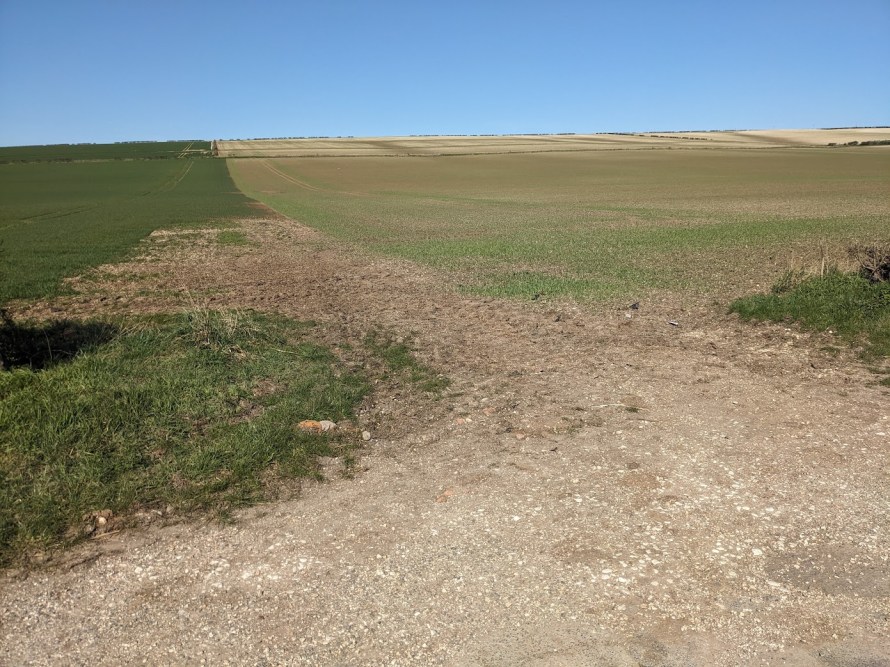
The Campaign to Protect Rural England (CPRE) has strongly objected to the plan at Foxholes, about nine miles from Scarborough, in North Yorkshire.
CPRE said a planning application by Egdon Resources should be refused.
A detailed response by the organisation’s North and East Yorkshire branch said:
“The proposal is inappropriate in this rural location, would cause unacceptable harm to countryside character and amenity, raises unresolved environmental and water protection concerns, would generate significant traffic and operational disturbance, and is inconsistent with the direction of travel required by climate change policy and responsible rural planning.”
It added:
“The proposal would introduce an intrusive industrial hydrocarbon exploration operation into a rural landscape, with associated drilling, testing, heavy goods vehicle movements, lighting, noise, emissions, water protection risks and long-term landscape and climate implications.
It said the operation, if approved, would “erode the local character and tranquillity of the area and would be at odds with the public interest in protecting the countryside for its landscape, amenity, ecological and cultural value”.
The organisation also said the application was “contrary to both national and local planning policies, inconsistent with the protection of rural character and amenity, and fails to demonstrate that the development can be made acceptable in this sensitive location.”
The earmarked site is on the edge of the proposed Yorkshire Wolds National Landscape, a designation that would bring the same level of protection given to national parks.
Egdon proposes to drill an exploration well through the chalk drinking water aquifer and next to the Gypsey Race, a rare chalk stream. Both the aquifer and the stream are considered internationally significant.
Key issues
CPRE said the proposal would generate some short-term construction work, possibly increase exploratory knowledge and may contribute to future gas production.
But the organisation said there were many disadvantages, including:
- climate conflict and lack of need for new gas
- harm to the Yorkshire Wolds and proposed National Landscape sensitivity zone
- unacceptable noise risk in a quiet rural area
- unresolved highway safety, congestion and emergency-routing issues
- risk to the Gypsey Race and chalk aquifer
- disturbance to residents, vulnerable road users, agriculture and tourism
- uncertainty over restoration and future production pressure
“Undermine protection of the Yorkshire Wolds”
CPRE said the site is in the setting of the proposed Yorkshire Wolds National Landscape, a distinctive region of open, rolling farmland, dry valleys, historic villages and relative tranquillity. The site is also within the 3.5km sensitivity zone of what would be a protected area.
The organisation said:
“approving hydrocarbon exploration in this landscape would set an undesirable precedent for further industrialisation of the Wolds and their rural setting”.
It said North Yorkshire Council, which will decide the planning application, should “attach ‘substantial weight’ to landscape protection, rural amenity and the conservation of countryside character”.
CPRE added:
“The council should not ignore the national significance of the landscape evidence or permit development within its immediate sensitivity zone that would prejudice, undermine or conflict with the purposes of designation”.
“Traffic risks on rural roads”
CPRE said the scheme should be refused because of the impact on local roads from a “significant number of heavy goods vehicle [HGV] and operational vehicle movements”.
It said:
“Rural roads in and around Foxholes are not designed to accommodate sustained industrial traffic without harm to local amenity, road safety, verges, agricultural access and quiet enjoyment of the countryside.
Increased HGV traffic would add noise, vibration, emissions, perceived danger for residents, walkers, cyclists, horse riders and other road users, the organisation said.
It added:
“the rural road network should [not] be used to support fossil fuel exploration where the claimed public benefit is speculative and limited.”
CPRE also raised concerns that the proposed lorry route to the Foxhole site crossed Staxton Hill, 515ft high with a 1:4 gradient.
It said Egdon Resources had not provided sufficient detail of any alternative or emergency route if Staxton Hill were closed or unavailable.
“Without a fully assessed and consulted-upon emergency routing plan, the council cannot lawfully or rationally conclude that safe and suitable access has been demonstrated for all phases of the development”.
The organisation said the impacts of the scheme on local roads “should therefore be treated as severe, or at the very least inadequately assessed, and permission should be refused until the applicant has demonstrated safe and suitable access for all users and the absence of unacceptable or severe cumulative transport effects”.
“Unresolved risks to water resources”
CPRE said the application had not “demonstrated that standard mitigation, monitoring and regulatory controls are sufficient to overcome the planning objection in this sensitive rural and hydrogeological context”.
It said the Yorkshire Wolds chalk aquifer was particularly vulnerable because groundwater can move through fractures and fissures and contaminants may travel unpredictably and rapidly.
It urged the council to apply a precautionary approach and “require clear, independent evidence that serious or irreversible harm can be ruled out”.
CPRE said North Yorkshire Council should not defer “fundamental questions of water protection to later permitting regimes where those matters are also relevant to land use planning.
The organisation added it would be “perverse” for the planning system to support a project to restore the Gypsey Race, “while simultaneously permitting a new fossil fuel drilling operation” nearby “without a compelling need and without eliminating the risk of harm to the chalk aquifer and chalk stream system”.
“Disturbance to residents”
CPRE said of the drilling proposal:
“it would introduce noise, lighting, dust, odour and industrial activity harmful to residential and rural amenity”.
It said planning conditions would not “adequately protect residents and the rural environment”.
CPRE said the current night-time noise levels were very low. It specifically opposed Egdon’s suggested night-time noise limits.
It said:
“the Council should require Egdon to show why materially lower night-time limits cannot be achieved and why the operation cannot be designed to avoid night-time drilling noise impacts altogether.”
“Climate change and fossil fuel dependence”
CPRE said it objected in principle to new hydrocarbon exploration because this would prolong dependence on fossil fuels when national policy, scientific evidence and public interest required accelerated transition to renewable and low carbon energy.
It said the planning case for the Foxholes proposal was “weak”. The development was not needed to meet a compelling local or national requirement for new gas extraction, the organisation said.
“The claimed economic benefits here are limited and temporary, while the proposal would enable a form of energy development that is inconsistent with the direction of national climate policy and the urgent need to decarbonise. On that basis, the development is not sustainable development and should be refused.”
Categories: Opposition, slider


