A landmark legal challenge that will shape future decisions on fossil fuel developments comes to the UK’s highest court next week.
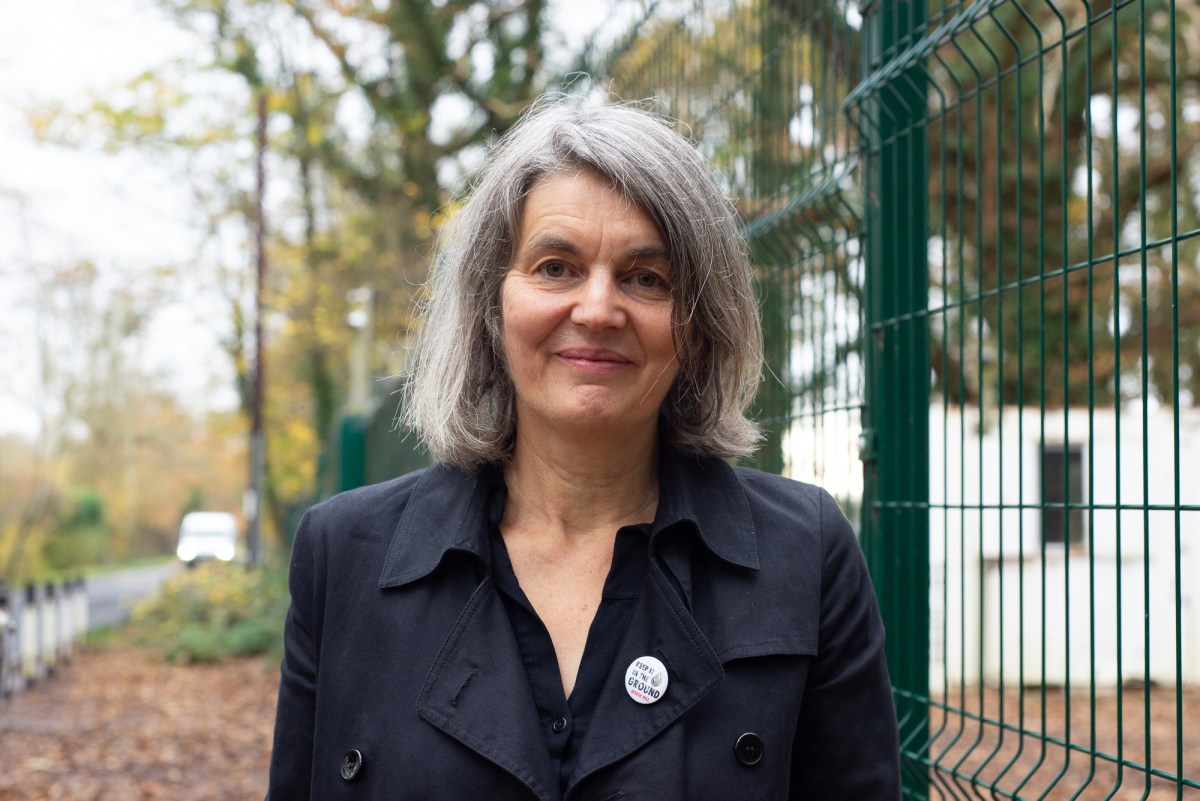
The environmental campaigner, Sarah Finch, is bringing her four-year case over the climate impacts of oil production to the Supreme Court.
Five justices are expected to decide whether planning authorities must take into account the full climate change effects of fossil fuel production before granting planning permission.
The case, due to last two days, centres on whether Surrey County Council acted unlawfully when it failed to assess the estimated 10.6 million tonnes of carbon emissions from using oil produced at the Horse Hill wellsite near Horley.
The council said it needed to assess only the emissions from the process of oil production, estimated at 140,958 tonnes of CO2 equivalent over the lifetime of the development.
This is the final stage of Ms Finch’s legal challenge, which began in 2019, with previous hearings at the High Court and Court of Appeal.
Three organisations will respond to her case. Another four have permission to intervene in the appeal.
DrillOrDrop will be reporting from the Supreme Court on both days.
Key facts
Appellant: Sarah Finch on behalf of Weald Action Group
Respondents: Surrey County Council; the site operator Horse Hill Developments Limited (a subsidiary of UK Oil & Gas plc); and the Secretary of State for Levelling Up, Housing and Communities
Interveners: Friends of the Earth and Greenpeace supporting Sarah Finch; the Office for Environmental Protection (organisation created in 2021 to hold government to account on the environment); and West Cumbria Mining Limited (operators of the new Cumbrian coal mine)
Justices: Lord Kitchin, Lord Sales, Lord Leggatt, Lady Rose, Lord Richards (link to biographies)
Dates: Wednesday 21 June 2023-Thursday 22 June 2023 (Supreme Court listing)
Court location: Supreme Court, Parliament Square, London SW1P 3BD, case number: 2022/0064
Site involved: Horse Hill oil site, Horse Hill, Hookwood, Horley, Surrey RH6 0RB
Key issue
Sarah Finch’s case is that it was unlawful for Surrey County Council to grant planning permission for oil extraction and extra drilling without assessing the level of greenhouse gas emissions caused by burning the produced oil (known as downstream or scope 3 emissions).
Her legal team has said this was required under directive 2011/92 EU of the European Parliament and the Town and Country Planning (Environmental Impact Assessment) Regulations.
Surrey County Council has argued that the law required an environmental impact assessment (EIA) to consider the impact of greenhouse gas emissions from the extraction of the oil but not its eventual use. It said the downstream emissions were not an effect of the development.
Significance of the case
The Supreme Court is expected to rule conclusively on whether the full climate change impact of fossil fuel developments in the UK must be taken into account before planning permissions are granted.
Sarah Finch said:
“The biggest climate impact from fossil fuel projects occurs when the fuel they produce is eventually burned. It’s unbelievable that these ‘downstream’ greenhouse gas emissions are ignored when planning decisions are made.”
Friends of the Earth said:
“This is a critically-important legal challenge that could have significant repercussions for new fossil fuel projects, including the proposed new coal mine in Cumbria.
“Sarah Finch’s legal challenge could ensure that the full climate impacts of new fossil fuel developments have to be taken into account in the environmental impact assessment when planning applications are considered. We’re in a climate crisis and it’s absurd that this is not happening already.”
What previous judges said
High Court
In December 2020, Mr Justice Holgate ruled:
“there is no requirement to assess matters which are not environmental effects of the development or project. In my judgment the scope of that obligation does not include the environmental effects of consumers using (in locations which are unknown and unrelated to the development site) an end product which will be made in a separate facility from materials to be supplied from the development being assessed.”
Appeal Court
The Appeal Court ruling in February 2022 was split.
Lord Justice Moylan, who allowed the appeal, concluded that the “essential character” of the Horse Hill application was the extraction of oil for commercial purposes. He said:
“the fact that the EIA failed to identify, describe and assess the “scope 3” or “downstream” greenhouse gas emissions which will be produced through the commercial use of the oil extracted from the well site means that the EIA failed to assess the relevant and required effects of the proposed development.
“As a result, the EIA does not comply with the requirements of the EIA regulations and planning permission cannot lawfully be given.”
Sir Keith Lindblom, senior president of tribunals, who dismissed the appeal, said it was a matter of planning judgement for the planning authority whether downstream emissions were a likely significant effect of a proposed development. He said:
“It was for the county council – not now to be second guessed by the court – to decide whether, in addition to the assessment of greenhouse gas emissions generated on the application site, a further assessment should be required covering the impacts of the ultimate consumption of refined products of the crude oil extracted by the proposed development.”
Lord Justice Lindblom, the third appeal court judge, agreed with Sir Keith’s ruling with some reservations:
“Whether the downstream greenhouse gas emissions were or were not to be regarded as indirect effects of the project was a question of judgment for Surrey CC. Although it would have been preferable for more explicit consideration to have been given to that question, I have concluded (not without hesitation) that the reasons just about pass muster.”
What Sarah Finch’s legal team will argue at the Supreme Court
Marc Willers KC, Estelle Dehon KC and Ruchi Parekh will argue that the majority ruling at the Court of Appeal was wrong on four grounds – it should not have:
- Held that downstream greenhouse gas emissions were not indirect effects of the development
- Held that environmental impact assessments were “project-centric” and excluded downstream greenhouse gas emissions from being indirect effects because the use of products generated by refinement of oil “was not part of the project”
- Found compliance with the environmental impact assessment regulations was entirely a matter of “planning judgment”, even if assessment of an indirect effect was wholly absent
- Accepted that downstream greenhouse gas emissions were a material consideration for the planning decision but were not indirect environmental effects
What respondents said about the case
After the Appeal Court result, Stephen Sanderson, chief executive of UKOG, said:
“This latest judgment in UKOG’s favour comes after more than two years in which Finch et al have sought to stop the Company’s oil production at Horse Hill. Given that during this time five judges have found against their case, one cannot help but wonder why they have been permitted so many repeated bites at the same legal cherry. That seems at very least unfair and perhaps is also somewhat unjust.”
After the appeal court ruling, Surrey County Council said:
“We note the judgement that our planning decision was lawful. We will review and consider the full findings of the judgement in due course.”
The Department for Levelling Up has not commented on the case.
Timeline and links
21-22 June 2023
Case at the Supreme Court.
17 May 2023
Cumbrian coal mine operators revealed to have been given permission to intervene in the case, along with Friends of the Earth and Greenpeace. Details
April 13 2023
The Office of Environmental Protection announces it has permission to intervene in the case. Details
August 2022
Supreme Court grants permission for Sarah Finch’s appeal. Details and interview with Sarah Finch
17 February 2022
Appeal court judges divided in their ruling on the climate impact of Horse Hill oil production. Details
November 16-17 2021
Case goes to the Court of Appeal. Court reports here and here.
21 December 2020
High Court challenge fails. Details
17-18 November 2020
High Court judicial review of Surrey County Council decision. Court reports here and here.
25 September 2019
Weald Action Group announces legal challenge to planning permission. Details
11 September 2019
Surrey County Council’s development control committee votes 7-2 to grant planning permission to Horse Hill Developments Limited for 20 years of oil production at Horse Hill and drilling four more wells. Details and link to committee report
21 December 2018
Plans published for four more wells and 20 years of oil production at Horse Hill. Details and link to planning application
19 December 2017
UK Oil & Gas says it will submit a planning application for production and extra wells at Horse Hill. Details

 DRILL OR DROP?
where should I send donations to this campaign?
I await the owners of yachts taking the off-shore wind farms to the Courts as the energy required downstream to fill their sails was not taken into account when the turbines were authorized!
[Comment removed by moderator]
if this is the case then every uk citizen is accused of consuming said energy in which is being proposed! When will this madness end!
Rather then accuse the energy companies, propose solutions to the climate problem but it’s easier to accuse!!