Landowners in North Yorkshire who lease sites to oil and gas companies have been warned they could be responsible for the costs of clean-up and restoration.
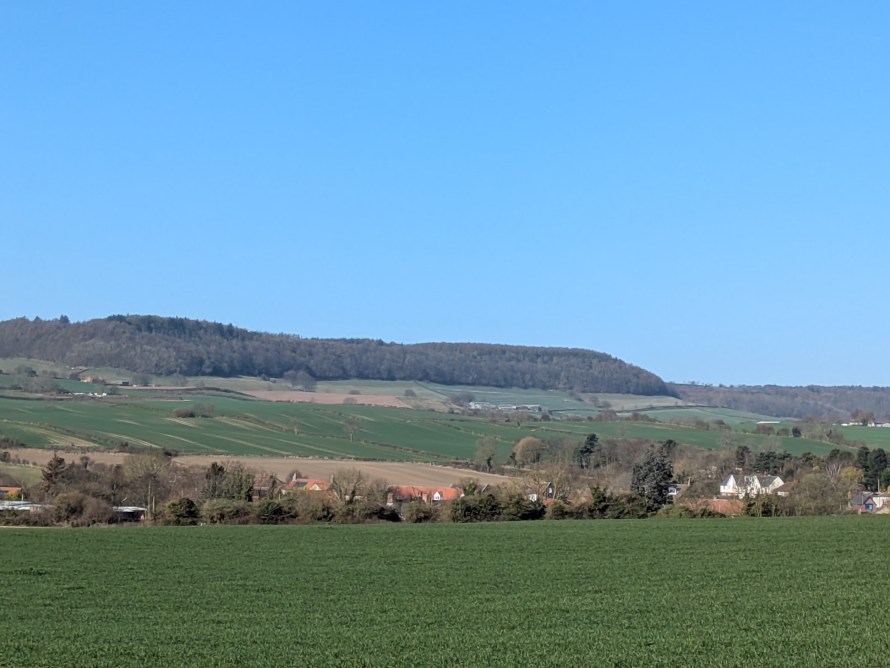
The Yorkshire Landowner Group, formed in 2019 to resist shale gas exploration, said “the risks are plentiful”.
The warning has been prompted by two exploration proposals in North Yorkshire by Europa Oil & Gas and Egdon Resources.
The group told DrillorDrop:
“If these two exploratory wells prove productive, the Yorkshire Landowner Group advises extreme caution by those whose land will need to be accessed for further development.”
It said a legal opinion had confirmed that the landowner could be liable for decommissioning costs, as the ‘owner of last resort’.
The group said it was particularly concerned about:
- Who was responsible if operations went wrong
- Complex corporate structures of oil and gas companies
- Imbalance of power between landowners and oil and gas operators
- Operations often dependent on high-risk financing
Europa Oil & Gas is planning to drill for gas and to use a form of hydraulic fracturing at Burniston, near Scarborough, on the edge of the North York Moors National Park.
Egdon Resources is proposing gas exploratory drilling at Foxholes, inland from Bridlington and near the new Yorkshire Wolds National Landscape (formerly area of outstanding natural beauty).
Public consultations on both planning applications have now closed. The decisions are due to be made by North Yorkshire Council’s strategic planning committee.
Who is responsible if operations go wrong?
Philip Tate, of the Yorkshire Landowner Group, said:
“There’s a complexity of who is actually responsible in the event of calamity that concerns landowners.”
He said:
“Residual liability for decommissioning wells and restoring land at the end of operation would become the personal financial responsibility of the landowner if the licence holder ceased trading or went into administration.
“In these circumstances, contamination of water resources or other environmental damage would be the responsibility of the landowner to clean up.
“The probability of this happening is not unreasonable, given the complicated corporate structures that frequently underpinned the operators.”
Complex corporate structures
Many onshore oil and gas companies own several, sometimes multiple, subsidiaries. Often, each subsidiary is responsible for a single site or field.
This arrangement means that if a site were unsuccessful, the operating subsidiary could go out of business without damaging the future of the parent company.
Companies House lists eight companies in the Europa Oil & Gas group, all headed by the chief executive, William Holland.
The organisation of Egdon Resources is no longer public. The company was bought in 2023 by a subsidiary of the privately owned Heyco-group, based in Dallas, Texas.
In North Yorkshire, both Europa and Egdon are partners in the Burniston project.
Europa is the operator of the Burniston petroleum and development licence (PEDL343), with a 40% stake. Egdon has a 40% stake in the licence, while a further company, also owned by Heyco, holds the remaining 20%.
To make matters more complicated, Europa and Egdon are offering to give up part of their licence interest, in return for new investment totalling more than £6.5m.
The arrangement, known as a farm-out, allows Europa and Egdon to secure funds to drill and test the Burniston well.
They also need money to pay for a seismic survey of the area to identify geological faults and fractures and help the company decide on the precise trajectory of the well.
In return, the investor could get a stake of up to 40% in the Burniston project.
This arrangement was announced earlier this month and shows how the ownership arrangements in the oil and gas industry can change, sometimes rapidly.
Philip Tate said:
“The corporate structure and assets of an operator with whom a landowner might enter into an access agreement for ten or twenty years, is highly unlikely to be the same corporate structure at end of operations.
“The transfer or sale of these interests during the period of grant would not be within the remit of a landowner to influence, and thus the financial resilience of the operator would vary significantly during the duration of a lease.”
On the proposed Burniston farm-out, Mr Tate said:
“As far as landowners are concerned, this means that another corporate structure will be added to those already involved in future development.”
At Foxholes, Egdon is the licence operator of PEDL347 with a 75% stake. But decisions would also be shaped by a subsidiary of the fracking company, Cuadrilla, which holds the remaining 25%. Since 2000, Cuadrilla has been 93% owned by the Australian mining group, A J Lucas.
Imbalance of power
“There is an asymmetry of power between operator and landowner”, Mr Tate said. He said:
“At its crudest expression, the managing directors at Egdon Resources and Europa Oil and Gas both draw salaries and director emoluments of at least £200,000 per annum, probably more. There will be few local landowners and farmers in the Yorkshire Wolds that exceed this.”
In Egdon’s case, he said decisions about Foxholes could well be made in Dallas by Heyco, rather than in North Yorkshire.
He said financial arrangements, such as farm-out agreements, revenue swaps, buy-ins, and joint developments, are commonplace in the oil and gas industry but rarely feature in land management.
Financial risks
“These financial manoeuvres provide liquidity for an operator and minimise or spread risk in a speculative business,” Mr Tate said.
“And the risks are plentiful, he said.
“Not only is there a risk of drilling a ‘dry’ well but there is liquidity risk, cash flow risk, credit risk and, of course, volatility in the commodity price of oil and gas.
“The acquisition and sale of interests in assorted development projects are regular occurrences within the petroleum business.”
Mr Tate said banks were “always keen to lend umbrellas when the sun is shining but the moment it starts raining, they want them back”.
He said:
“When an exhausted well heads towards decommissioning it ceases to be cash generative and requires the operator to seek another umbrella.
“The availability of further lending and the price at which this can be achieved is beyond the control of a landowner upon whose land the well is located.
“The corporate structure that originally supported the operator at commencement can evaporate leaving it standing in the rain without the funds to pay for decommissioning and any residual liability.”
Categories: Opposition, slider

 DRILL OR DROP?