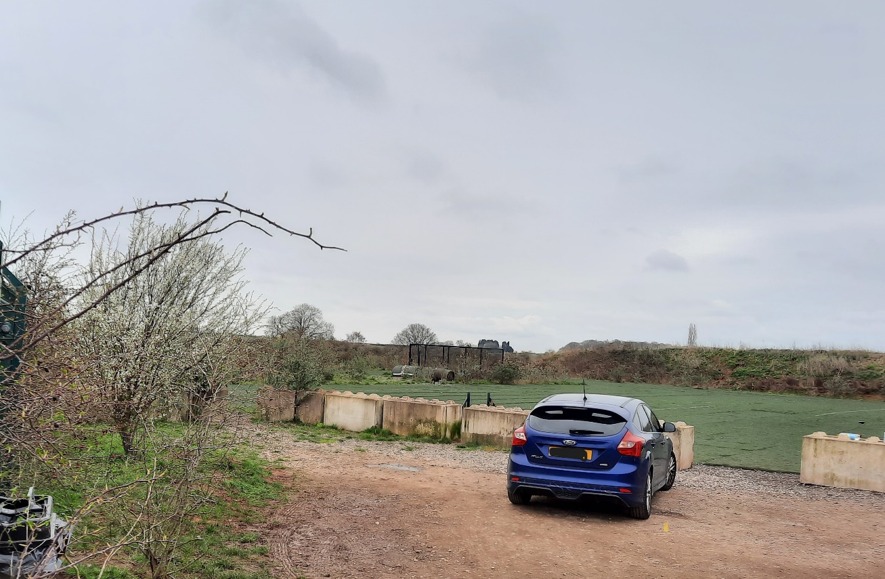
The company that gave up on oil operations in the protected landscape of the Lincolnshire Wolds is now trying to keep the abandoned well pad.
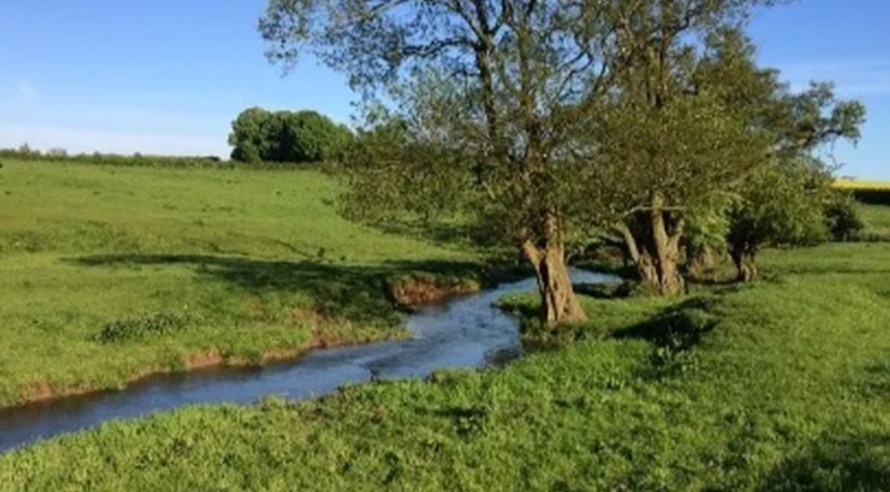
Photo: SOS Biscathorpe
Egdon Resources has applied for planning permission to retain the former Biscathorpe oil compound near Louth, including hardstanding, surrounding earth mounds, security gates and fencing, access track and drain.
It said the site would be used by the landowner, F Wallis & Sons, for agricultural purposes.
Egdon said in a statement that Lincolnshire County Council planners had already “agreed in principle” to the proposal.
A public consultation is now underway. Comments must be submitted to Lincolnshire County Council by the end of this month (Tuesday 30 June 2026).
Egdon announced in December 2025 that it had abandoned an appeal against the refusal of planning permission for oil production and further drilling at Biscathorpe.
The company said in April 2026 it would be decommissioning the oil well at the site.
But this week news emerged about the new plans for Biscathorpe.
Egdon said retaining the well pad would avoid the need for 738 heavy goods vehicle movements over a period of 10 weeks.
But local opponents have said the application, if approved, would save Egdon the cost of restoring the site to farmland, required in a planning permission granted in 2018. It would also turn what had been described as a temporary operation into a permanent development.
Amanda Suddaby, of the local campaign group, SOS Biscathorpe, said:
“While it is unsurprising to us that Egdon would prefer to leave the infrastructure in place rather than incur the cost and effort of restoring the site, we don’t believe those commercial considerations should influence the planning decision.
“The proposal now before the Council risks turning what was presented as a temporary development into a permanent foothold in the landscape.
“Of principal concern is the fact that retaining the wellsite pad keeps alive the possibility of future oil and gas development at Biscathorpe should political, regulatory or commercial circumstances change.
“While no such proposal is currently before the Council, retaining the site would make future development proposals significantly easier.
“Once the site is fully restored, any future developer would need to start again and make an entirely new case for development whereas retaining the infrastructure leaves the door open and preserves a platform for future proposals.”
The Biscathorpe site is in the protected Lincolnshire Wolds National Landscape, the new name for areas of outstanding natural beauty.
A new law requires public bodies to “seek to further” the statutory purposes of Protected Landscapes” when considering planning applications.
Government advice said public bodies should seek to avoid harm and contribute to the conservation and enhancement of the natural beauty, special qualities and key characteristic of protected landscapes”.
Ms Suddaby said:
“For years local communities were assured that this development was temporary and that, once operations ended, the site would be restored to agricultural land. That promise was central to the original planning permission and seemed to offer a guarantee that the development would leave no lasting visual impact on the protected National Landscape.
“Additionally, retaining a substantial area of hardstanding in the National Landscape could encourage other forms of development that would not otherwise arise at this location. However, the over-riding issue is that infrastructure which was expressly permitted on a temporary basis is now being proposed for permanent retention.”
She also said:
“It is troubling that the planning documents state that the principle of retaining the site has already been agreed with County Council officers – even before public consultation.
“If commitments that were central to the original planning permission can be set aside in this way, local residents are entitled to ask what confidence they can ever place in planning conditions intended to protect landscapes and communities.
“This application is ultimately about trust. The original permission was granted on the basis that the development was temporary and the land would be fully restored. The time has come for those commitments to be honoured.”
SOS Biscathorpe is urging residents and supporters of the Lincolnshire Wolds National Landscape to object to the application and call for the site to be restored in accordance with the original planning permission.
The group said the decision on the application would test whether commitments made during the planning process could be relied upon when development proposals were approved.
At the time of writing, there were 12 objections to the new application.
In its supporting statement, Egdon said Nottinghamshire County Council had granted planning permission in 2025 for the retention of another former Egdon wellsite, at Kirklington, near Newark. Since then, Newark and Sherwood District Council have confirmed that two steel framed buildings could be installed on the site without planning permission. (The Kirklington site is not in a National Landscape.)
Egdon also said the Biscathorpe scheme would include planting a 940m2 of native hedgerow around the site area to increase biodiversity and provide visual screening to the fencing. The company said this would achieve the minimum 10% net gain for habitats and hedgerows required by law.
Other abandoned sites
Other recently abandoned oil and gas sites have still not been restored to farmland, as required by conditions in their original applications.
DrillOrDrop is monitoring progress to restore the Broadford Bridge oil site in West Sussex and the Preston New Road shale gas site in Lancashire.
At the Harlequin well site, Radcliffe-on-Trent, Nottinghamshire, the site was turned into a dog exercise track after five planning permissions for exploration expired without a well being drilled.
The National Planning Policy Framework requires mineral planning authorities to “provide for restoration and aftercare at the earliest opportunity, to be carried out to high environmental standards, through the application of appropriate conditions”.