UK Oil & Gas is selling its stake in the troubled Horse Hill production site and licence, the company’s last remaining hydrocarbon interest.
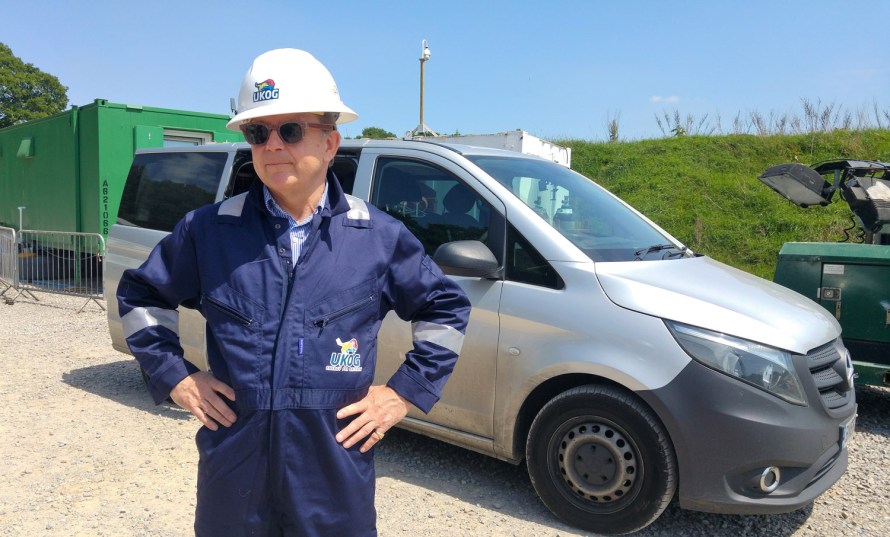
The company announced in a statement today (12/6/26) it had agreed sell its entire 85.635% interest in Horse Hill and PEDL137 to energy B plc for £1m.
energy B, led by Neil Ritson, a former executive at Solo Oil and Leni Gas and Oil, has interests in bitcoins and wind turbines.
It said the deal was part of a wider strategy for energy B to “build a portfolio of oil and gas projects in the UK in support of UK energy security”. At the time of writing, energy B shares had risen more than 125%.
Today’s news coincides with the appointment of David Lenigas as energy B executive chairman. This will be his second direct involvement in Horse Hill.
Mothballed
Horse Hill, near Redhill in Surrey, has been suspended since October 2024 after the Supreme Court stripped planning permission five months earlier in a landmark climate ruling.
The court judgement, known as the Finch Ruling, was the culmination of six years of legal action against oil production at Horse Hill by Sarah Finch and the campaign network, Weald Action Group.
The site, once nicknamed the Gatwick Gusher, has not lived up to its operator’s predictions of North Sea levels of oil extraction.
In 2015, UKOG described the oil discovery at Horse Hill in Surrey as “world class” and that the Weald in southern England could produce 100 billion barrels of oil. It later issued two clarifications to the London Stock Exchange.
In the last full six months of production, Horse Hill recorded an average of 30 barrels of oil a day, according to official records. The UK’s biggest producing field, at Wytch Farm in Dorset, extracted an average of 9,802 barrels of oil a day over the same period.
UKOG’s move from oil and gas
Today’s announcement marks the end of UKOG’s current interest in hydrocarbon extraction.
In 2015, the company had direct interests in the Avington and Horndean oil fields in Hampshire, Baxter’s Copse and Markwells Wood in West Sussex, the Holmwood prospect in Surrey and an offshore licence near the Isle of Wight. It also had indirect interests in the Brockham oilfield in Surrey and the Lidsey field in West Sussex.
A year later, UKOG acquired the Broadford Bridge site in West Sussex and the PEDL234 licence straddling the border with Surrey. It was also awarded PEDL331 onshore on the Isle of Wight but failed to get planning permission for a proposed site at Arreton.
In 2019, UKOG revealed plans for a new site near Dunsfold in Surrey. It finally got planning permission in June 2022 after an appeal. But no work was carried out at the site and DrillOrDrop understands the planning permission has now expired.
In recent years, UKOG has switched its interest to hydrogen storage. Last month, the company reported declining assets and revenue. The most recent annual accounts confirmed that Horse Hill was then the company’s sole remaining oil and gas site.
Stephen Sanderson, UKOG’s chief executive, said today:
“Whilst the Company recognises that potentially material resources likely remain within HH [Horse Hill], this divestment presents a timely and attractive opportunity to complete UKOG’s exit from the UK onshore oil & gas sector, freeing our team and resources to focus upon our two material UK salt cavern energy storage projects and new international energy opportunities under active review.
“We wish energy B well in its future stewardship of Horse Hill and in realising its ambition to deliver the field’s full remaining potential.”
UKOG’s stake in Horse Hill is divided between subsidiaries.
It holds 77.9% of shares in the site operator, Horse Hill Developments Limited. UKOG (137/246) has a 35% working interest in Horse Hill.
At the time of writing, the UKOG share price was down 2.56%.
Executives return to Horse Hill
Both David Lenigas and Neil Ritson have had previous interests in Horse Hill.
Mr Lenigas was chairman of UK Oil and Gas Investments until July 2015. Four years later, he left Doriemus, which had a 4% stake in Horse Hill.
He said today:
“This is an incredibly exciting project and important for future of UK energy sovereignty. Not only is there a great deal of oil at Horse Hill, but there is also a lot of gas in this very live, shallow and extensive hydrocarbon system. That gas has historically been flared over the last decade, gas that could have been used to power or heat UK homes.
“The initial flow rates at Horse Hill were incredible but obstacles existed to fully assessing the true potential of the 500m thick oil-laden Kimmeridge limestones identified by some of the biggest independent oil consultancies in the world at the time.
“Only a few of the oil sequences in the Kimmeridge were tested in 2016 testing program. Time constraints limited the ability to test the Kimmeridge’s ultimate flow potential and less than 20% of the Kimmeridge interval was tested back in 2016.
“With the oil and gas window at Horse Hill being relatively shallow compared to the hydrocarbons in the North Sea, this project and many other onshore projects in the UK offer a highly credible solution to assist with the domestic energy crisis.
“Whilst many right now are vacating the oil and gas sector in the UK, we aim to go against the tide with energy B.”
Neil Ritson, chief executive of energy B, was chairman of Solo Oil when it had interests in Horse Hill, more than 10 years ago.
Solo Oil disposed of its stake in Horse Hill in 2018.
Mr Ritson said today:
“I am delighted to present shareholders of energy B with an opportunity to develop the Company as an onshore oil and gas participant, alongside the green energy technology being developed around the HFI patented wind turbine.
“The UK is on a path to net zero, however, we need to recognise that oil and gas will remain part of the energy mix for decades to come. Importing foreign gas and oil; often with a much higher carbon footprint than indigenous supplies, is environmentally and economically unsound.
“We hope to bring Horse Hill back on to production as soon as possible and to develop its greater potential as a springboard.”
energy B said it was withdrawing from its Bitcoin treasury strategy. The company is listed on the UK’s Aquis Stock Exchange, which specialises in growth and entrepreneurial companies.
Deal details
energy B said it had entered into a share purchase agreement with UKOG for £1m. The deal gives energy B 100% of UKOG (137/246) and 77.9% of Horse Hill Developments Limited.
The purchase has been funded by an energy B share placing, which raised £1.2m. Some of the proceeds will be used to provide working capital, including payment of existing creditors, energy B said.
The agreement must be approved by the industry regulator and energy B’s shareholders.
Planning
UKOG announced more than a month ago that it had applied for planning permission to restart oil production at Horse Hill.
At the time of writing, Surrey County Council had still not published the application or begun a public consultation. DrillOrDrop understood this had been due this week. We will report when this happens.
At Broadford Bridge, another UKOG site where planning permission has lapsed, the company said it had plugged and abandoned the two wells. But the site has still not been restored to farmland, required b a condition of the permission. We continue to follow what happens at Broadford Bridge.


