In this guest post, Ann Stewart, of Weald Action Group, argues that IGas plans to produce hydrogen from fossil fuels in Surrey appear to be an attempt to greenwash continued extraction of unabated methane. She says the schemes, if approved, would lock the county into decades of emissions under the false premise of contributing to net zero.
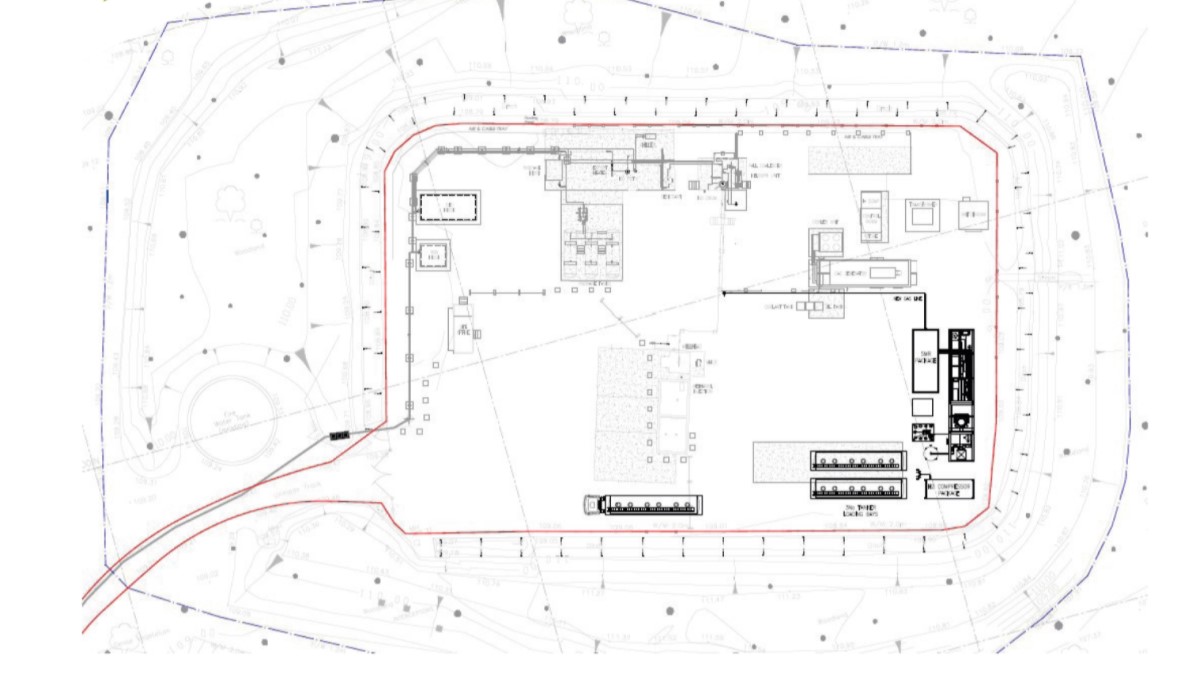
IGas is proposing to install hydrogen generation systems at two sites in Surrey. At present it has an online exhibition about the plans for one site, at Albury, and has said it will submit a planning application in July.
Hydrogen burns without producing any carbon dioxide and other emissions except water. Consequently, IGas is claiming that its hydrogen production can be part of the UK’s transition to net zero emissions by 2050.
This is misleading on a number of grounds. The plans will, instead, lead to a significant increase in direct emissions at their sites in Surrey.
Hydrogen production and its emissions
IGas proposes using a process called Steam Methane Reformation (SMR). This is a system that mixes natural gas (methane) with high temperature steam (7000 C – 10000 C).
IGas states that SMR “is a widely used and safe process to produce hydrogen”.
This is true to some extent. Hydrogen is already an established global industry. A 2019 report by the International Energy agency (IEA) stated that globally 6% of all gas production and 2% of coal production was used to produce hydrogen. However, it also stated that this produced about 830 million tonnes of CO2 each year. This is equivalent to the combined annual CO2 emissions of the United Kingdom and Indonesia.
Hydrogen production results in significantly higher greenhouse gas emissions than using natural gas directly. This is mainly for two reasons:
- The SMR process requires a great deal of heat. Presumably, IGas will be burning its own gas to produce this heat. This combustion process will release climate changing emissions.
- All conversion processes from one form of energy to another result in some loss. A recent parliamentary briefing states we will need to use 15-66% more natural gas to make up for energy losses should we replace natural gas with hydrogen made with the SMR process in our heating systems.
Both of these processes mean that additional natural gas is required to make up the shortfall. This additional gas results in additional emissions. The IGas claim that its hydrogen, to be used in vehicle fuel cells etc, is “displacing the diesel which would otherwise have been used for fuel” is misleading because it does not take into account the full cost in terms of emissions.
Production on the site
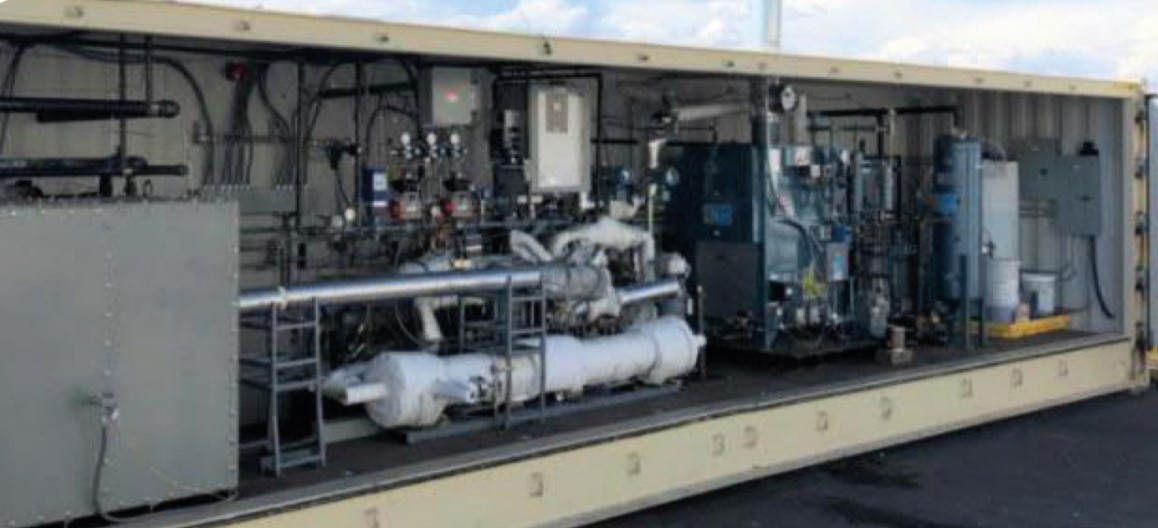
IGas plan to use a modular system produced in the US by Bayo Tech. Their specifications include:
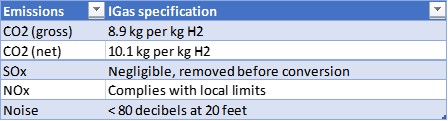
IGas states that its system will avoid nitrogen oxides (NOx)and sulphur oxides (SOx) emissions released when burning diesel.
It did not state what would happen to the SOx that is removed as part of the hydrogen purification process.
In the Bayo Tech specifications, It would appear that NOx emissions comply with US local limits but we are not clear how this relates with UK limits. However, this does suggest that all IGas calculations concerning their emissions levels need to be scrutinised in detail.
Hydrogen as part of the energy transition
In its proposal, IGas refers to the role of hydrogen in the government’s Ten Point Plan for a Green Industrial revolution, as if its proposal were part of this plan. It is not.
The Ten Point Plan has two key proposals for hydrogen production:
- Hydrogen production from fossils fuels but with Carbon Capture Use and Storage (CCUS).
- Green hydrogen
Fossil hydrogen using CCUS captures most of the emissions and prevents their release into the atmosphere. This is known as “blue’ hydrogen.
Blue hydrogen is, at present, very expensive and as yet there are no fully-functioning, large-scale projects in the UK or globally. The UK government has recently started investing in developing this technology in six low carbon hubs. They are all large industrial clusters with very high rates of industrial emissions and none of these are in the south of England. It is the scale of the projected emissions savings and the importance of the industries and jobs in these clusters that justifies both government and industry investment. However, only two of these low carbon hubs are projected to be completed by 2030.
Clearly, the project proposed by IGas is not the kind of project proposed in the Ten Point Plan. Instead, it will commit Surrey to allowing the production of “grey” hydrogen, that is hydrogen that is highly polluting, and which adds significantly to the county’s greenhouse gas emissions. IGas acknowledge they are producing grey hydrogen but say there are future opportunities for the emissions to be captured and stored. In fact, there are no plans, as far as we know, to develop any CCUS facilities in the south in the next decade.
Green hydrogen is produced from water using electrolysis. Where the electricity comes from renewable resources it results in very low emissions indeed.
There are plans for such a facility in the south-east UK, in Kent. Ryse Hydrogen is building a plant in Herne Bay, using electricity from the nearby wind farm and hope to be in production by 2022.
The IGas implication that its proposal is part of the Ten Point Plan is, in our opinion, highly misleading. It is yet another example of greenwashing: a fossil fuel company trying to claim some renewable credentials that are completely unwarranted.
The government was due to produce a hydrogen strategy earlier this year, but it has been delayed and it is now due to be published in July 2021. Once this strategy is published, any role for onshore gas sites, should there be any, will become much clearer.
What does seem clear already is that hydrogen production would increase greenhouse gas emissions in Surrey at a time when the county says it is endeavouring to reduce them.
Oil and gas oil sites are already a point source of large amounts of greenhouse gases.
However, at present gas produced at the current sites is distributed and therefore the emissions are released over a wider area and not all contained specifically in the county. Hydrogen production would mean that all those emissions would be released at the site.
In terms of global warming this is irrelevant, once in the atmosphere the effects of these emissions are global.
But if Surrey commits to emission reduction targets it could find that its reduced emissions are simply replaced by the new emissions produced alongside the hydrogen.
The Weald action Group considers that IGas, in its presentation of this proposal, is misleading residents of Surrey.
Without CCUS, hydrogen production would increase greenhouse gas emissions significantly and there are no plans for CCUS in Surrey.
The urgency to reduce greenhouse gas emissions and avert catastrophic climate change is now being recognised in the most unlikely of circles.
Even the International Energy Agency, in a recent report, stated categorically that “there are no new oil and gas fields approved for development in our pathway”.
Surrey needs to reject this attempt by IGas to avert the decline that its industry faces by misleading residents and work towards promoting genuine, low carbon industries.
Categories: Opposition, slider

 DRILL OR DROP?
It is vital that we are not misled by those who, fully cognizant of the effects of the continuing burning of fossil fuels upon our planet and indeed proclaiming the same, nevertheless covertly try to justify “more of the same” by representing the need for more domestic supplies of natural gas, (to provide the methane needed to produce the hydrogen!), as an essential contribution to mitigation. To what end? What are we to think of such arguments, intrinsically absurd yet which attract a certain following? Is this ‘just’ denialism? That seems unlikely. Stupidity? Perhaps. But the nagging worry remains – the polluters’ need to show a profit. Short term profit preferred to planetary life. This looks familiar.
The overall environmental emissions for using Methane to produce Hydrogen (even accounting for the CO2 released as part of the SMR process) compared to those emitted during the diesel refining process are less, along with the lack of diesel combustion related bi-products of NOx, SOx, or other harmful particulates matter produced by HGV’s, buses, etc.
This represents a significant environmental improvement and one that can be further enhanced with the possibility of CCUS.
It’s one of the many choices and steps on the pathway to Net Zero.
Thank you John for adding some sense and knowledge.
Interesting that my news letter from the Green Party that was pushed through my door this am was waxing lyrical about the benefits of local sourcing and how it benefitted the environment by cutting down on transport emissions!
That must be Green washing, then?
Short term profits? Was that why ridiculous financial guarantees were made to land owners to persuade them to go for wind turbines that would make them very rich whether the electricity was actually required or not? Then, short term profit from cash for ash! And the short term profits in the DRC from cobalt output by kids handling a known carcinogen and being paid a pittance? (There are many more, but I think that is enough to show there are others interested in short term profit opportunities, and lobby like crazy to achieve them. )
I know what I think about such hypocrisy to be claiming the moral high ground around that! Not sure there will be too many to join the “we” club for a classic within the “don’t go there” territory. 1720, you do make me smile. You argue against HS2 and try and justify that is because it is not a good return on money and then also try and argue against short term profits. Perhaps, you just like to argue?
Martin, the lack of CCUS in Surrey may also be a non issue. The loss of demand for fuel during the pandemic, led to a dramatic production cut back and in many cases a complete shutdown of Ethanol plants around the world.
Since Ethanol plants sell the CO2 that is produced as a byproduct in the manufacturing process, it led to a shortage of Carbon dioxide (CO2) for agriculture and the food/drink industries.
With the uptake of EV’s in the near future, the manufacture of Ethanol and CO2 as a byproduct will only further decrease, creating a possible opportunity for the likes of IGas to step in and fill the gap in the market.
UKOG have been keeping their hydrogen aspirations in check prior to the Loxley appeal next month. You won’t find much, if anything, in the planning or EA application but you can bet your bottom dollar Steve Sanderson is going to use it in the last chance saloon.
And why not, Mike?
About time some plans were put in place as to how hydrogen will be provided. Don’t think crowd funding will do it, it will take companies willing to take a punt.
All well and good for activists to waffle on about how it should not be produced but at some time someone has actually to produce effective and commercial plans that can be delivered. Might make a few activists redundant but there will be plenty of other opportunities.
More “greenwash”? Or the way forward? Oil companies lead the way in fighting climate change?
https://www.theguardian.com/business/2021/jun/29/equinor-to-triple-uk-hydrogen-output-with-new-plant-near-hull
“Norway’s state oil company Equinor will triple its UK hydrogen output, after setting out plans to build the world’s biggest hydrogen production plant with carbon capture and storage technology near Hull.
Equinor plans to produce clean-burning “blue hydrogen” to supply the Keadby gas power plant in Lincolnshire, owned by energy company SSE, making it the world’s first full-scale power plant to burn pure hydrogen to generate electricity.
Anders Opedal, the chief executive of Equinor, said on Monday that the company plans to produce another 1,200MW of blue hydrogen in the Humber area to help supply the Keadby hydrogen power plant.
He said that without hydrogen and carbon capture technology there was “no viable path to net zero and realising the Paris goals”.
Earlier this year Equinor and SSE set out plans to produce enough hydrogen to supply the Saltend Chemicals Park and Saltend Power Station. The 600MW project will extract hydrogen from traditional fossil gas, leaving carbon dioxide which it plans to trap and store using carbon capture technology.”
The same Equinor:
https://www.equinor.com/en/news/202106-production-licences-25th-licensing-round.html
“The Ministry of Petroleum and Energy has offered Equinor two operated production licences in the 25th licensing round in the Barents Sea.”
These protesters are a Joke. [Edited by moderator] All they do is cripple the county & drive up cost that Ordinary working folk end up paying for. & worst of all it all for nothing. we won,t make the slightest bit of difference compared to this. China Built 3 Times as Many Coal Plants in 2020 as Rest of …
Search domain breitbart.com https://www.breitbart.com/national-security/2021/02/03/china-built-three-times-as-much-coal-power-in-2020-as-the-rest-of-the-world-combined/
3 Feb 2021China approved the construction of a further 36.9 GW of coal-fired capacity last year, three times more than a year earlier, bringing the total under construction to 88.1 GW. It now has 247 GW of coal power under development, enough to supply the whole of Germany. A team of central government environmental inspectors delivered a scathing assessment of China’s energy regulator last Friday …
Meanwhile in the Far East:
https://www.theguardian.com/environment/2021/jun/30/five-asian-countries-80-percent-new-coal-power-investment
“Five Asian countries are jeopardising global climate ambitions by investing in 80% of the world’s planned new coal plants, according to a report.
Carbon Tracker, a financial thinktank, has found that China, India, Indonesia, Japan and Vietnam plan to build more than 600 coal power units, even though renewable energy is cheaper than most new coal plants.
The investments in one of the most environmentally damaging sources of energy could generate a total of 300 gigawatts of energy – enough to power the UK more than three times over – despite calls from climate experts at the UN for all new coal plants to be cancelled.”
Lead by example? As I have said many times before, Enemies of Industry, XR and all the other local antis should focus on where a difference can be made and could actually result in helping fight climate change, reduce global emissions etc.
The UK has a plan, is executing it and is doing better than most countries. If these entities really want to help then they need to focus on where the impacts will be greatest.
Paul.
I sympathise with your argument that those against fossil fuel pollution should concentrate their efforts where they are most likely to succeed. I think you are wrong however in seeking to exonerate the UK and put the blame on those countries you mention whose behaviour in this respect is certainly to be condemned. The blame, as last night’s C4News report showed and will show tonight and next week, is to be placed squarely on industry, in particular ‘Big Oil’ and ‘Big Gas’. Such facts do not make us enemies of industry, far from it. We are enemies only of that section of industry driving and colluding in the destruction of the planet and in the power they are able to exert on nation states, including, I am afraid, the UK.
What power are the Big Oil and Big Gas companies able to exert on China, India, Indonesia, Japan and Vietnam Iaith1720? The point I was making that those against fossil fuel production should move their efforts to where the most benefit will result. Not “most likely to succeed”. Of course they won’t succeed in the above mentioned countries which is why they don’t go there and protest. I don’t watch the news very often – what “blame” are you referring to?