Potential gas production from two sites in East Yorkshire would have a significantly lower carbon footprint than the UK average, according to new estimates.
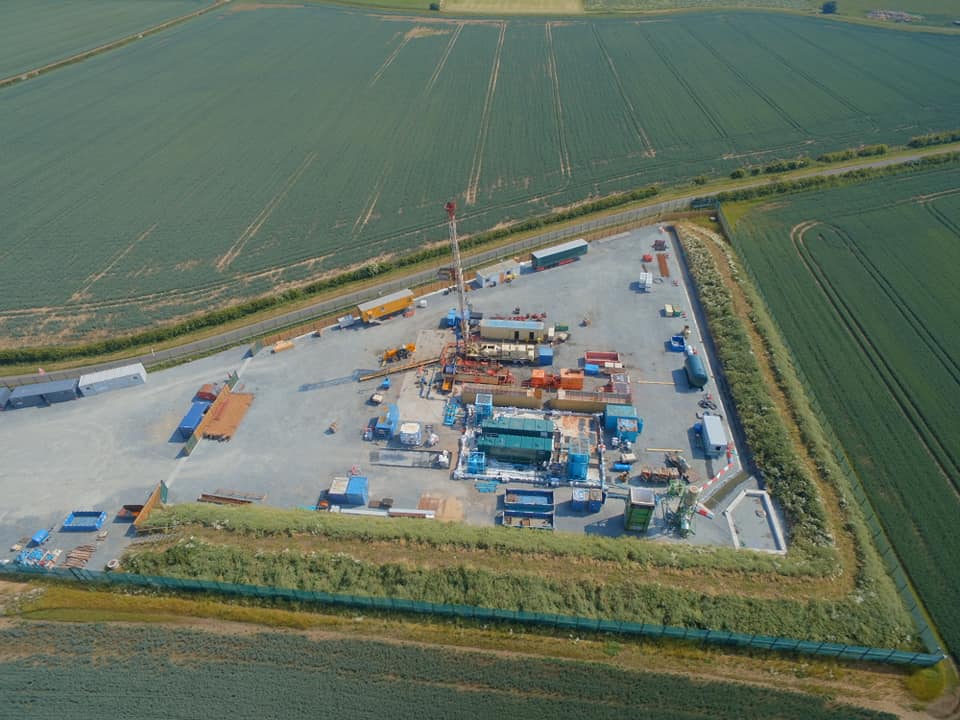
A report, by the petroleum consultancy GaffneyCline, gave potential production from the West Newton field the best available AA rating for carbon intensity.
The authors estimated West Newton gas production would emit 2.87 grams of CO2 per megajoule of energy developed (gCO2eq./MJ). They also said there was potential to improve the carbon intensity to 2.66 gCO2eq./MJ.
The report said the field had been compared with a “selection of UK onshore and offshore field analogues” and imported LNG (liquified natural gas).
It said the carbon intensity of average UK onshore production was more than 7gcO2eq/MJ. But this figure included oil, as well as gas, production.
The average UK offshore carbon intensity was more than 10gCO2eq/MJ and average imported LNG was just over 12gCO2eq/MJ, the report said.
GaffneyCline estimated than almost 2gCO2eq/MJ at West Newton would come from venting, flaring and fugitive emissions. Other carbon sources included production operations, processing, transport and offsite emissions.
Union Jack, one of the West Newton partners, said in a statement the project would seek to reduce the project’s carbon intensity through “the utilisation of the best available techniques, including Gas-to-Grid technologies and stringent engineering specifications to minimise any venting, flaring or fugitive emissions”.
Union Jack’s executive chairman, David Bramhill, said:
“The AA rating achieved indicates the efforts made by the Operator, Rathlin Energy (UK) Limited, to ensure that projects under its stewardship comply with best practice.”
Sachin Oza, co-chief executive of the other partner, Reabold Resources, said in a statement:
“The AA rating demonstrates the low carbon credentials of the West Newton project and is an example of the opportunities available in the UK to power the country through lower carbon, home grown energy, rather than relying on expensive and more carbon intensive imports.”
In 2021, Union Jack said a report on the carbon intensity of oil production at Biscathorpe in the Lincolnshire Wolds would also be below the UK onshore average. This report, also by GaffneyCline, rated Biscathorpe AA for carbon intensity. It estimated a carbon intensity of 3.06 gCO2eq./MJ, with the potential to reduce it to 1.49gCO2eq.MJ.
Most UK production measures carbon intensity by kg of CO2 per barrel of oil equivalent (kgCO2/boe). The industry regulator, the North Sea Transition Authority, said average carbon intensity for all UK gas production, at 21 kgCO2/boe, was lower than all sources imported into the country, except that piped from Norway. Norwegian piped gas has a carbon intensity of 8kgCO2/boe
Union Jack financial results
Union Jack reported falling profits and revenues for 2023 but said “the future remains bright”.
The recent annual accounts showed net profits dropped to £859,089, down 76% on 2022 (£3,606,624). Oil revenues, mainly from the Wressle field in North Lincolnshire, were 40% down at £5,065,679, compared with £8,507,050, in 2022.
Union Jack said the company was in “sound financial health” and continued to be debt free.
David Bramhill said the Union Jack remained focussed in the UK on the Wressle “flagship”. The field would “support the company with revenues for at least another decade”, he said.
The undeveloped West Newton field (see above) had the “potential to become an important transition fuel in helping the UK achieve its 2050 Net Zero target”, Mr Bramhill added.
Site updates
Wressle: Union Jack said initial extraction rates at the UK’s newest onshore oil producer had exceeded expectations. It has generated revenues for Union Jack of more than $19m before tax and allowed the company to be self-sustaining for almost three years without the need to borrow.
West Newton: Union Jack said: “we are expecting West Newton … to see activity during the remainder of 2024 and beyond.” Reports had confirmed that previous drilling with water-based mud had caused near well-bore damage in the Kirkham Abbey formation, he said. This had affected the natural porosity and permeability of the formation and reduced the ability of oil to flow.
Keddington: A review confirmed an undrained oil resource on the eastern side of the field, Union Jack said. There was planning permission for further drilling and production could increase with a sidetrack to one of the existing wells, the company added. There were also plans to upgrade production equipment during 2024.
Biscathorpe: Union Jack did not refer to a two-day hearing at the High Court in June 2024, at which r SOS Biscathorpe will challenge the decision of a planning inspectorate to allow permission for a sidetrack well and long-term production.
North Kelsey: Union Jack also did not refer to the withdrawal of Egdon Resources in June 2023 from its appeal against refusal of planning permission.
Licence relinquishments
Union Jack said licence relinquishments were being prepared for Kirklington (PEDL203),Widmerpool Gulf (PEDL201) and Laughton (PEDL209). It said there was potential for geothermal energy at Fiskerton Airfield and Dukes Wood.
Key figures
Gross profit: £3,298,844 (2022: £5,100,479)
Net profit: £859,089 (2022: £3,606,624)
Impairments to property, plant and equipment: £56,829 on PEDLs 118, 203, EXL294
Basic earnings per share: 0.79 pence (2022: 3.20 pence)
Oil revenues: £5,065,679 (2022: £8,507,050)
Administrative expenses, excluding impairment costs: £2,057,506 (2022: £1,665,174)
Cash and cash equivalents at year end: £5,198,303 (2022: £7,155,100)
Total assets at year end: £24,176,606 (2022: £26,361,337)
Non-current assets at year end: £17,431,036 (2022: £17,157,286)
Intangible assets: £10,905,630 (2022: £9,134,006)
Tangible assets: £5,888,456 (2022: £5,666,212)
DrillOrDrop has closed the comments section on this and future articles. We are doing this because of the risk of liability for copyright infringement in comments. We still want to hear about your reaction to DrillOrDrop articles. You can contact us by clicking here.

 DRILL OR DROP?