The government has defended plans to end the issuing of new onshore oil and gas licences in England.
It said new onshore licences, which give holders an exclusive right to explore for oil and gas, would not stop the decline of the UK hydrocarbon industry or “meaningfully improve” UK energy security.
In a consultation, which began this week, the Department of Energy Security and Net Zero (DESNZ) said the small-scale of the onshore industry generated lower levels of tax revenue and jobs than the offshore sector. Despite this, the department said onshore production could be more disruptive.
During last year’s election, Labour said it would not issue new licences in the North Sea. The party repeated this stand in government.
And this week DESNZ confirmed it also intended to stop new licensing for onshore oil and gasfields:
“We propose to treat onshore and offshore licensing in the same way and are therefore consulting on ending the issuing of new onshore licences for exploration and production. This will support consistency across the system and meet our commitment not to support new oil and gas licences for new fields.”
DESNZ said:
“Further licensing for onshore exploration and production activities would not halt the decline of the industry, nor meaningfully improve UK energy security.”
The latest data, from the industry regulator, the North Sea Transition Authority (NSTA), shows that in 2024 the onshore industry contributed 2.07% of oil and 0.96% of gas production.
DESNZ added:
“Employment levels and tax revenue from onshore production are correspondingly much lower. Although onshore production is small compared to the UK’s offshore industry, onshore production still contributes to the UK’s domestic and international climate impacts. Onshore production can also be more disruptive, as it takes place closer to people’s homes.”
The department also referred to plans to ban hydraulic fracturing:
“Ending new onshore licences will progress the government’s commitment to ban hydraulic fracturing for shale gas extraction (‘fracking’).”
It defined fracking as “a specific type of onshore oil and gas extraction by unconventional means, involving pumping large volumes of fluid into shale rock at high pressures. The consultation said:
“Onshore licences, along with other consents and permissions, are a prerequisite for fracking to take place, and therefore the government’s proposal to end new onshore licencing would also encompass new licences for the purpose of fracking.”
The consultation also added:
“We will also explore whether the NSTA’s sanction powers in respect of onshore activities are sufficiently robust, and/or whether they would benefit from greater alignment with the NSTA’s sanction powers in respect of offshore activities.”
The NSTA shares regulatory powers for the onshore industry with mineral planning authorities, the Environment Agency and the Health and Safety Executive.
The consultation is open to individuals, groups and companies. It closes on 30 April 2025. Link to consultation information
Licensing
There have been 14 onshore licence rounds, where licences were auctioned to bidding oil and gas companies.
The most recent round, the 14th, offered 93 new licences to 22 separate companies in England in 2015. Most of these licences were to explore for shale gas.
A DrillOrDrop investigation in 2024 revealed that 52 of the 60 shale gas licences issued under the 14th round no longer exist.
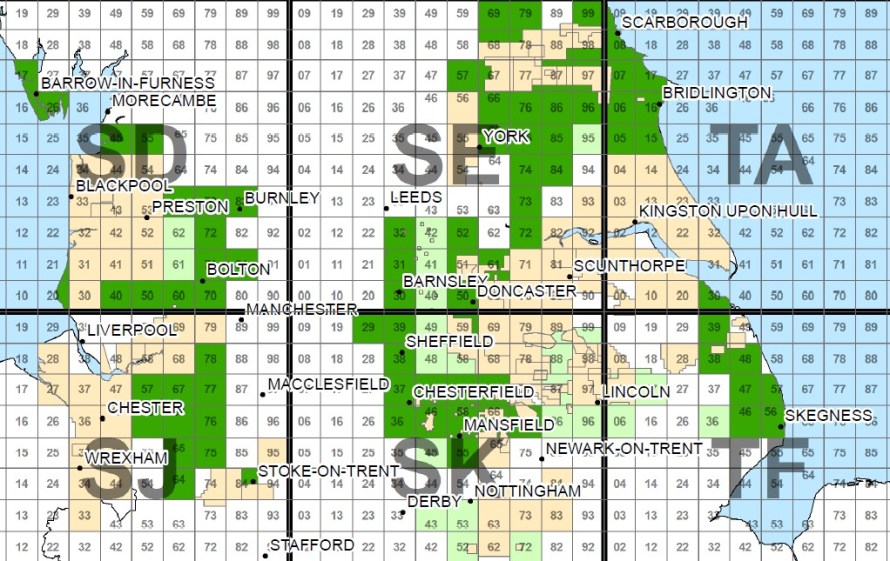
There remain a total of 66 oil and gas licences in England. Many are not active. The oldest dates back to 1923 and is held by the Duke of Devonshire, of Chatsworth Hall in Derbyshire.
The most recently-issued licences are called Petroleum Exploration and Development Licences or PEDLs. They were issued for 30 years.
Onshore licensing is now a devolved function so the consultation concerns only new licences in England. Onshore licensing in Wales, Scotland and Northern Ireland is the responsibility of the devolved governments.
DrillOrDrop has closed the comments section on this and future articles. We are doing this because of the risk of liability for copyright infringement in comments. We still want to hear about your reaction to DrillOrDrop articles. You can contact us by clicking here.

 DRILL OR DROP?