Government plans to cut methane emissions are being challenged in court next week by a group campaigning against onshore oil and gas in southern England.
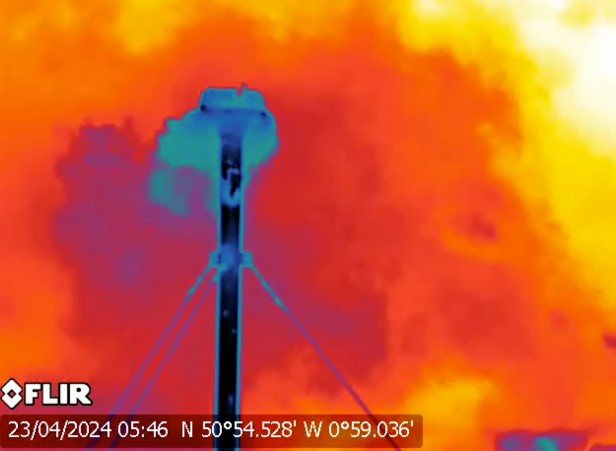
Photo: Clean Air Task Force
The Weald Action Group, which won a landmark Supreme Court climate case in 2024, will seek a judicial review at the High Court of the UK Methane Action Plan.
The campaigners will argue that the plan fails to address properly the risks to delivering the UK’s carbon budgets under the Climate Change Act. They will also say it omits meaningful policies for onshore oil and gas methane emissions.
The campaigners will also argue that the Methane Action Plan is government policy and so it must comply with environmental principles designed to prevent harm and protect the environment.
Methane is a potent but short-lived climate pollutant. Its warming potential is 80 times more powerful than carbon dioxide over a 20-year period. It is responsible for about a third of global warming.
One of the key sources of methane from the oil and gas industry is flaring (inefficient burning of methane), venting (releasing unburnt methane) or leaks.
The Weald Action Group said:
“Cutting methane pollution is one of the fastest and most cost-effective ways to slow climate breakdown this decade and reducing emissions of this gas has the added benefit of protecting public health by improving air quality.
“Yet in the UK onshore oil and gas sector, leaking, venting and flaring of gas are common, inspections infrequent, and leak detection is sporadic. Methane is poorly regulated and largely hidden from public scrutiny.”
The group’s methane campaigner, Emily Mott, said:
“As UK leaders take to the global stage at COP31 to champion methane action, the UK must show real commitment by tackling emissions at home.
“We are calling on the UK Government to urgently address methane emissions from onshore oil and gas operations.
“Taking action now—robust methane regulation and policy that includes the onshore sector would deliver rapid climate benefits, strengthen public health protections and close the gap between the UK’s international climate ambitions and its domestic regulatory approach.”
The hearing at the Royal Courts of Justice in London is on Wednesday 18 November (time to be confirmed).
Horndean challenge
This is the second judicial review sought by Weald Action Group on methane emissions.
It also challenged the Environment Agency for an environmental permit that allowed methane emissions from the Horndean oil field in Hampshire without adequate limits. The group also alleged that the EA failed to assess properly better methane mitigation options and approved the permit without sufficient transparency or public consultation.
A judge refused the case at a recent hearing, but Weald Action Group has appealed against this decision.


