The environmental campaigner who secured a landmark Supreme Court judgement on oil and gas emissions has won a prestigious international award.
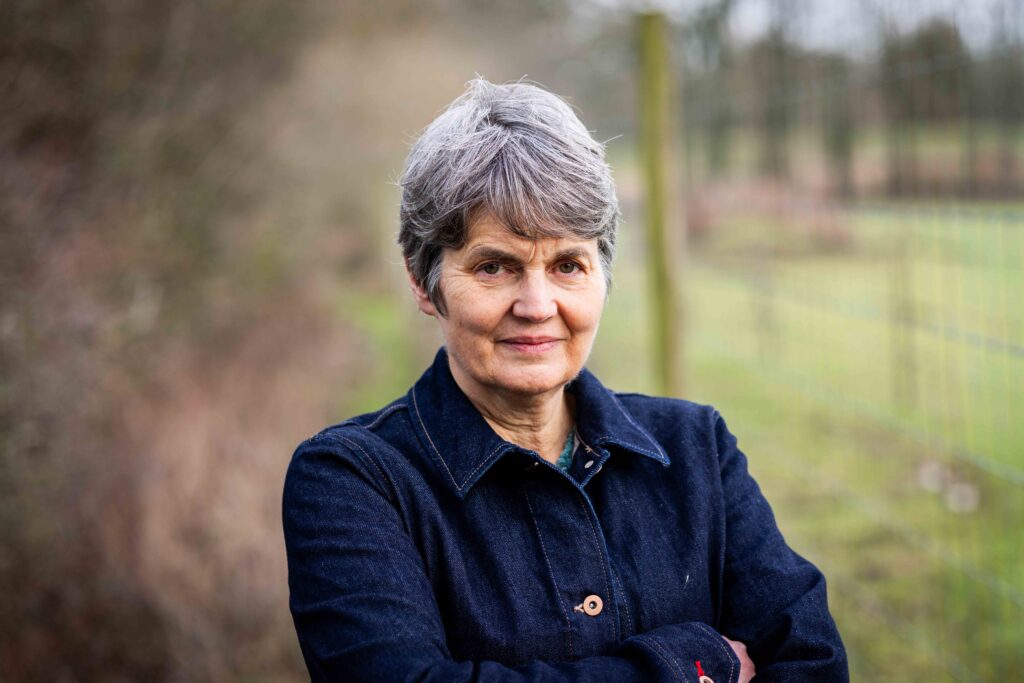
Sarah Finch, 62, representing the Weald Action Group, will receive the Goldman Environmental Prize, often referred to as the Green Nobel, at a ceremony in San Francisco later today (Monday 20 April 2026).
Her win follows in the footsteps of former winners, including Ken Saro-Wiwa, who was executed by the Nigerian government after campaigning against environmental damage by the oil industry in Ogoniland.
The Goldman, regarded as the world’s foremost prize for grassroots environmental activists, recognises the June 2024 Supreme Court judgement, which became known as the Finch ruling.
This required authorities to consider the impacts of burning fossil fuels on global climate before deciding whether to grant permission for extraction.
The Goldman is awarded annually to campaigners from each of the world’s six regions. For the first time, all the 2026 winners are women.
Ms Finch, who won the Europe award, told DrillOrDrop:
“It just feels unreal. But I’m very proud and very honoured to be chosen for this”.
She said:
“The case that we won at the Supreme Court absolutely deserves any prize going.
“While I feel that, as an individual, I’m not Europe’s most inspiring campaigner, I’m happy to accept the award on behalf of the Weald Action Group and grassroots communities everywhere who are fighting to keep fossil fuels in the ground.”
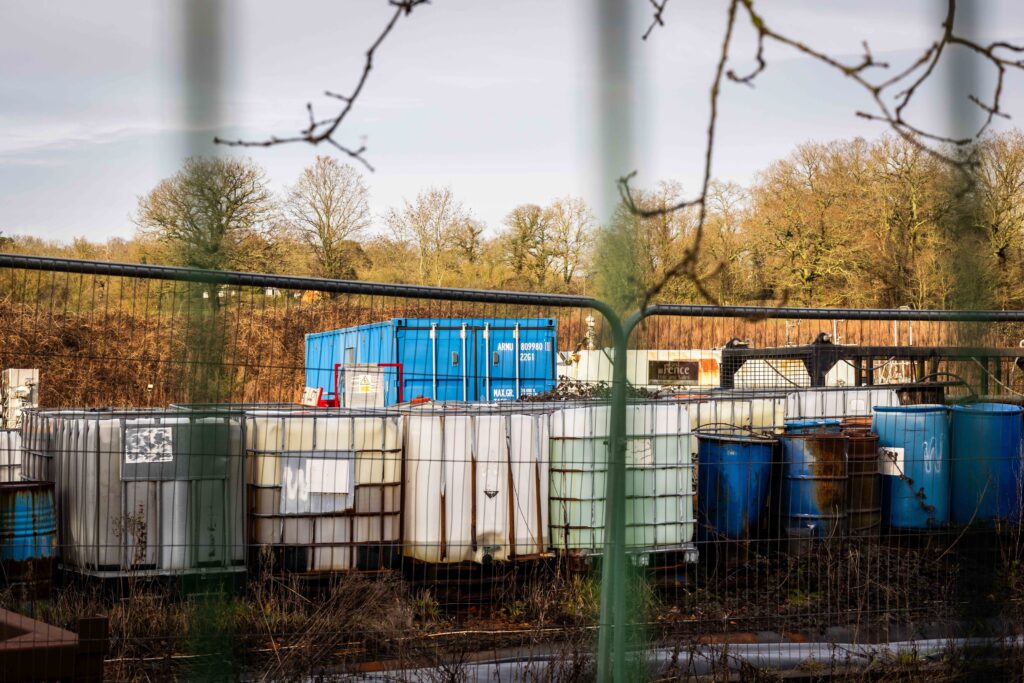
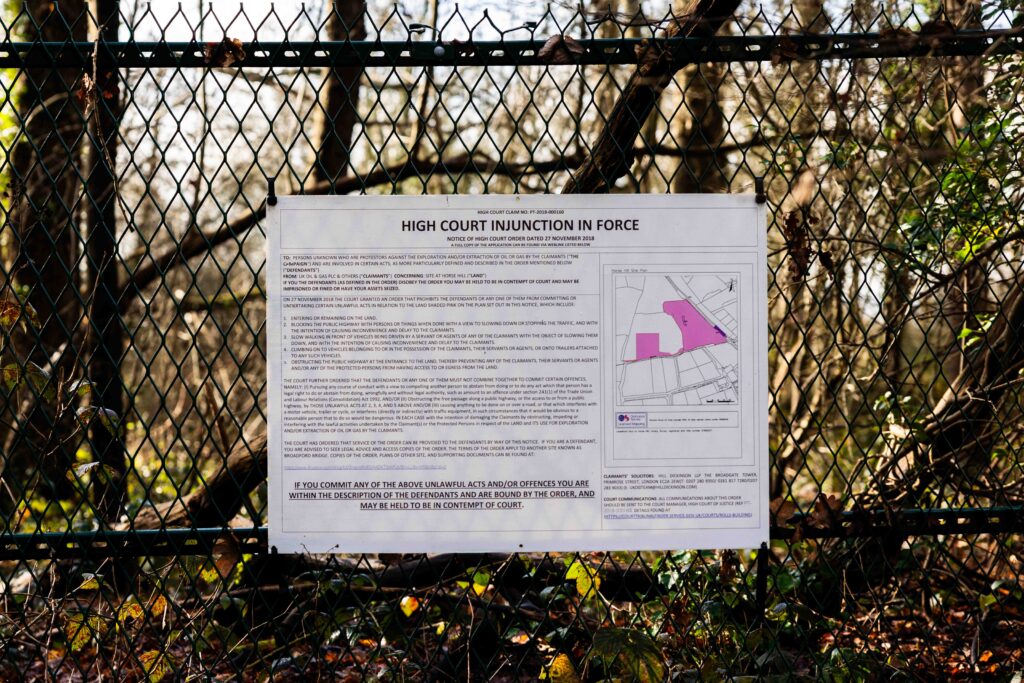
Her campaign, which ended at the Supreme Court, began in 2019 against plans for expanded production at the Horse Hill oil site near her then home at Redhill in Surrey.
In the space of four years, the case was heard by a total of 11 judges at all levels of the English court system.
“Astonishing impacts”
Since the Supreme Court judgement, the Finch ruling has had a widespread impact in the UK on oil, gas and coal projects, as well as industrial-scale agriculture and infrastructure developments. It could also inform European Union policy in future.
Ms Finch said:
“It’s huge and it’s just grown and grown. We always said, right from the start, that if we won the case, it would have wider impacts. We knew that theoretically, it was true. But to see it actually happen, it’s still astonishing.”
Soon after the ruling, the UK government withdrew support for developing the Rosebank and Jackdaw oil and gas fields in the North Sea. Permission was quashed for oil production at Biscathorpe in the Lincolnshire Wolds, expansion of the Wressle oil site in North Lincolnshire and a new deep coal mine near Whitehaven in Cumbria.
Within a year, it has been estimated that the Finch ruling resulted in the delay or cancellation of projects whose downstream emissions would total almost 400 million metric tons of CO2—roughly the entire domestic carbon emissions of the UK in 2024.
The ruling also led to the UK government issuing new guidance on assessing carbon emissions from oil and gas production.
Ms Finch said:
“There was a whole year when the North Sea was on hold waiting for this new guidance.
“The new guidance, when it came, was very strong and better than we expected.
“The developers shouldn’t be able to rely on mitigation unless they could actually demonstrate where and how this mitigation was going to happen. And they had to look at the cumulative impact of greenhouse gas emissions from other already existing or planned sites.”
Ms Finch said:
“We’ve seen the court ruling used in other sectors too. There have been cases where giant animal farms have had planning permission refused because of the downstream emissions.”
She added:
“I feel that it has really changed the context in which these kinds of infrastructure decisions have to be made and so it’s had a real effect in the wider world.”
Outside the UK, the ruling may have been influential in decisions on projects in Australia and Guyana.
Inspiration
Ms Finch said the Supreme Court case had also been important for campaigners.
“I think it has inspired and encouraged a lot of people not just about taking cases to court, but in any kind of campaigning. I think to have a big visible win is encouraging to other people.
“I think it was a shot in the arm for our whole sector of anti-oil and gas campaigners.”
She added:
“I’ve always said it was worth doing even if you don’t win. One of the things we were doing was slowing everything down. We were creating time for wisdom to emerge.
“In our case, 11 judges had to listen to our arguments. In all the other cases where campaigners lost, judges have had to grapple with these issues and their thinking moves on.”
“The fight isn’t over”
But she warned that the Finch ruling was vulnerable.
The government is looking at revising regulations on environmental impact assessments (EIA), the current mechanism for assessing greenhouse gas emissions.
The previous Conservative government proposed to replace EIAs with new Environmental Outcome Reports (EORs), designed to deliver specific, measurable environmental outcomes, rather than assess impacts.
Additionally, a review of nuclear regulation by the economist John Fingleton has recommended overturning the Finch judgement for low-carbon infrastructure.
Ms Finch said:
“I feel the fight isn’t over. It’s like a war of attrition really. The ruling was a big step forward but you can’t relax your guard.”
“A new life”
Many of the previous 239 Goldman winners have gone on to positions as government officials, heads of state and leaders of voluntary organisations.
Wangari Maathai, from Kenya, a 1991 winner for her opposition to deforestation, was later elected to her national parliament with 98 percent of the vote and won the Nobel Peace Prize.
Before the Horse Hill campaign, Ms Finch, a writer and editor, said she had always been a climate campaigner “in a very small way”.
She previously worked for Greenpeace as a climate press officer, was a Green Party councillor in Surrey and belonged to climate campaign groups.
“I did whatever actions they asked me to do. But when I became aware of the Horse Hill site, which was close to where I lived at the time, I was just like, oh, so this is not just a kind of a national policy thing, this is actually here on my doorstep.”
She described herself as “quite an introvert”:
“I’m happy sitting at my kitchen table, reading a planning application, rather than manning the barricades.
“I never was a front person. I was in the background sending out the press releases.”
But since the Supreme Court decision, Ms Finch said:
“It really has been overwhelming. I’ve got a new life as a kind of climate litigation poster person, which I never expected.”
She said:
“Now I am a public person. I get invited to speak at conferences and people recognise my name. It’s been a big change for me but I really welcome it because I feel it has given me a platform so that I can talk about climate change.”
She agreed to front the Horse Hill legal action for the Weald Action Group in the absence of anyone else:
“I didn’t get picked exactly, I volunteered.
“But I’m glad I did, because out of the group, I had been the person who’d been interested in Horse Hill for the longest time.
“And I had spent quite a lot of time there and got to know local residents. I think I was a good choice, just in terms of, having demonstrated commitment to that particular site.”
In 2024, Ms Finch was named one of Time’s 100 Most Influential Climate Leaders and a year later, she won campaigner of the year award from the Sheila McKechnie Foundation. She said:
“That was amazing. I kept thinking, this is the peak, and now the Goldman Prize.”
On the Goldman, she said:
“Because the judgement is in my name, it can give the impression that it was a one-woman thing. But it’s absolute not. It should be called the Weald Action Group ruling because we did it. I did it on behalf, and with, the Weald Action Group.
“I think what our case really showed is that ordinary people working together, in their neighbourhood, can bring about big changes. It’s not just about individuals.”
She said it was “very fitting” that all this year’s prize winners were women.
“We know that women around the world are generally more vulnerable to climate impacts and I think, possibly, for that reason, women are taking it upon themselves to fight for change.”
Horse Hill future
At Horse Hill, planning permission was quashed almost two years ago by the Finch ruling. The site stopped oil production in October 2024 and some equipment has been removed.
But the operator, a subsidiary of UK Oil & Gas plc (UKOG), has repeatedly delayed submitting key documents needed for a new planning application.
Ms Finch said:
“I really think it’s very unlikely that UKOG will do anything there. They’re still saying that they’re going to put in another planning application. But it was going to be last summer, then before Christmas, then January and February.
“My fear is that it will be abandoned and it will be down the local council to restore the site. That’s a worry that we have about other sites around the Weald.”
Reaction
Lorraine Inglis of the Weald Action Group said:
“We are grateful to Sarah for stepping forward and representing our case – and we are incredibly proud of our successful campaign on Horse Hill which has changed the story on proposed UK fossil fuel developments. Around the world, thousands of dedicated campaigners like Sarah and the other Goldman Prize winners are making a real impact and all their efforts are essential.”
Katie de Kauwe, senior lawyer at Friends of the Earth, who helped support the legal challenge, said:
“The Finch ruling is one of the most significant legal breakthroughs this century in the fight against the climate crisis. It has fundamentally changed the rule book for granting new fossil fuel projects, as it forces developers to take responsibility for the full climate impacts of their planet-wrecking projects. The ruling resulted in the quashing of several other consents for fossil fuel projects in the UK, including a huge coal mine in Cumbria, and it is also making waves internationally.”
“All of this was possible thanks to the determination of a local community group in Surrey, who were prepared to take on both the government and financial might of fossil fuel interests. Friends of the Earth was proud to intervene in support of their case from the very beginning right up to the Supreme Court. This award to Sarah is richly deserved and recognises the incredible power of grassroots action to change the world.”
John Goldman, vice president of the Goldman Environmental Foundation, said:
“While we continue to fight uphill to protect the environment and implement lifesaving climate policies – in the US and globally – it is clear that true leaders can be found all around us. The 2026 Prize winners are proof positive that courage, hard work, and hope go a long way toward creating meaningful progress. I am especially thrilled to honor our first-ever cohort of six women, as this is a powerful reflection of the absolutely central role that women play in the environmental community globally.”
Updated with reaction at 19.07 on 20 April 2026


