The campaign network, which won a landmark climate ruling at the Supreme Court in 2024, failed today in its legal challenge to the government’s plan to reduce methane emissions.
The Weald Action Group (WG), which campaigns against onshore oil and gas in southern England, lost on all three grounds of its case.
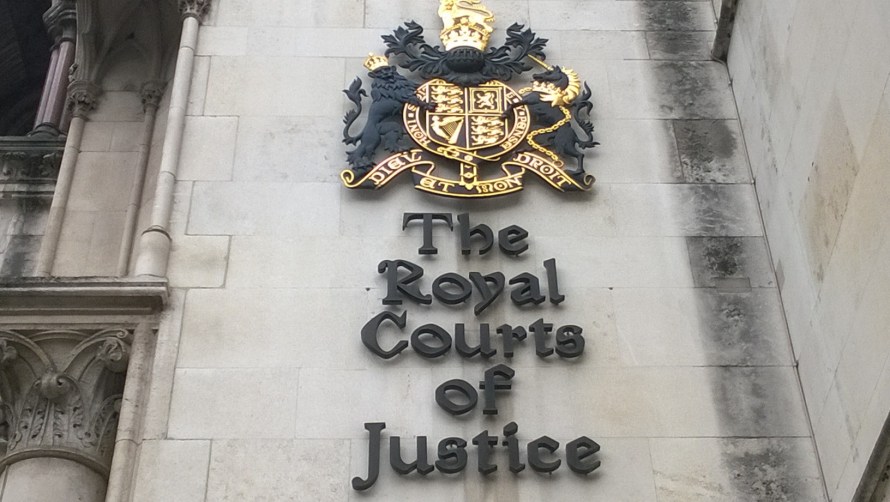
Mr Justice Kolinksy, sitting at the High Court in London, awarded costs, limited to £10,000, against the group.
WAG had sought to revise the government’s Methane Action Plan (MAP), published in October 2025.
It claimed the plan failed to address properly the risks of delivering the UK’s carbon budgets under the Climate Change Act 2008.
It said the plan omitted meaningful policies for methane emissions from onshore oil and gas sites. It also argued that the MAP was government policy and must comply with environmental principles designed to prevent harm and protect the environment.
Power of methane
Part of the case centred on two calculations to assess the ability of methane to trap heat in the atmosphere (its global warming potential).
Over a 20-year timespan, methane is about 80 times more powerful than carbon dioxide (CO2). But over 100 years, methane’s comparative potency falls to about 28 times that of CO2.
WAG said the government should have used the 20-year period in the Methane Action Plan, not 100 years. It argued that the next 23 years, to 2050, were key to the UK meeting its target of net zero emissions.
Taking action to reduce methane emissions would be a “quick win”, WAG’s barrister, Marc Willers KC, told the court.
But the judge backed arguments by the Department of Energy Security and Net Zero (DESNZ) that the 100-year horizon was an international standard. The secretary of state did not lawfully need to use a different measure, he said.
Targets and risks
The judge also rejected WAG’s argument that the secretary of state had breached the Climate Change Act by failing to set targets for methane reduction or assess the risks in policies set out in the MAP.
Mr Willers said the secretary of state needed sufficient evidence to understand the risks if policies in the MAP, such as ending routine flaring and venting, would help to meet net zero.
WAG said the MAP should also have applied to onshore oil and gas sites in the UK – not just operations in the North Sea.
The court heard that the Horndean oil field in Hampshire was allowed to burn 10 tonnes of gas in a flare every day. Multiply this by other onshore sites and it adds up to a “significant amount”, Mr Willers said.
DESNZ said the MAP did not set new policy and was part of a package of wider measures.
Preventing harm
The judge also said in his ruling that WAG had selectively applied the obligations of the Environment Act 2021 on the secretary of state.
The group had argued that the act placed a duty on ministers to “have due regard” to the environmental principles policy statement (EPPS). This sets out how policymakers should apply environmental principles to support environmental protection and enhancement.
WAG said methane emissions were causing “considerable harm to the climate and air quality”. Policymakers should understand what damage was being caused, where it originated and what were the costs and benefits of a policy, the group said.
Lawyers for DESNZ had said the MAP was a communications tool to explain to the public what was being done and what would be done in future.
Assessments of risks and impacts of policies referred to in the MAP had been done in the Carbon Budget and Growth Delivery Plan, published on the same day, the department said. There was no need to do them again in the MAP.
The judge supported DESNZ’s argument that the secretary of state had been correctly advised on how policies in the MAP aimed to meet methane reductions and there was no need to consider other policies. He said he considered WAG had relied on a “selective and unfair” reading of the EPPS.


