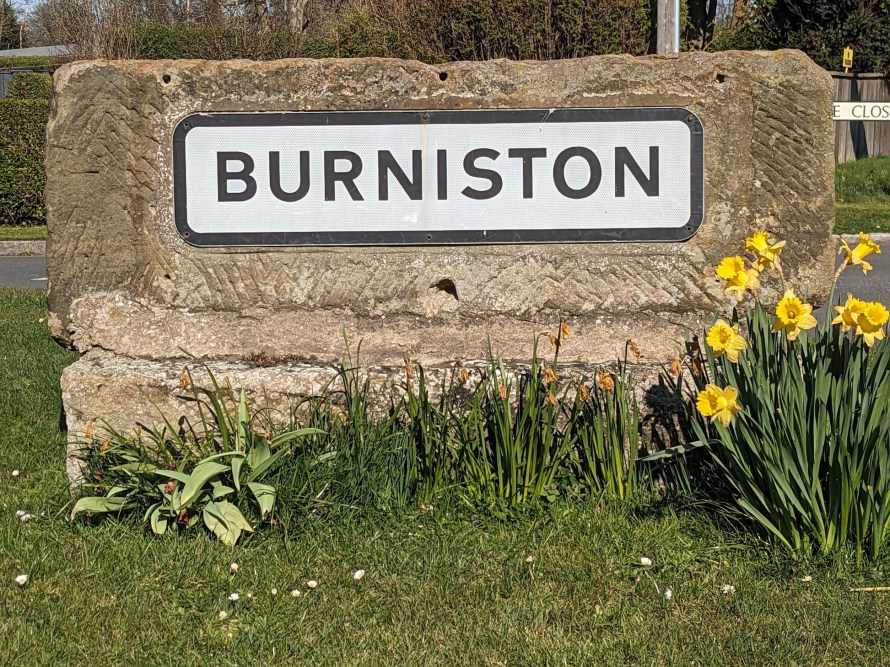
Councillors in the North Yorkshire village of Burniston made a formal complaint today about the Environment Agency’s handling of a permit for proposed gas drilling and lower-volume fracking.
This is at least the second formal complaint made about the Burniston permit process.
A separate earlier complaint, by campaigner Dennis May, advanced this week to the Environment Agency’s final complaints stage.
Today’s formal complaint, by Burniston Parish Council and the village’s North Yorkshire Council representative, Cllr Derek Bastiman, centred on the announcement in August 2026 that the Environment Agency (EA) was “minded” to grant an environmental permit to Europa Oil & Gas for its plans at Burniston.
The EA’s draft decision and permit documents, published with the announcement, were criticised locally and nationally. Numerous corrections and changes were later made to the documents. A public consultation period was extended.
Questions over EA impartiality
Burniston Parish Council today questioned the EA’s appearance of impartiality and its ability to reach decisions through a “fair, transparent and evidence-based process”.
The council made 21 formal requests to the EA. These included confirmation that the EA would not make a final decision on the Burniston permit application until the concerns in the complaint were investigated.
The council also asked the EA to provide details of when decisions had been made, what discussions EA officers had with Europa, what technical assessments had been used to make the draft decision, whether outstanding issues remained and what safeguards were used to ensure the assessment remained impartial.
The complaint also asked for information about errors in the draft decision documents and what impact this had on the decision-making process.
“Wholesale failure”
Mr May, of the Nottinghamshire campaign group, Frack Free Misson, is seeking a management review of the handling of his formal complaint.
Mr May said there had been a “self-evident” “wholesale failure in quality assurance” in the permit process.
He said:
“The sheer number of amendments made to the revised draft decision document and permit following the submission of this complaint should raise concerns among senior management with regards the EA’s understanding, processing and resultant quality control of information conveyed to the public for consultation.”
He accused the EA of carrying out the permitting process “under an inappropriate perception of time pressure” and of aligning itself with company rhetoric in the public consultation process.
He said:
“The proceedings of this public consultation process and wider management of the oil and gas permitting should be subject to a full management review to ensure that the EA is meeting its stated objectives in serving the public.”
Burniston Parish Council complaint details
The formal complaint from Burniston, submitted today, called for a “full and substantive investigation by the Environment Agency. It said:
“The Parish Council has serious concerns about the manner in which the application has been assessed, the effectiveness and fairness of the public consultation, the apparent timing of the Agency’s minded-to-grant position and, importantly, whether the potential environmental, geological and public safety risks associated with the proposed operation have been adequately investigated.”
The complaint said the concerns “relate to the integrity of the regulatory process, the quality and completeness of the technical evidence, the protection of the local community and the transparency of the Agency’s decision-making”.
The parish council said it expected the EA to “demonstrate that its assessment has been conducted impartially, that all relevant evidence has been properly scrutinised and that the public has been afforded a genuine opportunity to influence the outcome”.
The Burniston complaint focused on 10 issues.
1. The timing of the minded-to-grant position and impartiality of the process
The parish council said it was “particularly concerned about the timing of the Environment Agency’s indication that it was minded to grant the environmental permit”. It said:
“Where an indication that the Agency is minded to grant a permit is given at the very beginning of the consultation period, following lengthy engagement with the applicant, there is an understandable concern that a preferred outcome may already have emerged before the public has had an opportunity to make its views known.”
2. Errors in the draft decision document
The errors and inaccuracies identified in the original minded-to-grant report led to an extension of the consultation period. Burniston said:
“The Parish Council considers that this raises further questions about the adequacy of the original assessment and the extent to which the technical and environmental information had been properly checked before the Agency indicated that it was minded to grant the permit.”
It added:
“We believe that the local community is entitled to understand why the original report required correction and whether those corrections affected the basis upon which the Agency was minded to grant the permit.”
3. Failure to arrange a further public meeting
Burniston Parish Council asked the EA to arrange a further public meeting in the village after the changes to the draft decision documents. The council said “to the Parish Council’s knowledge, no substantive response [from the EA] was provided to the request”.
The council said:
“Given that the original report had required correction and the consultation period had been extended, the Parish Council considers that a further opportunity for public engagement would have been particularly important.”
It asked the agency for explanations including who considered the request for a public meeting, why no meeting was arranged and what steps were taken to ensure the local community understood the changes.
4. Public consultation and notification of residents
The EA wrote to residents about the extended consultation, which closed on 21 October 2026. But the parish council said some residents did not receive their letters until 22 October 2026, after the consultation closed.
The council said:
“This is a particularly serious concern.
“Residents who received their notification after the consultation had closed were effectively denied the opportunity to participate through the normal consultation process. They could not reasonably have been expected to submit representations within a period of which they had not been made aware.”
It said issuing letters was not sufficient if arrangements did not allow recipients a “reasonable opportunity to respond”.
The council added that the letters problem and the failure to arrange another public meeting raised “significant questions about whether the consultation process provided the local community with a sufficiently informed and meaningful opportunity to participate”.
5. Geological assessment and absence of seismic investigation
The council said it had “serious concerns” about whether the geological and seismic risks of the Burniston fracture operation had been “adequately investigated”.
No seismic testing or baseline seismic monitoring had been undertaken at the proposed site, the council said.
It asked for details about how the EA had assessed the underlying geology and the risks of seismic activity from hydraulic fracturing.
It said:
“The Parish Council is particularly concerned that the Agency should not reach a final permitting decision where significant uncertainties about the underlying geology remain unresolved.”
6. Hydraulic fracturing
The council said it was concerned about the impact of hydraulic fracturing on nearby homes and unstable coastal cliffs. It asked the EA to demonstrate that it had properly assessed the characteristics of the geology and the risks from hydraulic fracturing.
7. Underground retention of hydraulic fracturing materials
The majority of the fluid from the Burniston fracturing operations is likely to remain underground, near Barmoor Lane, Scalby.
The council said:
“insufficient information has been provided to the local community about the precise nature, composition, quantities and long-term environmental implications of the materials that will remain underground”.
It asked the EA to provide details including the precise location of the proposed underground area where material would be stored, estimated volumes and assessments of potential migration and contamination of groundwater.
8. Other parish council concerns
- “Insufficient consideration” given to the experience and environmental consequences of hydraulic fracturing at Preston New Road, Lancashire
- Request for confirmation that the EA has done a “sufficiently comprehensive assessment of the combined environmental implications of the proposed operation”.
- Relationship with planning process – the council asked for clarification about how the EA took into account the planning position when determining an environmental permit.
Management review details
Conventional or unconventional
The EA was accused in Mr May’s request for a management review of giving misleading information through incorrect and vague terminology.
A key issue was the classification of the Burniston reservoir as “conventional” or “unconventional”.
The EA said the proposed “small-scale hydraulic fracturing process”, described by Europa as a proppant squeeze, had historically taken place in conventional oilfields.
But Mr May said Burniston would the UK’s first onshore, multi-stage hydraulic fracturing operation of unconventional strata since 2019.
He said:
- A 2005 industry appraisal of the prospect around Burniston, known as Cloughton, classified the target strata as “tight sand” that would require “massive hydraulic fracturing to produce gas at commercial rates. In industry guidance, tight formations are classified as unconventional.
- The Cloughton target formations are “reservoir-shale pairs” or “strata encased in shale”, usually considered to be unconventional.
- The permeability of the Cloughton target formation has been assessed as low, at 0.04 millidarcys, meeting the industry definition of unconventional.
- The Cloughton strata is the equivalent of the target formation at Kirby Misperton, less than 30km away, where there were plans in 2017 for high-volume fracking.
- The Cloughton operation, which seeks to use 300m3-500m3 of fluid per fracking stage, is a different scale from a typical proppant squeeze, which would use 100m3-200m3 per stage.
Volumes
Mr May said the industry, government and the EA had attempted to “downplay the potential impacts” of the Burniston fracturing project by comparing it with onshore associated hydraulic fracturing.
This is defined in the Infrastructure Act as an operation using 1,000m3 of fluid per fracking stage or 10,000m3 in total.
A moratorium in 2019 prevented associated hydraulic fracturing in England. But it does not cover operations using lower volumes of fluid.
Mr May said the volumes in the act had “by a wide margin, never been attained” in the UK. And he said:
“the proposed injection volumes for the Cloughton 2 well [at Burniston] are directly comparable to those deployed on the PNR2 [Preston New Road-2] well in Lancashire which caused the 2.9ML seismic event that resulted in the ongoing moratorium.”
Mr May said:
- The proposed total volume of fluid proposed for Burniston is 80% of that which caused the 2.9ML seismic event at Preston New Road
- The maximum proposed stage volume for Burniston is higher than any used on the PNR2 well
- The minimum proposed stage volume for Burniston is twice the final quantity which triggered the 2.9ML event.
Seismic survey
The EA acknowledged that Europa had not carried out a 3D seismic survey at Burniston and described this as “unusual”.
But it said it was “standard practice for onshore oil and gas applications” to make this a pre-operational condition, after the permit had been approved.
Mr May said:
“If the EA is applying standard, i.e. ‘usual,’ practice,’ it should not be considered unreasonable for a 3D seismic survey and resulting preliminary seismic assessment to be carried out prior to subjecting the Burniston community to the impacts of site construction and drilling operations.”
Industry guidance
Mr May said the EA had misrepresented guidance from the industry regulator, the North Sea Transition Authority.
The EA said “small-volume hydraulic stimulation of a conventional target requires less information and a proportionate level of control”.
But Mr May said the NSTA guidance actually states:
‘If the proposed injection volumes fall below the BEIS associated hydraulic fracturing thresholds, the OGA may {emphasis added] decide less information or monitoring is appropriate…’
- The consultation documents and responses for the Burniston permit application have been archived. These documents normally remain online in the EA’s citizen space webpages for about a year. But an EA spokesperson told DrillOrDrop today that the organisation was changing contractors and consultations handled by the former contractor were all being archived.
Categories: Regulation, slider