The campaign group behind a landmark legal judgement on carbon emissions has criticised official advice to government on the climate impact of onshore oil and gas.
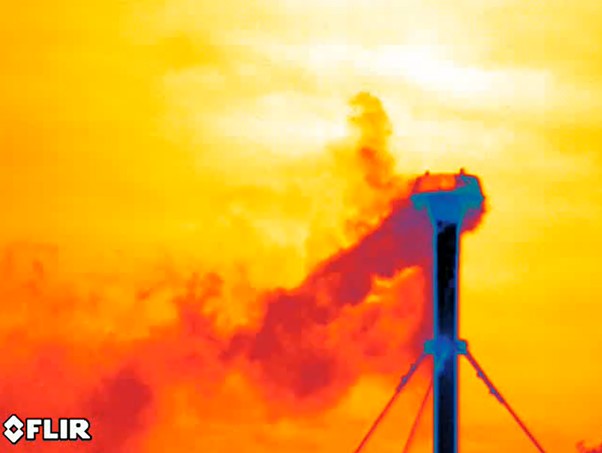
Photo: Clean Air Task Force
The Weald Action Group, which secured the 2024 Finch Ruling at the Supreme Court, said the Climate Change Committee (CCC) may have underestimated the climate risks from onshore petroleum operations in guidance to ministers.
The CCC is required by law to provide advice to the government every five years on how onshore petroleum extraction in England affects the UK’s ability to meet its climate targets.
Earlier this year, the CCC told the energy secretary, Ed Miliband, greenhouse gas emissions from conventional onshore petroleum production in England were “a small contributor to carbon budgets and Net Zero”. The CCC also assumed that emissions would decline as onshore sites matured and closed.
But the Weald Action Group (WAG) said in a response this week that the CCC’s assessment was “incomplete” and not “a robust basis” for determining whether onshore oil and gas operations were compatible with UK carbon budgets.
In a letter to the CCC chair, Nigel Topping, the group said this year’s advice “failed to reflect the current reality of the onshore petroleum sector”.
WAG also said the CCC relied on assumptions that were “inconsistent with observed industry activity and regulatory practice”.
The CCC did not appear to have taken into account new expansion plans by onshore operators, WAG said. It said the CCC’s conclusions contradicted previous support for tighter limits on oil and gas production and a presumption against further exploration.
WAG also suggested:
“the assessment used to inform the Committee’s advice is incomplete and therefore underestimates the climate risks from onshore oil and gas under current policy and regulation.”
Expansion plans
WAG identified eight proposals to expand onshore oil and gas in the UK.
The plans include four sites in North and East Yorkshire (Burniston, Foxholes, Ebberston Moor and West Newton), three in Lincolnshire and North Lincolnshire (Wressle, Whisby and Glentworth) and one in Dorset (Waddock Cross).
WAG said a moratorium on further onshore petroleum development would be a “reasonable and logical position for the CCC to adopt”.
Regulatory failure
WAG also said the climate impact of onshore oil and gas was compounded by a failure of regulators to ensure disused wells – a source of methane emissions – were decommissioned in “a timely manner”.
WAG said:
“evidence from multiple UK onshore sites indicates that decommissioning is frequently delayed, increasing the likelihood of prolonged emissions from inactive or suspended wells”.
The group accused the onshore sector of deferring well abandonment and site restoration for as long as possible “due to financial constraints, a reluctance to incur costs where funds are available, or broader political and strategic ambition”.
WAG said this was abetted by a “laissez-faire approach” from the industry regulator, the North Sea Transition Authority (NSTA).
The group said the NSTA had allowed Star Energy to schedule decommissioning of the South Leverton field in Nottinghamshire in 2028, even though production had stopped in 2020-2021.
WAG added that at Cuadrilla’s Preston New Road shale gas site in Lancashire, the NSTA extended the deadline for decommissioning wells beyond the expiry of planning permission.
“Questionable data”
WAG also said the CCC had relied data on methane emissions from upstream oil and gas activities recorded in the National Atmospheric Emissions Inventory (NAEI).
The group said:
“There is doubt over the reliability of using NAEI data to estimate the impact of the onshore sector on carbon budgets – particularly regarding methane emissions.”
The CCC relied upon a production emissions baseline based on what it admitted was “limited publicly available information”, WAG said.
It added that research in 2023 indicated that the NAEI data could be underestimating true methane emissions, particularly from onshore venting.
Categories: climate, slider, Uncategorized


